
10 Best Cable Machines For Home Gym in 2026
This post contains affiliate links. As an Amazon Associate, we earn from qualifying purchases.
For a complete home gym, the Body-Solid Powerline PFT100 Cable Crossover stands out as the best overall for its dual independent weight stacks and rock-solid stability. If floor space is tight, the Goimu WM1 Wall Mount Cable Station is a versatile space-saver, while the Mikolo Wall Mount Cable Machine offers serious budget-friendly value with a built-in weight stack.
Building a home gym means making smart choices about space, budget, and the kind of training you actually want to do. A cable machine opens up hundreds of exercises for your entire body, but the wrong one can eat up your room or limit your progress. We want to help you find the machine that fits your space and your goals without wasted money or regret.
This guide is built from research into manufacturer specs, expert round-ups, and patterns in owner feedback. We’ve organized ten of the best options to help you compare stability, pulley systems, and footprint so you can choose with confidence.
Top 10 Cable Machines For Home Gym in the Market
Certain content that appears on this site comes from Amazon. This content is provided "as is" and is subject to change or removal at any time.
The Best Cable Machines For Home Gym, Reviewed
Body-Solid Powerline PFT100 Cable Crossover

What We Like
- Dual independent 160 lb weight stacks
- Extra-wide mainframe for stability
- 10-year frame warranty
- Near-unlimited high and low pulley exercises
Trade-offs
- 476 lb weight requires a dedicated floor space
- No wall-mount or fold-away option
Dual 160-pound weight stacks with a 1:2 ratio mean you get smooth, independent resistance for each arm, perfect for isolateral moves like cable crossovers or single-arm rows. The machine’s 476-pound weight and extra-wide mainframe provide a stable base for a variety of cable exercises, from high and low pulley movements to full-body workouts. The 10-year frame warranty backs the build quality, so you can expect this to hold up over time.
The Body-Solid Powerline PFT100 Cable Crossover weighs 476 pounds, which gives it the heft to stay planted during heavy cable work like tricep pressdowns and glute kickbacks. That weight also means you’ll want to place it where it can stay put for the long haul, since moving it after assembly isn’t a quick job. Compared to the Goimu WM1 wall mount at 81.3 pounds, this machine trades easy relocation for a stable dual-stack setup that won’t shift around as you pull from high or low positions.
Goimu WM1 Wall Mount Cable Station
What We Like
- 17 adjustable pulley positions for varied angles
- Dual pulley ratios for heavy or light work
- Wall-mounted design saves floor space
- Includes lat bar, tricep rope, and D-handles
Trade-offs
- Requires concrete or masonry wall for installation
- No weight stack included; uses plate loading
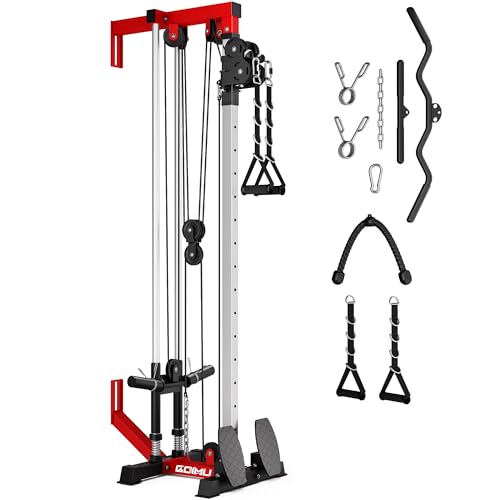
With a footprint of just over three square feet, this wall-mounted station tucks flush against a concrete or masonry wall, turning a cramped corner into a full cable gym. Seventeen pulley heights let you hit everything from overhead presses to low rows, and the SmartT adaptor switches between a 1:1 ratio for heavy pulls and a 2:1 ratio for lighter endurance work. It comes with a lat bar, tricep rope, and D-handles right in the box, so you can start supersetting without hunting for extras.
At 81.3 pounds, this wall-mounted unit requires a concrete or masonry wall for installation, and owners report it’s a two-person job to get it up. Once mounted, the 14-gauge steel frame and reinforced brackets deliver rock-solid stability during heavy rows or pulldowns. A freestanding option like the Body-Solid PFT100 doesn’t need wall mounting, but it occupies more than twice the floor space. For anyone who prioritizes a compact setup and doesn’t mind loading plates, this is a steady, space-saving choice.
Mikolo Wall Mount Cable Machine

What We Like
- 118 lb built-in weight stack, no plates needed
- 19 adjustable pulley positions for full-body work
- 1:1 pull ratio adapter for true resistance feel
- Compact wall-mount design saves floor space
Trade-offs
- Wall mounting requires sturdy wall and installation
- No footplate or seat included for seated exercises
A 118 lb selectorized weight stack means you can switch resistance with a pin instead of fumbling with plates. That keeps supersets and drop sets moving fast. The compact wall-mount footprint turns a garage corner or spare wall into a functional trainer without eating up floor space, making it a smart pick if you are short on square footage but want cable work for your whole body. Nineteen adjustable heights let you hit high flys, mid rows, and low curls, and the included lat bar, tricep rope, and handles cover the basics right out of the box.
The 118 lb weight stack is a fixed maximum, so anyone who needs more than that for heavy pulling exercises will hit a ceiling. The Body-Solid PFT100 in the guide has dual 160 lb stacks, which gives it a higher top end for those who need it. The Mikolo is a space-saving wall-mounted unit with a built-in stack, making it a practical option for home gyms where floor area is tight and the 118 lb limit is acceptable.
Goimu WM3-V4 Folding Squat Rack

What We Like
- Folds to 4.3 sq ft for storage
- Dual independent 1:1 cable pulleys
- 5 adjustable function modes
- 15 adjustable pulley heights
Trade-offs
- Requires wall mounting for use
- No built-in weight stack included
- Open footprint still needs 12.3 sq ft
When collapsed, this rack takes up 4.3 square feet of floor space, so it can live in a corner or against a garage wall without taking over the room. Fully opened, it expands to 12.3 square feet and gives you a power rack, dual independent cable pulleys, a pull-up bar, and an adjustable pulley system. That means one piece of gear handles heavy squats, bench presses, cable flies, and pull-ups, which is a lot of versatility for the footprint. The five configurable modes let you switch between setups like a half rack for barbell work or a functional trainer for cable moves, so you don’t need separate machines for different workouts.
The trade-off is that this is a wall-mounted unit, so you need a sturdy wall and the willingness to bolt it in. No rolling it around like a standalone cable crossover. Compared to the Body-Solid Powerline PFT100, which has dual 160-pound weight stacks and a bigger 62.6-inch width, the Goimu saves floor space but requires you to supply your own plates and a spotter for heavy squats. If you’re okay with mounting it and bringing your own weight plates, the folding design and dual pulley flexibility give you a lot of training variety for a compact setup.
JELENS CC01 Cable Crossover Machine
What We Like
- 64-inch front training space
- Triangular frame for stability
- 15 pulley height adjustments
- Includes pull-up bar, rowing bar, handles
Trade-offs
- Assembling requires 2-3 people for 1.5 hours
- Floor footprint is 12.1 sq ft
- Weight plates not included
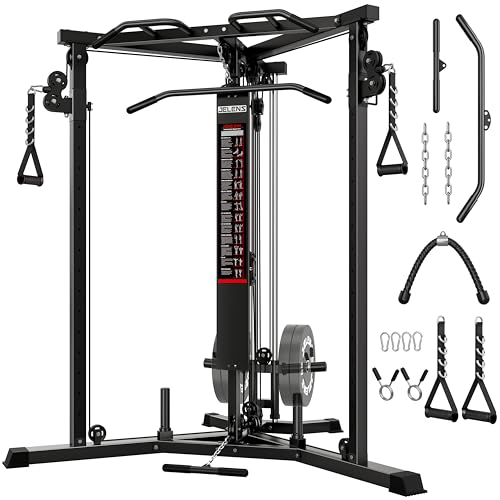
The triangular frame creates a 64-inch front training space, which gives you room to move during exercises like chest flyes and cable crossovers. The 146-pound steel frame keeps the machine stable during heavy pulls, and the 15 pulley height adjustments let you target muscles from triceps to lats. If your home gym is tight on space but you want a cable crossover that doesn’t feel cramped, this machine offers a wide stance without taking up a whole room.
Assembly requires two or three people and about 1.5 hours with the included manual. The machine uses weight plates you supply yourself, so if you already own plates, you can keep the initial cost lower. For someone who values open training space and already has iron, this setup makes sense.
Major Fitness Drone2 Smith Machine

What We Like
- 2000 lb weight capacity for heavy routines
- 1:1 pulley ratio for strength-focused resistance
- All-in-one design integrates smith machine and cable crossover
- Lifetime after-sales support included
Trade-offs
- Large footprint requires significant floor space
- 1:1 ratio offers less speed than 2:1 for lighter moves
- No integrated weight stack; uses plate-loaded system
The 2000 lb weight capacity on this all-in-one unit means you can load it up without worrying about the frame wobbling or giving out, even during heavy squats or lat pulldowns. That kind of stability, paired with the 1:1 pulley ratio that delivers full resistance through every inch of the cable stroke, makes the Drone2 a smart fit for anyone who wants a serious smith machine and a functional cable station in one piece of equipment. It’s built for the lifter who values strength work over speed. The included accessories, dip handles, tricep rope, ankle straps, mean you can start training right after assembly without hunting for add-ons.
Space and plate management are the main compromises here. At 85.2 inches wide and 84.4 inches tall, this machine needs a dedicated corner of your garage or basement. And because it uses plate-loaded cables rather than a weight stack, you’ll be swapping plates between exercises. That’s a slower rhythm than the Goimu WM1 wall-mounted cable station, which keeps its weight stack ready to go and folds away when not in use. But if you want the versatility of a smith machine and a cable crossover in one rigid frame, and you have the room to set it up permanently, the Drone2 delivers a combination that standalone cable machines simply can’t match.
Product photos
DONOW Smith Machine With Weight Stacks
What We Like
- Linear-bearing Smith bar for smooth lifts
- Steel-encased weight stacks for safety
- 2" x 2" steel frame for durability
Trade-offs
- Large footprint requires dedicated floor space
- Fixed cable paths limit angle variety of some machines
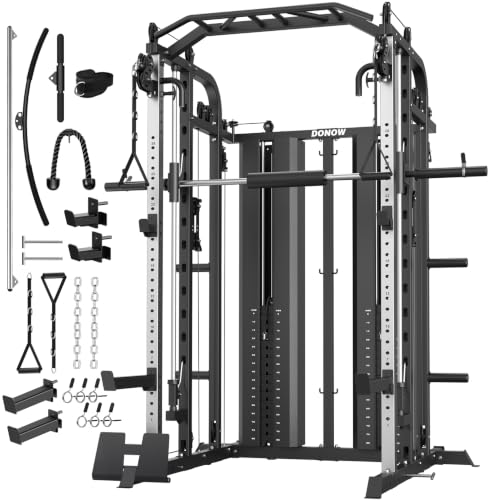
A combined 352 pounds of selectorized weight across two independent stacks means you can train both sides of your body simultaneously without ever touching a loose plate. That dual-stack setup turns this machine into a true cable crossover station, letting you perform flyes, face pulls, and lat pulldowns with the same smooth, commercial-gym feel. The linear-bearing Smith bar adds another layer of versatility, so you can squat or press with guided stability while still having the cable system ready to go. For someone who wants a single piece of equipment that handles both free-weight and cable work, this design keeps your workout flow uninterrupted.
This unit takes up a serious chunk of floor space, nearly 78.6 inches wide and 88 inches tall, so it demands a roomy corner or garage bay. Compared to wall-mounted options like the Mikolo or Goimu WM1, which tuck away more easily, the DONOW is a permanent anchor in your gym. But if you have the room and prefer not to bolt anything into studs, the all-in-one frame and enclosed weight stacks offer a cleaner, safer setup for heavier training. It is a straightforward choice for anyone who values dual-stack cable work and a Smith bar in one sturdy package.
Product photos
GMWD Wall Mount Cable Machine
What We Like
- Folds flat against wall when not in use
- 26 height holes and 13 arm angle settings
- Switchable 2:1 and 1:1 cable resistance
- Includes lat bar, cable bar, leg holder
Trade-offs
- At 165 lbs, wall mounting requires sturdy framing
- Fixed wall position limits workout location flexibility
- No weight stack included; uses plate loading only
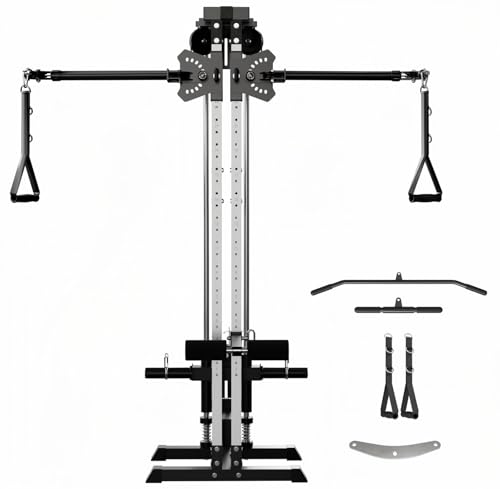
Twenty-six height adjustments and 13 arm-angle settings mean you can dial in cable positions for everything from a low-row to an overhead press without fighting a fixed path. That range of motion, paired with the ability to switch between 2:1 and 1:1 cable resistance, gives you the kind of fine-tuning that makes progressive overload feel natural rather than forced. This station is built for the home gym owner who wants commercial-style movement variety but has to share their space with a car, a washer, or a kid’s bike. When the workout ends, the whole thing folds flat against the wall, reclaiming the floor in seconds.
A solid wall and a confident installation are required for 165 pounds of steel. If your garage wall is drywall over thin studs, you will want to reinforce before mounting. Compare that with the Goimu WM1, which is lighter and easier to hang but offers fewer adjustment positions and no cable-ratio switch. The GMWD gives you more adjustability and that fold-flat convenience, but it asks for a more permanent commitment to its spot on your wall.
Product photos
SNODE ALL10 Smith Machine Home Gym

What We Like
- Includes leg press attachment and lat pulldown seat
- Dual pulley ratio (2:1 and 1:1) for custom cable tension
- 350 lb total weight stacks for heavy cable work
- 2000 lb frame capacity for intense training
Trade-offs
- Large footprint (68.7 × 57.0 in) needs dedicated floor space
- Two weight stacks mean more assembly time and weight
A 2000 lb frame capacity and twin 175 lb weight stacks support heavy training without the machine shifting, so you can focus on leg presses, squats, and cable work. The included leg press attachment and lat pulldown seat let you switch between exercises without leaving the station. This setup works well for anyone who wants a single unit that handles both smith machine and cable movements, especially if leg press is a priority at home.
You need about 68.7 inches of floor length and 57 inches of width for this machine, so it demands a dedicated space, unlike wall-mounted cable stations that fold away. The dual weight stacks mean assembly takes longer, but the package includes a leg press attachment and a dual pulley ratio (2:1 and 1:1) for varied cable exercises. If you have the room and want one unit that handles smith machine, cable crossover, and leg press work, this is a practical all-in-one.
Product photos
Centr 1 Functional Trainer

What We Like
- 33 adjustable pulley positions for variety
- 160 lb weight stack for progressive resistance
- Compact footprint for home gyms
- Frictionless pulleys for smooth motion
Trade-offs
- At 312 lbs, difficult to move once assembled
- 160 lb stack limits very advanced lifters
The 312-pound steel frame means the machine stays planted once it’s assembled, so you won’t worry about it shifting during heavy pulls. Unlike wall-mounted units that require drilling into studs, this standalone design sits on its own footprint. With 33 vertical positions, you can switch from overhead presses to low rows without moving the machine, giving you a wide range of cable work in a stable package.
Product photos
How We Evaluated Cable Machines For Home Gym
We looked at specifications, manufacturer documentation, and common themes from expert reviews and owner experiences to rank these machines. Our goal was to cut through the noise and focus on what actually matters for a home gym setup.
The most critical criteria were frame stability and build quality, as a wobbly machine is unsafe and frustrating to use. We also prioritized the pulley system design, whether a machine uses independent pulleys, a 1:1 or 2:1 ratio, and the range of adjustable positions, since that determines exercise variety. Finally, we weighed the footprint and installation requirements against the machine’s capabilities.
An evaluation like this can’t replace using the machines yourself, but it does highlight the models that consistently meet their promises on paper. We focused on the trade-offs that owners most often mention, like assembly difficulty or the need for a concrete wall, to give you a realistic picture before you buy.
What To Look For In Cable Machines For Home Gym
Choosing a cable machine for your home gym means balancing your training goals with the realities of your space. Focus on the pulley system, the weight stack or plate-loading setup, and the machine’s overall footprint.
Look for a cable machine with smooth, adjustable pulleys that match your preferred exercises. Decide between a weight stack for convenience or plate loading for lower cost and higher potential resistance. Measure your ceiling height and floor space carefully, and check the machine’s weight capacity against your strength level.
Pulley System and Adjustability
The pulley system is the heart of any cable machine. Independent pulleys let you work each arm separately, which is better for unilateral movements like single-arm curls or crossovers. A 2:1 ratio means the weight you feel is half of what you load, making it easier on joints for high-rep work, while a 1:1 ratio gives you true resistance for strength-focused training. Look for multiple adjustable pulley heights, at least 15 positions is a good benchmark, to perform everything from overhead presses to low rows.
Weight Stack vs. Plate Loading
Weight stacks offer quick, convenient changes with a selector pin, ideal for circuit training or supersets. They usually top out at a weight that is plenty for most users. Plate-loaded machines are more affordable and allow you to use your existing plates, but changing weight takes longer.
Some advanced lifters prefer plate loading because they can add more resistance. Think about how you train: if you value speed, go with a stack; if you want maximum weight or a lower upfront cost, plate loading is fine.
Footprint and Installation
Measure your space before you buy anything. Freestanding machines like the Body-Solid PFT100 need a dedicated area of about 5 by 6 feet. Wall-mounted units save floor space but require a sturdy wall, often concrete or masonry, and permanent installation. Some models fold flat against the wall, which is a solid compromise for a multi-use room. Also check your ceiling height: many cable crossovers need at least 8 feet to operate smoothly.
- Measure your floor space and ceiling height before choosing a machine.
- Decide if you prefer a weight stack for speed or plate loading for flexibility.
- Check the wall type for any wall-mounted models you consider.
- Look for a machine with at least 15 adjustable pulley positions for full-body workouts.
- Consider the machine’s weight capacity relative to your current and future strength.
A solid rule of thumb: the heavier the machine’s frame, the more stable it will be during intense pulls and presses.
Cable Machines For Home Gym Compared
The table below compares the key specs and trade-offs of each machine, making it easy to see which one fits your home gym best.
| Product | Weight Stack | Pulley Positions | Dimensions |
|---|---|---|---|
| Body-Solid Powerline PFT100 Cable Crossover | 2 x 160 lb (1:2 ratio) | High and low | 42.3"L x 62.6"W x 83"H |
| Goimu WM1 Wall Mount Cable Station | N/A | 17 height settings | 28.1 x 24.8 x 78.7 inches |
| Mikolo Wall Mount Cable Machine | 118 lbs selectorized | 19 height settings | N/A |
| Goimu WM3-V4 Folding Squat Rack | N/A | 15 positions | 33.5 x 50.0 x 85.0 in |
| JELENS CC01 Cable Crossover Machine | N/A | 15 levels | 64.2 x 53.9 x 81.9 in |
| Major Fitness Drone2 Smith Machine | N/A | N/A | 62.5"L x 85.2"W x 84.4"H |
| DONOW Smith Machine With Weight Stacks | 352LB Weight Stacks 2:1 | N/A | 54.7 x 78.6 x 88.0 in |
| GMWD Wall Mount Cable Machine | N/A | 26 height holes, 13 arm angles | 39.0 x 28.6 x 77.0 inches |
| SNODE ALL10 Smith Machine Home Gym | 2 × 175 lb (350 lb total) | N/A | 68.7 × 57.0 × 80.7 in |
| Centr 1 Functional Trainer | 160 lb | 33 vertical | 81.5" H x 51" W x 62" L |
Frequently Asked Questions
What is the best cable machine for a home gym with limited space?
For small spaces, a wall-mounted unit like the Goimu WM1 is a top choice because it saves floor area while offering 17 adjustable pulley positions. If you need something that folds away completely, the GMWD Wall Mount Cable Machine folds flat against the wall when not in use. Explore our guide to compact cable machines for more space-saving ideas.
Do I need a weight stack or a plate-loaded cable machine?
It depends on your training style. Weight stacks let you change resistance instantly with a pin, which is great for circuit training. Plate-loaded machines are more affordable and allow you to use heavier weights if you outgrow a standard stack. Many lifters start with a stack and switch to plate loading as they get stronger.
Can I install a wall-mounted cable machine in an apartment?
Wall-mounted machines usually require drilling into concrete or masonry for safety, which many apartments do not allow. If you are a renter, a freestanding machine like the Centr 1 Functional Trainer or the Body-Solid PFT100 might be a better choice, as they do not need permanent installation.
How many pulley positions do I need for a full-body workout?
At least 15 adjustable pulley heights will cover most exercises, including overhead presses, chest flyes, rows, and tricep pushdowns. Machines with fewer positions may limit your range of motion or force awkward positions. The Goimu WM3-V4 offers 15 positions, while the Centr 1 has 33 for maximum variety.
What is the difference between a 2:1 and a 1:1 cable ratio?
A 2:1 ratio means you feel half the weight you load, which is easier on your joints and better for high-rep, endurance-style work. A 1:1 ratio gives you the full resistance of the weight, making it better for building raw strength. Some machines, like the SNODE ALL10, let you switch between both ratios for the best of both worlds.
The Bottom Line
For most home gym owners, the Body-Solid Powerline PFT100 Cable Crossover is the best overall choice. Its dual 160 lb weight stacks, wide frame, and 10-year warranty make it a stable, long-lasting foundation for serious training. It is ideal if you have a dedicated floor space and want a machine that handles everything from chest flyes to tricep pushdowns without compromise.
If your space is limited, the Goimu WM1 Wall Mount Cable Station is a smart pick that mounts to the wall and gives you 17 adjustable pulley positions. For a budget-friendly wall mount with a built-in weight stack, the Mikolo Wall Mount Cable Machine delivers great value. And if you want an all-in-one machine, the SNODE ALL10 combines a smith machine, cable crossover, and leg press in a single unit.
The single most important thing to get right is the fit, both in terms of your available floor space and the type of resistance you prefer. Measure your room, decide between a weight stack and plate loading, and choose a machine that matches how you actually train. A well-chosen cable machine will transform your home workouts for years to come.
