
10 Best Commercial Gym Flooring in 2026
This post contains affiliate links. As an Amazon Associate, we earn from qualifying purchases.
For heavy lifting, high-traffic gyms, and dedicated workout zones, the Rubber-Cal Eco-Sport Interlocking Tiles earn the Best Overall spot with their 3/4-inch thickness and modular design that handles both indoor and outdoor use. The American Floor Mats Heavy Duty Rubber Roll offers full coverage for equipment stations, while the Grytfit Interlocking Rubber Floor Tiles give buyers a solid USA-made choice with no foam fillers.
Choosing commercial gym flooring means balancing thickness, durability, and installation method. A deadlift platform needs different impact absorption than a yoga studio, and a roll-out mat serves a fixed layout differently than interlocking tiles that can adapt to odd-shaped rooms. We built this guide around manufacturer specs, material composition data, and patterns in owner feedback to help you match the right floor to your actual workout setup. For a deeper look at the broader category, our commercial gym flooring guide covers additional options and considerations.
Top 10 Commercial Gym Flooring in the Market
Certain content that appears on this site comes from Amazon. This content is provided "as is" and is subject to change or removal at any time.
The Best Commercial Gym Flooring, Reviewed
Rubber-Cal Eco-Sport Interlocking Tiles

What We Like
- 3/4-inch thick for impact absorption
- Interlocking design for easy installation
- Wear-resistant and durable rubber
- Suitable for indoor and outdoor use
Trade-offs
- 19.5-inch tiles mean more seams than larger formats
- 15-tile pack weighs 13 lbs, manageable but not light
The 3/4-inch thickness of these rubber tiles is designed to absorb impact and shock from industrial machinery, and it also provides underfoot comfort for running, exercising, and walking. The interlocking design covers 39.6 square feet per pack, and the tiles are available in four colors to complement indoor or outdoor floors. For anyone setting up a durable surface for exercise or heavy equipment, this tile offers a thick, wear-resistant option that can be used on patios or in garages.
The trade-off comes in the tile size: at 19.5 inches square, you’ll have more individual pieces to lock together compared to a roll like the American Floor Mats Heavy Duty Rubber Roll, which comes in a 4×5-foot sheet. That extra seaming can be a consideration if you prefer fewer joints. Each pack of 15 tiles weighs 13 pounds, so moving a full pack into a basement is manageable but requires some effort. Still, for the thickness and modular design, these tiles provide a durable surface for high-traffic areas like gym floors or basements.
Product photos
American Floor Mats Heavy Duty Rubber Roll

What We Like
- Half-inch thick solid rubber
- Heavy-duty commercial build
- Simple roll-out installation
Trade-offs
- Does not interlock like tiles
- Single 4×5 ft size limits layout options
- Heavier to move than thinner mats
A full half-inch of solid rubber means this roll absorbs impact from heavy barbell drops and vibrating treadmills better than most gym mats. That thickness gives you real shock protection for commercial-style lifting zones or home gyms where you don’t want noise traveling through the floor. The single 4×5 ft sheet lays down as a fixed rectangular mat, so you get a stable surface without the gaps that can appear between interlocking tiles.
The trade-off is that you cannot reconfigure the layout like you can with interlocking tiles such as the Rubber-Cal Eco-Sport. Once you roll this out, it stays put, and the fixed 4×5 ft size means you may need multiple rolls to cover an irregular space, with visible seams between them. For a straightforward rectangular area where you want thick, stable flooring under a power rack or heavy dumbbell station, this roll delivers exactly what the spec promises without fuss.
American Floor Mats Fit-Lock Rubber Tiles
What We Like
- Includes border and corner tiles for finished edges
- Interlocking system installs without adhesive
- Shock-absorbing rubber protects floor and equipment
- Set covers a compact 4×6 foot area
Trade-offs
- 3/8-inch thickness offers less impact protection than thicker tiles
- Small set size limits coverage to a single station
- No border-only or corner-only set option for larger rooms
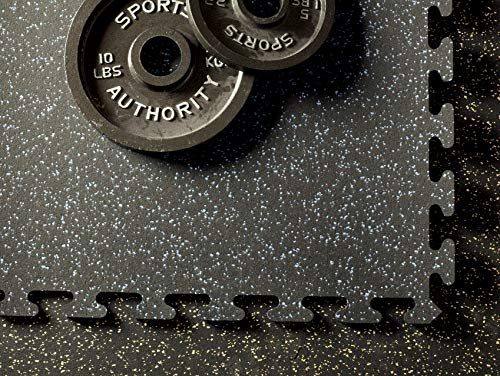
The 3/8-inch thickness of these Fit-Lock tiles absorbs shock and impact from heavy weights and equipment, protecting both the machinery and the floor from damage. The set includes border and corner tiles, so you can create a finished look without needing extra pieces. The interlocking system installs without adhesive, making setup straightforward. This set covers a 4×6 foot area with six tiles, suitable for a compact workout space.
At 3/8 inch thick, these tiles offer a middle-ground thickness compared to thicker options like the Rubber-Cal Eco-Sport Interlocking Tiles, which are 3/4 inch thick. The set covers just 4×6 feet, so you would need multiple packs for a larger room. For a single station, this set provides a practical solution with easy installation and a finished edge.
Grytfit Interlocking Rubber Floor Tiles
What We Like
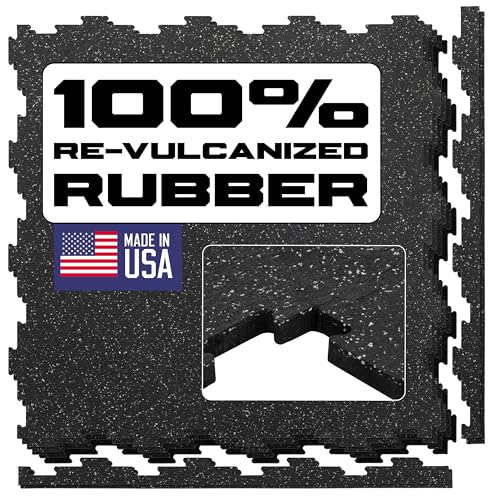
- 100% heavy-duty rubber construction
- Proudly made in the USA
- No foam or fillers used
- Slip-resistant and moisture-tolerant
Trade-offs
- Only 14 sq. ft. coverage per pack
- Each tile is only 22.5 inches, so more seams per room
Each tile is solid rubber from edge to edge, with no foam or filler, so it resists tearing, indenting, and shifting under pressure. Built for home gyms and garages, it handles equipment like racks, cardio machines, and free weights without wearing down. The slip-resistant surface also tolerates moisture, making it a practical choice for basements or outdoor training zones.
Each four-pack covers roughly 14 square feet, so outfitting a full room means buying multiple packs. The precision interlocking design keeps seams tight and flush, which helps the floor stay secure under heavy gear. This is a good choice for someone who wants American-made, solid rubber tiles rather than quick, wide coverage.
Product photos
Playsafer Commercial Grade Playground Mat
What We Like
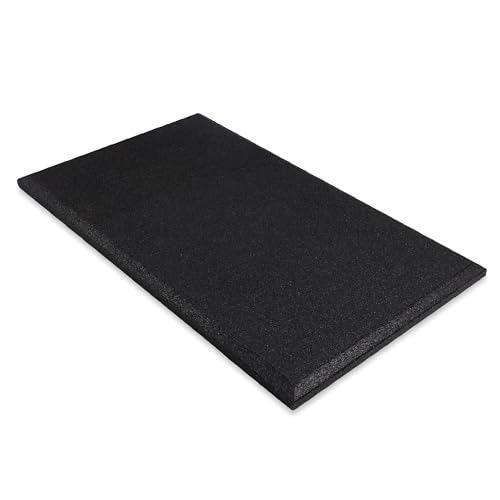
- 2-inch thickness for maximum shock absorption
- Commercial-grade rubber for high-traffic durability
- Easy to clean with hose and mild soap
- Versatile indoor and outdoor use
Trade-offs
- At 90 pounds, very heavy to move or reposition
- Fixed 54×32-inch size limits layout flexibility
If you’re setting up a dedicated deadlift platform, a playground safety zone, or a high-traffic gym area where falls and noise are real concerns, this mat gives you the cushion and durability to feel secure.
At 90 pounds and a fixed 54×32-inch rectangle, it’s not something you casually rearrange or fit into odd corners; you place it and leave it. For covering large continuous floors, interlocking tiles like the Rubber-Cal Eco-Sport offer a modular approach that can be reconfigured, while this mat gives you a thick, single-piece slab that stays exactly where you put it.
Product photos
MYOYAY Heavy Duty Rubber Flooring Mat
What We Like
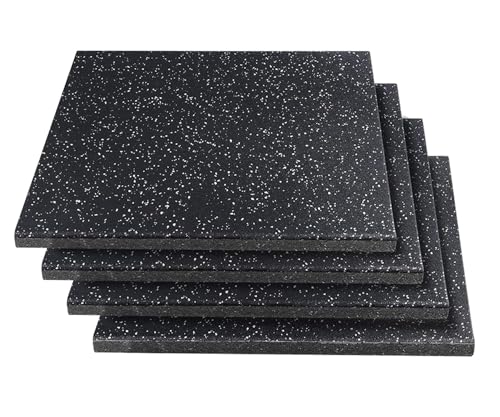
- 1-inch thickness for serious shock absorption
- Anti-vibration and anti-slip textured surface
- Includes 12 buckles for secure installation
- Water-resistant design wipes clean easily
Trade-offs
- At 1 inch thick, tiles are heavy to move
- Only 4 tiles per pack limits coverage area
A full inch of dense rubber provides shock absorption and anti-vibration for gym equipment and workouts, helping protect hard floors from impact. That thickness also contributes to sound insulation, which can reduce noise transfer to rooms below. The textured, non-slip surface offers a stable footing during exercise, and the included 12 buckles let you lock the tiles together for a secure fit. The water-resistant design wipes clean with a towel.
Each pack covers 11.12 square feet, so you’ll need multiple packs for anything larger than a small workout area. At 1 inch thick, these tiles provide more cushioning than the 3/4-inch Rubber-Cal Eco-Sport tiles, which helps absorb shock from heavy gym equipment and protects your floor. The extra thickness also means better sound insulation, so neighbors downstairs won’t hear your workout as much.
Titan Fitness Crumb Rubber Gym Flooring Roll

What We Like
- Non-slip textured surface
- Recycled rubber construction
- Reduces noise, vibration, and impact
Trade-offs
- At 100 lb, one-person handling is difficult
- 8 mm thickness offers less cushion than thicker rolls
- Single roll covers only 60 sq ft
A single roll covers 60 square feet of floor space, which is enough for a compact home gym or a dedicated deadlift platform area. The 8 mm recycled crumb rubber construction gives you a stable, non-slip surface that handles heavy drops from barbells and dumbbells without sliding around. If you want that classic commercial gym look without the interlocking seams, this roll delivers a clean, continuous floor that also cuts down on noise and vibration during intense lifting sessions.
At 100 pounds per roll, getting it into place is a two-person job. The 8 mm thickness is thinner than some other options available, such as the American Floor Mats Heavy Duty Rubber Roll which is 12 mm thick. That said, if your priority is a slip-resistant, low-maintenance surface that mimics a real gym floor without the hassle of tiles, this roll is a straightforward, practical choice.
For someone setting up a dedicated lifting area or a multi-purpose workout space who values a non-slip surface and doesn’t mind wrangling a heavy roll during installation. Not ideal for those needing extra cushion for high-impact activities like CrossFit or plyometrics.
Product photos
Playsafer Genaflex Rubber Gym Floor Mat
What We Like
- Lightweight at 28.0 pounds
- Recycled rubber for eco-friendly build
- Non-slip and stain-resistant surface
- Reduces noise, vibration, and impact
Trade-offs
- 8mm thickness offers less cushion than thicker rolls
- 4' x 4' size means more seams on large floors
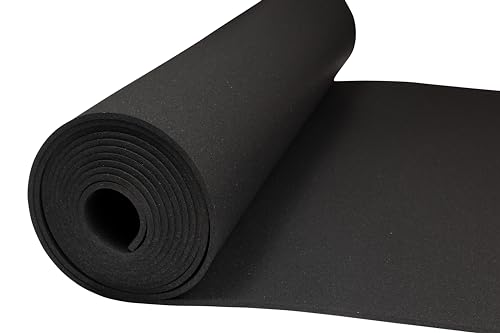
This 4′ x 4′ rubber flooring roll weighs 28.0 pounds, which is light enough for one person to carry and position without help. The recycled rubber material gives it a classic flecked look, and the non-slip, stain-resistant surface handles sweat and spills from workouts. Installation involves rolling it out, trimming to fit, and wiping clean for maintenance, no special tools needed.
The trade-off for that lightness is thickness: at 8mm, this roll provides less impact absorption than a thicker mat like the 12mm American Floor Mats Heavy Duty Rubber Roll. So if you’re dropping heavy barbells from overhead, you might want more padding underneath.
Product photos
Rubber-Cal Elephant Bark Rubber Flooring
What We Like
- UV and water resistant for outdoor use
- DIY installation without adhesive needed
- Made from recycled material
- Available in 6 colors
Trade-offs
- At 3/16 inch, thin for heavy deadlifts
- No interlocking edge for large-area alignment
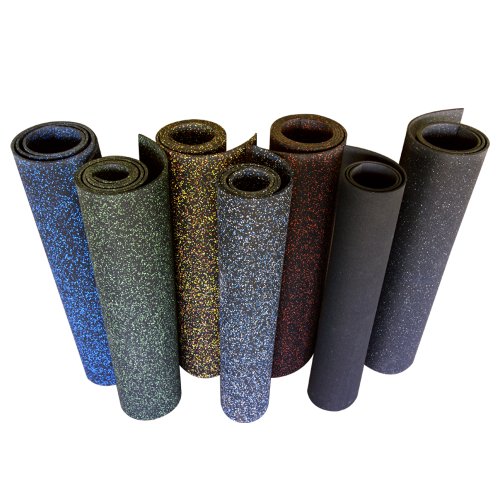
This rubber sheet comes in at 3/16 of an inch thick, which is noticeably thinner than most commercial gym mats. That slim profile means it won’t absorb the thud of a dropped barbell the way a half-inch or thicker mat would. It’s better suited for bodyweight work, light dumbbells, or cardio zones where impact protection matters less. What makes it stand out is the UV and water resistance, most gym flooring can’t handle being left on a balcony or patio without fading or warping. If you want a floor that works both indoors and outdoors, this is a rare find. The recycled rubber construction also gives it a genuine eco-friendly angle, and installation is as simple as unrolling it and trimming to fit, no glue or tape required.
The trade-off for that versatility is durability under heavy loads. At 3/16 inch thick, it lacks the cushioning you’d want under a squat rack or a heavy leg press machine. This sheet weighs 46.5 pounds and measures 4 by 12 feet, so moving it into place alone can be a challenge. But if your gym space includes a covered deck, a garage that doubles as a patio, or you simply want a low-profile, eco-conscious floor for lighter training, this mat delivers where most competitors can’t even go.
Product photos
AIRHOP Rubber Top EVA Foam Gym Flooring

What We Like
- Dual-layer rubber and EVA foam design
- Interlocking locks prevent shifting during workouts
- Waterproof surface for easy cleaning
- Supports heavy equipment and protects floors
Trade-offs
- Thinner than some commercial-grade rubber-only options
- EVA foam core can degrade faster than solid rubber under heavy impacts
The AIRHOP Rubber Top EVA Foam Gym Flooring covers 48 square feet with twelve interlocking tiles, each 0.79 inches thick. That dual-layer build, textured rubber on top, high-density EVA foam underneath, gives you a non-slip surface that absorbs impact from dropping dumbbells or setting down a barbell. It handles heavy machinery without scratching your subfloor, and the waterproof top wipes clean with a damp cloth. For anyone setting up a home gym on a budget, this is the kind of practical, no-fuss flooring that lets you focus on your workout instead of worrying about dents or dust.
The EVA foam core, while great for shock absorption, can feel softer under something like a heavy squat rack or leg press over time compared to solid rubber. The tiles are 24 inches on each side, so you will have fewer seams than some smaller tile options. If your setup stays mostly bodyweight, kettlebells, and moderate weights, the AIRHOP delivers real value. For a garage gym with a heavy deadlift platform, you might want a thicker all-rubber mat instead.
Product photos
How We Evaluated Commercial Gym Flooring
We researched each product’s material construction (virgin rubber, recycled rubber, or EVA blends), thickness measurements, and installation systems. Manufacturer documentation provided density ratings, slip-resistance claims, and moisture tolerance specs. Owner feedback patterns across multiple sources revealed real-world durability under barbell drops, treadmill vibrations, and daily foot traffic.
The four criteria that mattered most were thickness for impact absorption, material quality for long-term wear, installation method for layout flexibility, and coverage value per pack. A 2-inch mat like the Playsafer Commercial Grade Playground Mat serves a permanent heavy station, while a lightweight roll like the Playsafer Genaflex suits multi-purpose studios that reconfigure often. We also looked at durable rubber gym flooring options to understand how different rubber blends perform under repeated load.
This evaluation is based on specifications and owner experiences. The goal is to narrow your options so you can confidently choose based on your space, budget, and workout intensity.
What To Look For In Commercial Gym Flooring
Commercial gym flooring must absorb impact, resist wear, and stay stable under heavy loads. The right choice depends on your workout type, room size, and whether you need modular flexibility or full coverage.
Focus on thickness (8 mm to 2 inches), material composition (virgin rubber vs. Recycled vs. Foam blends), and installation method (interlocking tiles, rolls, or loose-lay mats). Match the floor to your heaviest activity, not your lightest.
Thickness and Impact Protection
Thickness is the single most important factor for protecting your subfloor and your equipment. For general weight lifting and cardio, 3/8-inch to 1/2-inch tiles or rolls provide adequate cushion. For Olympic lifting, deadlifts, or CrossFit-style drops, look for 3/4-inch to 2-inch mats.
The Playsafer Commercial Grade Playground Mat at 2 inches thick offers maximum shock absorption for permanent heavy stations, while the 1-inch MYOYAY Heavy Duty Rubber Flooring Mat balances serious impact protection with reasonable handling. Thinner options like the Rubber-Cal Elephant Bark at 3/16 inch work for light bodyweight training or covered outdoor areas but won’t protect floors from dropped barbells.
Material Composition and Durability
Solid rubber (virgin or recycled) outperforms EVA foam blends in commercial settings where heavy equipment stays in place for years. The Grytfit Interlocking Tiles use 100% heavy-duty rubber with no foam fillers, making them moisture-tolerant and long-lived. The American Floor Mats Heavy Duty Rubber Roll uses half-inch solid rubber for full equipment coverage.
Dual-layer options like the AIRHOP Rubber Top EVA Foam Gym Flooring combine a rubber wear layer with a foam core for affordability, but the foam can degrade faster under continuous static loads. For a comprehensive breakdown of material types, our types of gym floors resource compares rubber, foam, and vinyl options.
Installation Method and Layout Flexibility
Interlocking tiles offer the most flexibility for odd-shaped rooms, future reconfiguration, or partial coverage. The Rubber-Cal Eco-Sport Interlocking Tiles and American Floor Mats Fit-Lock Rubber Tiles both install without adhesive and can be expanded later. Rolls provide full coverage for fixed rectangular areas but are heavy to handle, the Titan Fitness Crumb Rubber Gym Flooring Roll weighs 100 pounds and is best installed with a helper. Loose-lay mats like the Playsafer Genaflex are lightweight and portable but shift under heavy equipment if not secured.
- Measure your room dimensions and account for seam placement before choosing tile or roll formats.
- Check weight per tile or roll to confirm you can handle installation logistics.
- Verify that the product includes border or corner pieces if you want finished edges with interlocking tiles.
- Consider moisture resistance if the floor will go in a basement, garage, or covered outdoor space.
- Look for slip-resistant surface textures, especially for high-sweat zones near cardio equipment.
Thicker is safer for heavy lifts, but modular tiles let you adapt your floor plan later.
Commercial Gym Flooring Compared
The table below compares each pick’s thickness, material, coverage, and best use case so you can match a floor to your workout space at a glance.
| Product | Thickness | Material | Tile Size |
|---|---|---|---|
| Rubber-Cal Eco-Sport Interlocking Tiles | 3/4 inch | Rubber | 19.5 x 19.5 inches |
| American Floor Mats Heavy Duty Rubber Roll | 1/2 in (12 mm) | Solid rubber | 4 ft x 5 ft |
| American Floor Mats Fit-Lock Rubber Tiles | 3/8 inch | Rubber | 24 x 24 inches |
| Grytfit Interlocking Rubber Floor Tiles | N/A | 100% solid rubber | 22.5" x 22.5" |
| Playsafer Commercial Grade Playground Mat | 2 inches | Commercial-grade rubber | 54 x 32 inches |
| MYOYAY Heavy Duty Rubber Flooring Mat | 1 inch | High density rubber | 20" x 20" |
| Titan Fitness Crumb Rubber Gym Flooring Roll | 8 mm | Recycled crumb rubber | 15.3 ft x 4 ft |
| Playsafer Genaflex Rubber Gym Floor Mat | 8mm | Recycled rubber | 4' x 4' |
| Rubber-Cal Elephant Bark Rubber Flooring | 3/16 inch | Recycled rubber | 4 ft x 12 ft |
| AIRHOP Rubber Top EVA Foam Gym Flooring | 0.79 inches | Rubber top / EVA foam bottom | 24 x 24 inches |
Frequently Asked Questions
What thickness of commercial gym flooring do I need for heavy deadlifts?
For heavy deadlifts and Olympic lifting, look for at least 3/4-inch thick rubber flooring. The Rubber-Cal Eco-Sport Interlocking Tiles at 3/4 inch handle dropped barbells well, while the 2-inch Playsafer Commercial Grade Playground Mat provides maximum protection for permanent heavy stations. Thinner mats under 1/2 inch risk transferring impact through to the subfloor.
Can I install interlocking gym tiles directly on concrete?
Yes, interlocking rubber tiles like the Rubber-Cal Eco-Sport and Grytfit Interlocking Tiles install directly on concrete without adhesive. The rubber grips the floor naturally and the interlocking edges keep tiles from shifting. Make sure the concrete is clean, dry, and level before installation.
How do I clean and maintain commercial rubber gym flooring?
Sweep or vacuum regularly to remove dust and debris. For deeper cleaning, use a mild soap and water solution with a mop or hose, most rubber floors are water-resistant. Avoid harsh chemicals or oil-based cleaners that can degrade the rubber. Our cleaning gym floors guide offers specific product recommendations for maintaining commercial surfaces.
Is recycled rubber gym flooring as durable as virgin rubber?
High-quality recycled rubber flooring, like the Titan Fitness Crumb Rubber Gym Flooring Roll and Playsafer Genaflex, is very durable for commercial use. Virgin rubber typically offers slightly better consistency and less odor, but recycled rubber performs well under heavy loads and is more eco-friendly. Avoid EVA foam cores for areas under continuous heavy equipment.
What size gym tiles do I need to cover a standard garage gym?
A standard single-car garage is about 12×20 feet, requiring roughly 240 square feet of coverage. The Rubber-Cal Eco-Sport Interlocking Tiles come in 19.5-inch squares, so you’ll need multiple packs. For larger spaces, consider the American Floor Mats Heavy Duty Rubber Roll in 4×5-foot sections or the Playsafer Genaflex in 4×4-foot mats to reduce seam count.
The Bottom Line
The Rubber-Cal Eco-Sport Interlocking Tiles are the best overall choice for most commercial and home gym owners. Their 3/4-inch thickness absorbs heavy impacts, the interlocking design adapts to any room shape, and the rubber construction holds up to years of use. They work equally well indoors and outdoors, making them the most versatile pick in this lineup.
If you need full coverage under a single piece of heavy equipment, the American Floor Mats Heavy Duty Rubber Roll delivers half-inch solid rubber in a simple roll-out format. For a permanent heavy-lifting station where maximum shock absorption matters, the Playsafer Commercial Grade Playground Mat at 2 inches thick is the clear choice. Budget-conscious buyers should look at the AIRHOP Rubber Top EVA Foam Gym Flooring for moderate home use.
The single most important buying factor is thickness: match the floor’s thickness to your heaviest activity, and everything else, material, installation method, coverage, falls into place from there.
