
9 Best Fitness Trackers For Heart Health in 2026
This post contains affiliate links. As an Amazon Associate, we earn from qualifying purchases.
For accurate, round-the-clock heart health tracking, the Apple Watch Series 12 GPS 42mm Smartwatch is our best overall pick thanks to its frequent heart rate and HRV sensing. Runners should look to the Garmin Forerunner 165 for adaptive training guidance, while those wanting a deeper recovery picture will appreciate the Garmin vívoactive 5.
The challenge with choosing a heart health tracker isn’t finding one, it’s finding one that delivers data you can actually act on. Many wearables claim to monitor your heart, but few provide the combination of accuracy and actionable insights like recovery time or HRV trends. You also need features that match your lifestyle, whether that means daily charging or multi-day battery life.
We built this guide by analyzing manufacturer specifications, expert consensus on sensor accuracy, and patterns in long-term owner feedback. Our goal is to help you match a tracker’s strengths to your real priorities, from AFib detection to sleep coaching.
Top 9 Fitness Trackers For Heart Health in the Market
Certain content that appears on this site comes from Amazon. This content is provided "as is" and is subject to change or removal at any time.
The Best Fitness Trackers For Heart Health, Reviewed
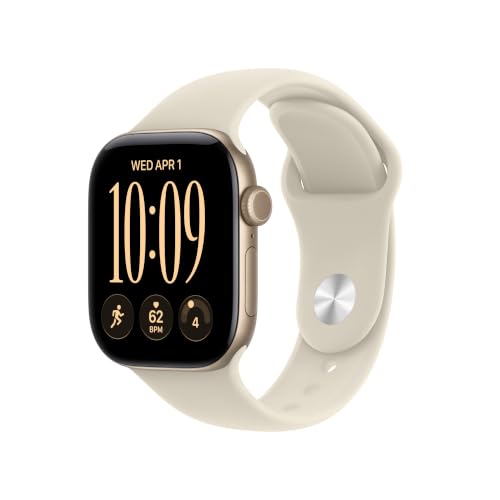
Apple Watch Series 12 GPS 42mm Smartwatch
What We Like
- Most accurate heart rate sensing in a wearable
- HRV measured every 5 minutes for stress insights
- Background heart rate readings every 5 seconds
- Fall and crash detection with emergency SOS
Trade-offs
- 24-hour battery needs daily charging
- Siri AI features rolling out in English only
- Some Audio Intelligence features delayed to late 2026
A heart rate reading every five seconds and HRV tracked as often as every five minutes means this watch keeps a close eye on your cardiovascular system. That constant stream of data feeds into the Vitals app, a daily sleep score, and a readiness experience that tells you whether to push hard or take it easy. For anyone serious about understanding their heart’s recovery and stress patterns, the Series 12 gives you the raw numbers to make smarter daily decisions without needing a medical degree to interpret them.
All that sensing does draw power, so the battery lasts up to 24 hours under normal use. That means you will want to get into the habit of charging it each night. On the plus side, a 15-minute fast charge gives you enough juice for up to 12 hours of normal use, so a quick top-off while you shower can get you through the day. Reviewers note that the trade-off is well worth it for the depth of health data you receive, from heart rate variability readings every five minutes to background heart rate checks every five seconds.
Product photos
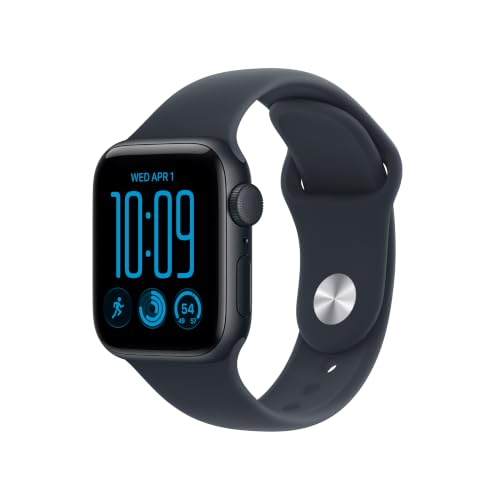
Apple Watch SE 3 GPS 40mm Smartwatch
What We Like
- Temperature sensing for Vitals app
- Sleep apnea notifications with disclaimer
Trade-offs
- 18-hour battery needs daily charging
- Requires iPhone for full connectivity
- No built-in ECG sensor for heart health
The trade-off is that 18-hour battery life still demands a nightly charge habit, so if you forget to plug it in, you might wake up to a dead watch. The SE 3 also requires an iPhone for full connectivity, which limits its use for Android owners. For everyday heart rate, sleep tracking, and safety monitoring with fast recharge, it remains a practical option for iPhone users.
Product photos
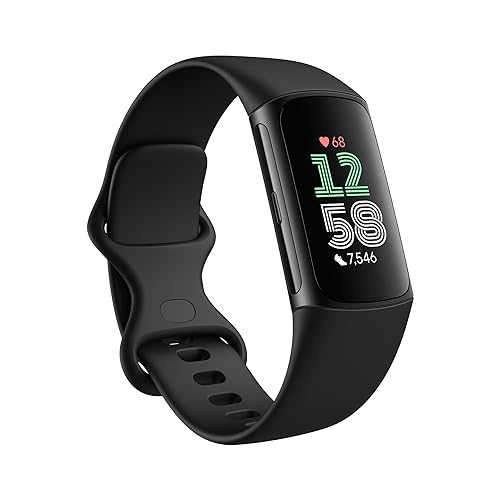
Google Fitbit Charge 6 Fitness Tracker
What We Like
- Real-time heart rate on exercise equipment
- Built-in GPS for outdoor tracking
- 40+ exercise modes for variety
- Stress management and sleep scores
Trade-offs
- Requires compatible exercise machines for heart rate link
- Google Health Premium subscription needed after trial
The Charge 6 can show your heart rate in real time on compatible exercise machines like treadmills and ellipticals, which means you can check your pulse on the machine’s display instead of your wrist. That direct feedback helps you stay in your target zone during cardio sessions. With built-in GPS for outdoor routes and more than 40 exercise modes, the tracker keeps heart data front and center without extra steps.
The real-time heart rate feature only works when you link the Charge 6 to compatible exercise machines like treadmills and ellipticals, so on older equipment or at home you won’t get that direct feedback. The Garmin vívoactive 5 offers 24/7 health monitoring, but the Charge 6 focuses on gym-based heart rate display. You also get a three-month trial of Google Health Premium, though the full coaching tools require a subscription after that. Someone who regularly uses modern cardio machines and wants live heart-rate feedback will find this a focused tool.
Garmin vívoactive 5 GPS Smartwatch

What We Like
- Body Battery shows when to rest
- Recovery time after each workout
- Sleep coaching with HRV status
- 11-day battery for uninterrupted tracking
Trade-offs
- Recovery insights are estimates, not medical data
- No built-in ECG or blood pressure monitoring
The Garmin vívoactive 5’s Body Battery energy monitoring, combined with recovery time and workout benefit insights, gives you a clear picture of when your body needs a break versus when it’s ready to push. For anyone focused on heart health, that means you’re not just tracking steps or heart rate; you’re learning how each workout affects your system and how long to wait before the next one. It suits the person who wants to train smarter, not harder, and values understanding their own recovery rhythm over raw data dumps.
Up to 11 days of battery life in smartwatch mode means you can wear the vívoactive 5 through a full work week and weekend without hunting for a charger. Its Body Battery energy monitoring gives personalized insights based on sleep, naps, stress, and workouts, helping you decide when to push hard or take it easy. Compared to the Garmin Forerunner 165, which is built specifically for runners, this watch includes over 30 built-in sports apps like walking, cycling, HIIT, swimming, and golf, plus a wheelchair mode that tracks pushes instead of steps.
Garmin Forerunner 165 Running Smartwatch

What We Like
- Personalized daily suggested workouts adapt to recovery
- Wrist-based heart rate with training effect labels
- Lightweight 43mm design with button controls
- Safety features: incident detection and assistance
Trade-offs
- Heart rate data is an estimation, not medical grade
- Safety features require paired smartphone and network
A built-in GPS tracks pace, distance, and speed, and wrist-based heart rate is included, so you can run without your phone and still get running data. Daily suggested workouts adapt based on your performance and recovery, which takes the guesswork out of training for anyone looking to improve. Training effect labels show how each session impacts your fitness and what the primary benefit is, such as building endurance or recovery. At 43mm and 0.1 pounds, it is light enough to wear all day without much notice.
The wrist-based heart rate is a close estimation rather than a clinical measurement. So if you need pinpoint accuracy for a cardiac condition, a chest strap or medical device would be more reliable. Compared to the Apple Watch Series 12, this Garmin focuses on running-specific features like recovery time and race-adaptive plans, while the Apple Watch offers a broader smartwatch experience. It is built for the runner who wants coaching, safety features like incident detection, and a battery that lasts up to 11 days, not for someone who needs medical-grade heart monitoring.
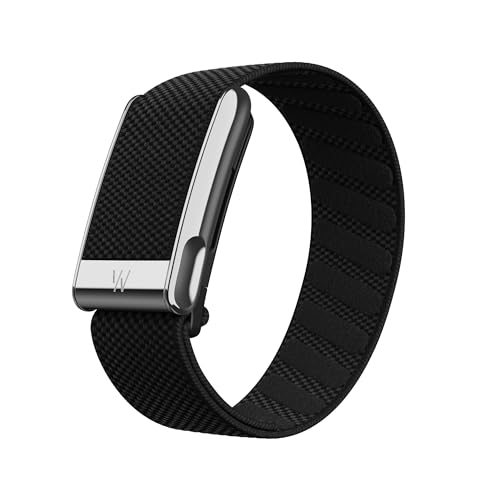
WHOOP 5.0 Screenless Fitness Wearable
What We Like
- Daily blood pressure insights from overnight data
- 99%+ heart rate and HRV accuracy
- Healthspan tracks biological aging pace
Trade-offs
- Screenless design means no glanceable stats
- No built-in GPS for outdoor route tracking
Blood pressure estimates for systolic and diastolic ranges come from overnight data, while the Health Monitor tracks resting heart rate, HRV, blood oxygen, and skin temperature with 99%+ accuracy for both heart rate and HRV. The Healthspan feature analyzes nine key metrics to calculate your WHOOP Age and Pace of Aging, showing whether your body is aging faster or slower than your chronological age. For someone focused on catching irregular heart rhythms early, this is the most direct tool in the guide.
There is no screen, so you cannot glance at your heart rate mid-run or see notifications without pulling out your phone. It also comes with a 12-month membership, which means you pay for the service upfront. Compared to the Apple Watch Series 12, which offers ECG and a full touchscreen with GPS, the WHOOP is lighter on your wrist and lasts over two weeks on a charge, but it will not replace your phone for navigation or quick checks. Pick this if heart monitoring depth matters more than convenience.
Samsung Galaxy Watch 8 40mm Smartwatch
What We Like
- Advanced Sleep Coaching with Bedtime Guidance
- Blood pressure monitoring on wrist
- Running Coach for 5K and marathon training
- Lightweight 0.1 lb design for all-day wear
Trade-offs
- Blood pressure calibration requires separate cuff
- No built-in GPS for phone-free run tracking
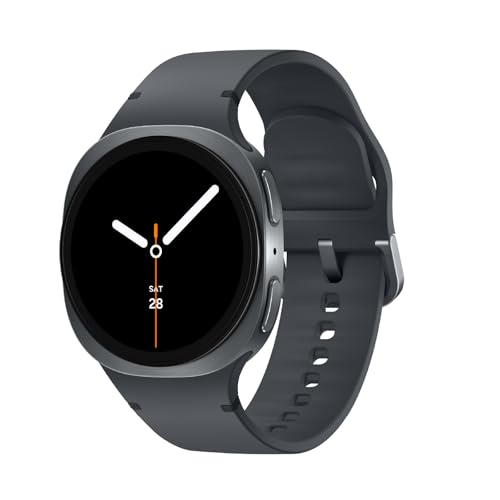
The Samsung Galaxy Watch 8 40mm packs a dedicated Advanced Sleep Coaching system that actually guides you toward your optimal bedtime rather than just tracking how long you tossed. That Bedtime Guidance feature helps you build a consistent wind-down routine, which matters more for heart health than most people realize, poor sleep strains your cardiovascular system over time. It also keeps tabs on your blood pressure directly from your wrist, so you can spot trends between your sleep quality and those systolic numbers. At just 0.1 pounds, this thing disappears on your wrist, making it easy to wear through the night without that clunky feeling that makes you want to rip off a tracker at 2 a.m.
Blood pressure monitoring requires a separate calibration cuff, which adds an extra step and purchase if you want those readings to be accurate. The vívoactive 5 tracks health around the clock, but the Galaxy Watch 8’s sleep coaching is designed to guide you toward better sleep habits. The Bluetooth connection means you’ll need your phone nearby for some features, but the Running Coach still gives real-time feedback for 5K and marathon training.
Product photos
Samsung Galaxy Watch9 40mm Smartwatch
What We Like
- Single Heart Health Score simplifies tracking
- Blood pressure monitoring with calibration
- Advanced Sleep Coaching for personalized guidance
Trade-offs
- Blood pressure cuff sold separately for calibration
- Heart Health Score requires sleep tracking overnight
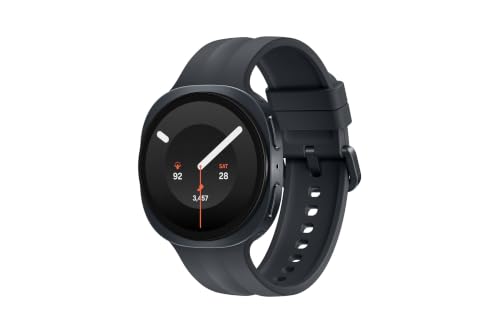
The single Heart Health Score pulls together sleep time, BMI, activity, and vascular load into one number. So you don’t have to juggle four separate metrics to understand your cardiovascular wellness. That simplicity makes this watch ideal for anyone who wants a clear daily snapshot of heart health without digging through graphs. The Advanced Sleep Coaching and Bedtime Guidance also help you build better sleep habits, which directly supports that score, and the soft sports band with a breathable air pocket design means you can wear it all night without discomfort.
Blood pressure monitoring requires a separate cuff for initial calibration, so it’s not a fully standalone feature out of the box. Compared to the vívoactive 5, which tracks health around the clock without extra accessories, the Galaxy Watch9 asks a bit more upfront effort. But if you’re willing to take that step, the consolidated Heart Health Score and sleep coaching give you a more integrated picture of your heart than most trackers in this guide.
Product photos
Fitbit Inspire 3 Fitness Tracker
What We Like
- Daily Stress Management Score tracks well-being
- 24/7 heart rate with irregular rhythm notifications
- Relax breathing sessions for on-demand calm
- 3-month Google Health Premium membership included
Trade-offs
- Small screen limits glanceable data at a glance
- Requires phone nearby for GPS-based distance and pace
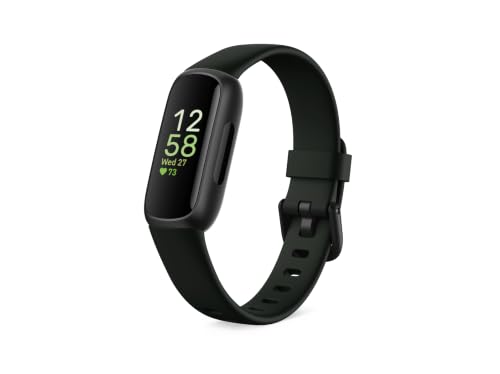
A daily Stress Management Score and guided breathing sessions help you monitor mental and cardiac well-being without feeling overwhelmed. The 24/7 heart rate monitor tracks your pulse around the clock, and the device can send irregular heart rhythm notifications, so you get a quiet safety net during work, workouts, or sleep. It also tracks SpO2 and resting heart rate, while automatic sleep tracking and a daily Sleep Score help you improve your sleep quality. For someone juggling a busy schedule and trying to build sustainable fitness habits, this is the kind of gentle nudge that actually sticks.
The Inspire 3 is designed for managing daily strain and recovery rather than mapping every outdoor run. If you want precise distance or pace data without carrying your phone, you would need a model with built-in GPS. The Apple Watch SE 3 offers that, but here you get a lighter, more focused experience that prioritizes stress and sleep over full smartwatch features.
Product photos
How We Evaluated Fitness Trackers For Heart Health
We started by examining the core sensor technology in each device. This meant looking at the type of optical heart rate sensor used, the frequency of background readings, and whether the device tracks Heart Rate Variability (HRV), a key metric for recovery and stress. We also cross-referenced this with manufacturer claims about accuracy and any relevant clinical studies.
The criteria that mattered most were sensor accuracy and update frequency. Also important were the breadth of heart health features such as ECG, AFib detection, and blood pressure monitoring. Battery life’s impact on continuous tracking and the overall value of the insights provided also played a role. A tracker that takes heart rate every five seconds is far more useful than one that samples every few minutes.
This evaluation synthesizes information from technical specs, expert round-ups, and the reported experiences of thousands of users to identify the most reliable options. For a deeper look at how these devices compare, check out our guide on comparing heart rate monitors.
What To Look For In Fitness Trackers For Heart Health
Choosing a tracker for heart health means looking beyond step counts. You need a device that captures meaningful data consistently and presents it in a way that supports your goals.
Focus on the frequency of heart rate readings, the inclusion of HRV tracking, and the specific heart health features (like ECG or irregular rhythm notifications) that match your needs.
Heart Rate Accuracy and Sampling Rate
The most important factor is how often and how accurately the device measures your pulse. A tracker that records your heart rate every second during exercise and every few seconds at rest provides a much more complete picture than one that takes a reading every five minutes. Look for devices that use multiple optical sensors and advanced algorithms to reduce motion artifacts. For a closer look at how these compare, see our analysis of heart rate monitoring trackers.
Heart Rate Variability (HRV) and Recovery Insights
HRV measures the time variation between heartbeats and is a powerful indicator of your nervous system’s state and recovery readiness. Trackers that measure HRV overnight or during sleep can provide a daily readiness score, telling you when to push harder and when to rest. This feature is critical for anyone balancing training, stress, and sleep.
Specific Heart Health Features
Beyond basic heart rate, some trackers offer advanced sensors. An electrocardiogram (ECG) can check for signs of atrial fibrillation (AFib) on the spot. Other devices offer passive AFib detection, irregular rhythm notifications, or even blood pressure monitoring (though the latter typically requires calibration with a cuff). If you have specific health concerns, prioritize a tracker that offers the corresponding clinical-grade feature. For more on this category, explore our list of best fitness trackers for heart rate.
- Check if the device requires a smartphone for core heart health features (like ECG reports or GPS tracking).
- Confirm the battery life meets your needs for continuous overnight HRV tracking.
- See if the data can be exported to your preferred health platform or doctor.
A heart health tracker is only useful if you wear it consistently, choose one with a comfortable design and a battery that lasts long enough for your routine.
Fitness Trackers For Heart Health Compared
The table below compares the nine trackers side-by-side on heart health features, battery life, and key trade-offs to help you narrow your choice.
| Product | Heart Rate Monitoring | Battery Life | Heart Health Features |
|---|---|---|---|
| Apple Watch Series 12 GPS 42mm Smartwatch | Every 5 seconds | Up to 24 hours | HRV every 5 minutes |
| Apple Watch SE 3 GPS 40mm Smartwatch | Heart rate sensor | 18 hours | N/A |
| Google Fitbit Charge 6 Fitness Tracker | 24/7 + real-time on equipment | N/A | N/A |
| Garmin vívoactive 5 GPS Smartwatch | Wrist-based 24/7 | Up to 11 days | Body Battery, HRV status |
| Garmin Forerunner 165 Running Smartwatch | Wrist-based heart rate | Up to 11 days | HRV status |
| WHOOP 5.0 Screenless Fitness Wearable | Heart rate | 14+ days | ECG, AFib detection, blood pressure insights |
| Samsung Galaxy Watch 8 40mm Smartwatch | Heart rate + blood pressure | Long-lasting charge | Blood pressure |
| Samsung Galaxy Watch9 40mm Smartwatch | Heart rate tracking | N/A | Heart Health Score, blood pressure |
| Fitbit Inspire 3 Fitness Tracker | 24/7 heart rate | N/A | Irregular heart rhythm notification |
Frequently Asked Questions
What is the most accurate fitness tracker for heart rate?
The Apple Watch Series 12 is widely considered the most accurate consumer wearable for heart rate sensing due to its frequent sampling and advanced sensor array. For clinical-grade accuracy, chest strap monitors remain the gold standard, but wrist-based trackers have closed the gap significantly in recent years.
Can a fitness tracker detect AFib?
Yes, several trackers can detect atrial fibrillation. The WHOOP 5.0 is specifically noted for advanced AFib detection, while the Apple Watch Series 12 offers on-demand ECG and irregular rhythm notifications. These features are screening tools and should not replace a doctor’s diagnosis.
What is the difference between heart rate and HRV on a fitness tracker?
Heart rate is the number of beats per minute, while Heart Rate Variability (HRV) measures the time interval between beats. HRV is a more nuanced metric that reflects your autonomic nervous system’s balance, helping you gauge recovery, stress, and overall readiness for exercise.
Do I need a fitness tracker with ECG?
Not necessarily. An ECG is useful if you have symptoms like heart palpitations or a family history of AFib. For general fitness and recovery tracking, a standard optical heart rate sensor with HRV monitoring is sufficient.
How do I use heart rate zones for training?
Heart rate zones are percentage ranges of your maximum heart rate. Zone 2 is for endurance, Zone 3 improves aerobic fitness, and Zone 4-5 builds speed and power. Many trackers, like the Garmin Forerunner 165, provide real-time zone feedback. For a complete method, see our guide on heart rate zones for training.
The Bottom Line
The Apple Watch Series 12 is the best overall fitness tracker for heart health because it combines the most accurate heart rate and HRV sensing with safety features like fall detection and emergency SOS. It is ideal for anyone who wants the fullest picture of their cardiac health in a smartwatch and doesn’t mind daily charging.
If you are a runner, the Garmin Forerunner 165 offers adaptive daily workouts that respond to your recovery. For a budget-friendly option focused on stress and sleep, the Fitbit Inspire 3 is a choice. Those seeking advanced AFib detection should consider the screenless WHOOP 5.0.
The single most important factor is consistent wear. Pick a tracker that is comfortable enough to sleep in (for overnight HRV) and has a battery that supports your lifestyle. No amount of data helps if the tracker is sitting in a drawer.
