
10 Best Gym Balls For Pregnancy in 2026
This post contains affiliate links. As an Amazon Associate, we earn from qualifying purchases.
The best gym ball for pregnancy is the ProBody Pilates Yoga Ball, a pick recommended by OBs, midwives, and doulas for its anti-burst safety and five height-matched sizes. For app-guided workouts from preconception through postpartum, the Momcozy BirthEase Pregnancy Ball Set brings personalized training plans. And the BABYGO Birthing Ball offers strong value with a full pregnancy exercise book included.
Pregnancy changes your center of gravity and puts new demands on your core, hips, and lower back. A gym ball helps you sit, stretch, and move in ways that ease discomfort, prepare your body for labor, and support recovery, but only if the size and safety specs match your body.
We built this guide by examining manufacturer specifications, safety certifications, and expert recommendations alongside patterns in owner feedback. We focused on the features that matter most for pregnancy: anti-burst construction, size options, surface stability, and whether the ball comes with guidance tailored to each trimester.
Top 10 Gym Balls For Pregnancy in the Market
Certain content that appears on this site comes from Amazon. This content is provided "as is" and is subject to change or removal at any time.
The Best Gym Balls For Pregnancy, Reviewed
ProBody Pilates Yoga Ball

What We Like
- Recommended by OBs, midwives, and doulas
- Gym-grade anti-burst PVC for safety
- 5 size options for height-matched fit
- 12-month replacement promise
Trade-offs
- Requires 24-hour settling before full inflation
- At 1.8 lbs, lighter than some competing balls
An anti-burst rating tested to 880 pounds means this ball deflates slowly if punctured rather than bursting, the safety pattern physical therapy clinics look for. With five size options from 45 cm to 85 cm, you can match the ball to your height for proper hip and knee angles during pregnancy exercises or desk work. Obstetricians, midwives, doulas, and physical therapists recommend it, so it’s a choice you can trust for prenatal and postpartum use.
The trade-off is patience: you need to inflate it to 80-90 percent, let it settle 24 hours, then top it up. That first-day wait is a small hurdle compared to the Momcozy BirthEase set, which comes with an anti-slip base but weighs over six pounds and includes app-guided courses. The ProBody keeps things simple and light at 1.8 pounds, making it easy to move between rooms. If you want a ball that OBs recommend and that comes in a size matched to your height, this is a straightforward option.
Product photos
Momcozy BirthEase Pregnancy Ball Set

What We Like
- App-guided courses from preconception to postpartum
- Personalized training plans with progress tracking
- Anti-slip surface and reinforced base for stability
- BPA-free and anti-burst for safety
Trade-offs
- At 6.1 lb, heavier to move than lighter balls
- Relies on smartphone app for full benefits
A 330-pound load capacity means this ball handles pregnancy and postpartum use without wobbling, and the textured anti-slip surface plus reinforced base keep you steady during gentle stretches or seated labor prep. What sets this set apart is the companion app: it offers stage-based video courses designed by maternal movement specialists, so you get guided exercise plans that evolve from preconception through recovery. The personalized training plans and progress tracking make it easy to stay consistent, even if you’re new to working out at home. This set is for someone who wants more than just a ball, they want a structured, supportive program wrapped around it.
The Momcozy BirthEase Pregnancy Ball Set weighs 6.1 pounds, which is noticeably heavier than lighter options like the 1.8-pound ProBody Pilates Yoga Ball. That might matter if you plan to move it between rooms frequently. The app integration means you’ll need your phone or tablet handy to get the full value. But if you’re the type who appreciates having a coach in your pocket and prefers guided sessions over figuring it out on your own, the Momcozy set delivers a complete experience that most pregnancy balls leave out.
Product photos
BABYGO Birthing Ball

What We Like
- 2,200 lb load capacity for safety
- 100-page pregnancy book with 40+ exercises
- Hypoallergenic, latex-free, phthalate-free materials
- Non-slip textured surface for stability
Trade-offs
- 75 cm size limits tall users over 5'10"
- PVC material not biodegradable
- Book adds weight for travel
A 2 mm anti-burst wall tested to 2,200 lb means the ball deflates slowly if punctured rather than popping, so you can sit and move without worrying about sudden collapse. The included 100-page pregnancy book gives you 40+ trimester-specific exercises, labor positions, and postpartum recovery moves, turning the ball into a guide you can follow from bump to birth. It suits anyone who wants a clear routine without hunting for separate guides.
Trideer Pregnancy Ball
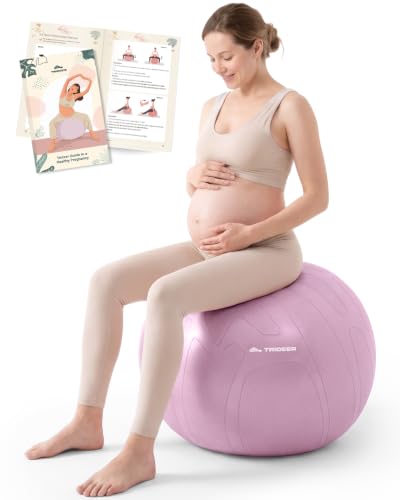
What We Like
- Anti-burst honeycomb PVC up to 550 lbs
- Non-slip surface pattern for stability
- Includes trimester workout guide
- Free from lead, cadmium, 10 phthalates
Trade-offs
- At 4.6 lb, heavier to move around
- No pump included for inflation
A 550-pound load capacity and 1.7mm anti-burst honeycomb PVC mean this ball stays supportive even during active labor positioning or heavier use, so you can lean, stretch, and rock without second-guessing the floor beneath you. The non-slip surface pattern adds extra grip, which helps keep the ball steady on hardwood or tile. It suits moms who want a sturdy, safety-minded ball with built-in guidance, thanks to the trimester-by-trimester workout instructions that come in the box.
At 4.6 pounds, this ball is noticeably heavier than the ProBody Pilates Yoga Ball (1.8 lb), so you won’t want to haul it from room to room daily. That heft comes from the thicker PVC that gives you the higher load limit, but if you plan to stash it away after each session, a lighter ball may be more convenient. For anyone who prioritizes stability and a higher weight capacity over portability, this one delivers real peace of mind.
ProBody Pilates Pregnancy Ball
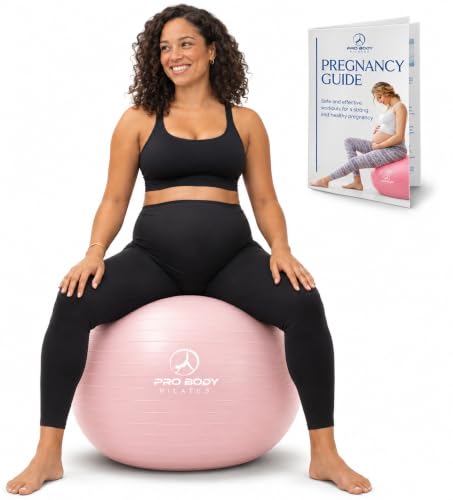
What We Like
- 1,000 lb static-load rating
- CA 10P certified for safety
- Includes trimester-by-trimester exercise book
Trade-offs
- Needs 2-3 days to fully stretch before use
- At 3.4 lb, lighter than some sturdier options
A 1,000 lb static-load rating and CA 10P certification mean this ball can handle the extra demands of pregnancy without the worry of sudden deflation. It comes with a full pregnancy book that walks you through trimester-specific exercises, pelvic tilts, and labor-prep movements, so you have a clear guide from day one. First-time moms in the third trimester use it to ease lower-back pressure, and doulas and midwives reach for it as a birth ball during labor and for optimal fetal positioning.
Patience is required: the instructions ask you to inflate to 80%, let the ball stretch for a few hours (ideally 2-3 days), then top it off. That wait ensures the PVC settles to the right size, but it is not instant gratification. The ProBody skips the anti-slip base and app courses that come with the Momcozy BirthEase set, relying on the book alone for guidance. If you prefer a guided app experience, the Momcozy might feel more modern, but for straightforward, midwife-trusted design with a proven safety rating, this ball delivers exactly what it promises.
Product photos
Baby Bump Birthing Ball

What We Like
- Anti-burst design for safety
- Non-slip textured surface
- Quick inflation pump included
- Supports up to 330 lbs
Trade-offs
- Only one size available
- No size options for shorter or taller users
The anti-burst design supports up to 330 lbs, which means the ball is built to handle typical use during pregnancy and labor without bursting. The non-slip textured surface helps keep you stable while sitting or stretching, and the included pump makes setup quick. This ball is a straightforward tool for anyone who wants a safe, durable option for maternity care and birth preparation.
This ball comes in just one size, so if you’re shorter or taller, you may need to check your fit against standard sizing guides. The Baby Bump Ball is simpler and lighter at 2.0 pounds, less to store, but also less extra support than the Momcozy BirthEase set, which includes an anti-slip base and app courses. For someone who wants a straightforward, no-fuss ball for labor, it delivers exactly that.
Product photos
Trideer Yoga Ball

What We Like
- Anti-slip frosted surface for stability
- Burst-resistant slow air release
- Quick-inflation pump included
- Five sizes to fit different heights
Trade-offs
- No pregnancy-specific guide or app included
A 330-pound max load and burst-resistant slow air release mean this ball handles pregnancy workouts without suddenly letting you down, literally. The frosted surface with anti-slip stripes keeps it planted on the floor and steady under your hips, so you can focus on gentle core work or just bouncing through back tension. For someone who wants a reliable, no-frills ball that covers the basics of prenatal movement without spending extra, this is the practical pick.
The trade-off shows up if you want more than the ball itself. But for the essential stability and safety features at a budget-friendly cost, it delivers exactly what a pregnancy ball needs to do.
Product photos
YOTTOY Exercise Ball
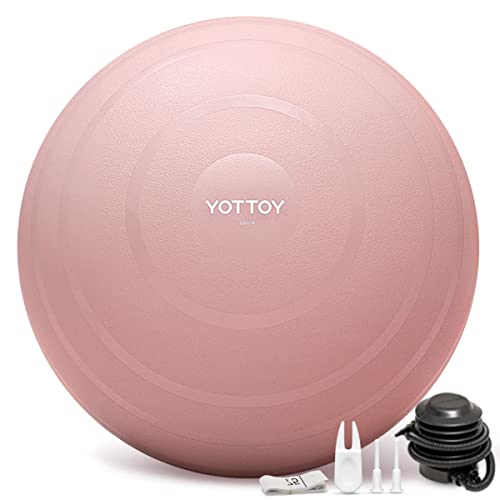
What We Like
- 2.8 mm thickened anti-burst construction
- 2000 lb load capacity for safety
- Exclusive anti-slip texture for grip
- Odorless and resilient PVC material
Trade-offs
- Single 25.6 inch size limits height options
- No exercise guide or app included
A 2.8 mm thickened wall with slow air leakage even when punctured, plus a 2000-pound load capacity, gives you a wide safety margin during pregnancy workouts. The high-density PVC is odorless and the exclusive anti-slip texture keeps you stable during gentle bouncing or seated stretches. This ball is for anyone who wants strong burst resistance and high weight capacity.
You get one size (25.6 inches) rather than a range of diameters with this ball. Shorter or taller users may find the fit less tailored than something like the ProBody Pilates Yoga Ball, which offers five sizes from 45 to 85 cm. There is also no printed exercise guide or app, so you will need to bring your own routine or look up moves online. If safety thickness and burst resistance are your top priorities, this ball delivers without fuss.
Retrospec Luna Exercise Ball

What We Like
- 1000 lb capacity for heavy-duty use
- Anti-burst material for safety
- Includes pump and stability base
- Non-slip surface for steady support
Trade-offs
- At 4.0 lb, heavier than some pregnancy balls
- Requires inflation pump not included with all units
A 1000-pound capacity is what sets this ball apart, most pregnancy balls top out around 330 pounds, so this one handles intense workouts, heavier body weights, or even partner-assisted exercises without a second thought. The anti-burst PVC and non-slip surface mean you can lean into it for labor support or core work feeling steady, and the included pump and base get you set up right away. It suits anyone who wants gym-grade durability in a pregnancy ball, especially if you plan to use it for strength training beyond just sitting or gentle stretching.
At 4.0 pounds, this ball is noticeably heavier than the ProBody Pilates Yoga Ball (1.8 pounds), so moving it between rooms takes a bit more effort. The included base adds stability for resistance band training, which keeps the ball from rolling away during exercises. The anti-burst material handles intense workouts, and the pump lets you inflate it for multiple uses.
URBNFit Yoga Ball

What We Like
- Anti-burst construction for safety
- 12-month replacement promise
- Five size options fit different heights
Trade-offs
- Requires overnight stretch before full inflation
- At 2.6 lb, lighter than some pregnancy balls (e.g., Trideer at 4.6 lb)
At 2.6 pounds, it’s lighter than the Trideer Pregnancy Ball (4.6 lb), so it’s easier to carry between rooms. The anti-burst PVC and slow deflation add safety for labor prep or plank holds. You can use it for squat drills, core work, desk sitting, or birth ball exercises without grabbing different equipment. For someone who wants one ball that covers multiple needs, this delivers.
How We Evaluated Gym Balls For Pregnancy
Our evaluation started with the safety fundamentals: anti-burst design, load capacity, and material certifications. We then compared size ranges because a ball that does not match your height can compromise stability and comfort. We also looked at surface texture, non-slip patterns matter more when your balance shifts during pregnancy. Finally, we considered whether each ball included practical guidance like trimester-specific exercise books or app-based programs, since most expecting parents want direction, not just inflatable plastic.
We cross-referenced manufacturer data with expert round-ups from birth professionals and patterns in owner feedback about inflation ease, stability over months of use, and portability between rooms. This approach surfaces the specs and trade-offs that real users and professionals consistently flag.
For a deeper look at the category, see our full collection of best exercise balls for pregnancy, which covers more models and use cases. Understanding gym ball size is critical to getting the right fit, and our size guide breaks it down by height. For general-purpose balls that work beyond pregnancy, check our roundup of best gym balls and our broader list of best exercise balls.
What To Look For In Gym Balls For Pregnancy
Choosing a gym ball for pregnancy means prioritizing safety, fit, and guidance over flashy features. The right ball supports your changing body through every trimester and into postpartum recovery.
Look for an anti-burst ball with a load capacity well above your weight, a size matched to your height, and a non-slip surface. A pregnancy-specific guide or app can help you use it effectively.
Anti-Burst Construction And Load Capacity
Standard exercise balls can puncture and deflate suddenly, which is dangerous when your balance is compromised. Pregnancy balls should use anti-burst PVC that deflates slowly if punctured. Look for a load capacity at least double your body weight, many quality options rate between 1,000 and 2,200 pounds. Certifications like CA 10P indicate stricter safety standards for materials and phthalates.
Size And Height Matching
A ball that is too small forces your hips below your knees, straining your lower back. One that is too large makes your feet dangle, reducing stability. Most brands offer five sizes, typically from 45 cm to 85 cm. Measure from your knee to the floor while seated in a chair with your thighs parallel to the ground, that measurement is your target ball height. The exercise ball size chart for pregnancy can help you match your height to the correct diameter.
Surface Texture And Stability
Smooth vinyl balls can slide on hardwood floors or under your body during labor. A non-slip textured surface or a stability base at the bottom adds grip. Some balls include a reinforced anti-slip ring or a frosted finish. If you plan to use the ball during contractions, a textured surface that stays put on a yoga mat or carpet is worth prioritizing.
Included Guidance And Programs
Pregnancy is not the time to guess which exercises are safe. The best balls come with a trimester-specific exercise book, a printed workout guide, or an app with stage-appropriate routines. Some apps offer personalized training plans and progress tracking from preconception through postpartum. If you prefer printed instructions over a screen, look for a ball that includes a book rather than an app code.
- Confirm the ball inflates with a pump (some include one, others do not).
- Check the inflation settling time, most balls need a day or more to fully stretch before use.
- Verify the ball is free from phthalates, lead, and cadmium if you plan to use it during labor.
A ball that fits your height and has an anti-burst rating above several hundred pounds gives you a safe foundation for pregnancy and postpartum use.
Gym Balls For Pregnancy Compared
The table below compares the ten best gym balls for pregnancy across the criteria that matter most: safety ratings, size options, included guidance, and weight capacity. Use it to narrow down which ball fits your height, budget, and preferred learning style.
| Product | Max Load | Material | Included Accessories |
|---|---|---|---|
| ProBody Pilates Yoga Ball | 330 lb | Gym-grade anti-burst PVC | Dual-action pump, 2 plugs, stopper remover, guide |
| Momcozy BirthEase Pregnancy Ball Set | 330 lb | BPA-free PVC | Anti-slip base, pump |
| BABYGO Birthing Ball | Tested to 2,200 lb | Hypoallergenic PVC, latex-free, BPA-free, phthalate-free | 100-page pregnancy book |
| Trideer Pregnancy Ball | 550 lbs | Honeycomb PVC | Exercise guide |
| ProBody Pilates Pregnancy Ball | 1,000 lb static-load rating | 1.7mm anti-burst PVC | Book, pump, plugs, guide |
| Baby Bump Birthing Ball | 330 lbs | Non-toxic, latex-free PVC | Quick inflation pump |
| Trideer Yoga Ball | 330 lbs | Frosted anti-slip PVC | Pump, two air stoppers, instructions |
| YOTTOY Exercise Ball | 2000 lbs | High-density PVC | Foot pump |
| Retrospec Luna Exercise Ball | 1000 lb | Anti-burst PVC | Pump and base |
| URBNFit Yoga Ball | 330 lb | Anti-burst PVC | Quick pump |
Frequently Asked Questions
What size gym ball should I get for pregnancy?
Your height determines the size. For most people under 5’3″, a 55 cm ball works. Heights between 5’4″ and 5’8″ typically need a 65 cm ball, and those over 5’9″ should look at 75 cm or larger. The goal is hips slightly above or level with your knees when seated.
Is it safe to use a gym ball during pregnancy?
Yes, when you choose an anti-burst ball with a load capacity well above your weight and use it on a stable surface. Avoid bouncing vigorously in the third trimester unless your healthcare provider approves. Always deflate slowly and store out of direct sunlight.
Can I use a regular exercise ball instead of a pregnancy ball?
You can, but pregnancy-specific balls often include anti-slip surfaces, higher load capacities, and trimester exercise guides that a standard ball lacks. If you already own a quality anti-burst ball, check its load rating and size before using it for pregnancy support.
How long should I inflate a gym ball before using it during pregnancy?
Most balls need a day or more to fully stretch after inflation. Inflate the ball to about 80 percent of its full size, then let it sit overnight. Add air in small increments until the surface feels firm but not taut. Using an under-inflated ball during pregnancy is safer than one that is over-inflated.
What exercises can I do on a pregnancy gym ball?
Gentle hip circles, seated pelvic tilts, cat-cow stretches, and supported squats are common safe options. Some balls include printed or app-based routines for each trimester. Always avoid deep backbends, twisting at the waist, or any exercise that causes discomfort. For structured routines, explore pregnancy workout programs and maternity workouts that integrate ball work.
The Bottom Line
The ProBody Pilates Yoga Ball earns the best overall spot because it combines OB, midwife, and doula recommendations with five precise size options and gym-grade anti-burst safety. It is the most versatile pick for anyone who wants a ball that fits their body exactly and comes backed by birth professionals.
If you prefer guided digital workouts, the Momcozy BirthEase Pregnancy Ball Set delivers app-based training plans from preconception through postpartum. For a budget-friendly option with a printed exercise book, the BABYGO Birthing Ball and its 2,200 lb capacity is hard to beat. And the Trideer Pregnancy Ball, a Mom’s Choice Award winner, offers a thick non-slip surface with trimester guides for those who want maximum stability.
The single most important factor is size. A ball that does not match your height will compromise your posture and safety, no matter how many features it packs. Measure your knee-to-floor height, check the size chart, and choose a ball that lets your hips sit level with or slightly above your knees.
