
10 Best Natural Yoga Mats in 2026
This post contains affiliate links. As an Amazon Associate, we earn from qualifying purchases.
For eco-conscious yogis, the Gaiam Cork Yoga Mat stands out as the best overall natural yoga mat. Its cork surface resists sweat and odor, the TPE bottom layer is eco-friendly, and it weighs just 2.0 pounds for easy travel. For those who prioritize non-slip grip, the JadeYoga Harmony Yoga Mat offers superior traction with its open-cell natural rubber. The Manduka eKO Lite Yoga Mat is our pick for Best Lightweight Natural Rubber, easy to carry to the studio.
The challenge with natural yoga mats is balancing eco-friendly materials with the grip, cushion, and durability you need for a steady practice. Cork, natural rubber, jute, and cotton each behave differently when wet, on hard floors, and over time. We reviewed specifications, manufacturer documentation, and patterns in owner feedback to find the natural yoga mats that deliver on both sustainability and performance. This guide breaks down what each material does well and who each mat suits best.
Top 10 Natural Yoga Mats in the Market
Certain content that appears on this site comes from Amazon. This content is provided "as is" and is subject to change or removal at any time.
The Best Natural Yoga Mats, Reviewed
Gaiam Cork Yoga Mat

What We Like
- Natural cork resists sweat and odor
- Eco-friendly TPE bottom layer
- Lightweight at 2.0 pounds
- Cork grip improves when slightly damp
Trade-offs
- Thin 0.2-inch cushioning limits joint comfort
- Cork surface requires moisture for best grip
At 2.0 pounds, this mat is one of the lightest full-size options in the guide, which matters if you carry your mat to a studio or class. The natural cork top is designed to resist sweat and odor, and it actually gets softer and easier to grip when you start to sweat, perfect for hot yoga or any practice where moisture is part of the deal. This is the mat for someone who wants a sustainable, low-maintenance surface that stays fresh without needing a deep clean after every session. Its eco-friendly TPE bottom adds a bit of traction on studio floors, and the whole thing rolls up small enough to toss in a bag without feeling like you are hauling gym equipment.
The trade-off for that featherlight carry is a thin 0.2-inch profile, so if you spend a lot of time on your knees or elbows on a hard floor, you will feel it. Compare that to the Manduka eKO Lite, which is heavier at 5.2 pounds, offering a different feel from its natural rubber construction. The Gaiam Cork mat is 24 inches wide, so taller or broader practitioners might find themselves stepping off the edge during wide-legged poses. If you prioritize portability and a naturally antimicrobial surface over thick cushioning and width, this mat delivers exactly what it promises.
JadeYoga Harmony Yoga Mat

What We Like
- Open-cell natural rubber for superior grip
- PVC-free, phthalate-free, no heavy metals
- Tree planted with every mat sold
Trade-offs
- Open-cell rubber absorbs sweat and moisture
- Shorter length (68 in) than some alternatives
The natural rubber surface provides a non-slip grip that helps you maintain poses with confidence. The 3/16-inch thickness offers a balance of cushion and stability, giving you enough support for knees and wrists while keeping you connected to the floor. For yogis who want a mat that stays put during practice, this construction delivers reliable traction.
Because the mat is made from open-cell natural rubber, it can absorb sweat and moisture, so wiping it down after practice is important to keep it fresh. At 68 inches long, it is shorter than the 71-inch Manduka eKO Lite, which means taller practitioners may find their feet or head extending past the mat in poses like savasana. If you prioritize grip from a natural material and are okay with a little extra care, this mat is a strong option.
Product photos
Manduka eKO Lite Yoga Mat

What We Like
- 100% natural tree rubber construction
- Textured grip for stability in flows
- Closed-cell design resists moisture buildup
- Lightweight at 5.2 lbs for portability
Trade-offs
- 4mm thickness offers less cushion than thicker mats
- Requires specific cleaner; avoid soap and sun exposure
Weighing just 5.2 pounds, this mat makes it easy to carry your practice from home to studio without wrestling a heavy roll. The 100% natural tree rubber construction gives you reliable traction through strong flows and steady holds, while the textured Catch-Grip surface helps you feel planted even when your palms start to sweat. If you value a mat that travels well, cleans up quickly, and skips the synthetic materials, this one fits the bill nicely for everyday yoga without the bulk.
The trade-off for that lightweight portability is a 4mm thickness, which is less padding than some thicker mats in the guide, like the 5mm Ellylife Natural Rubber option. For vinyasa, power yoga, or anyone who prioritizes grip and eco-friendly materials over plush cushioning, this mat delivers exactly what it promises.
Product photos
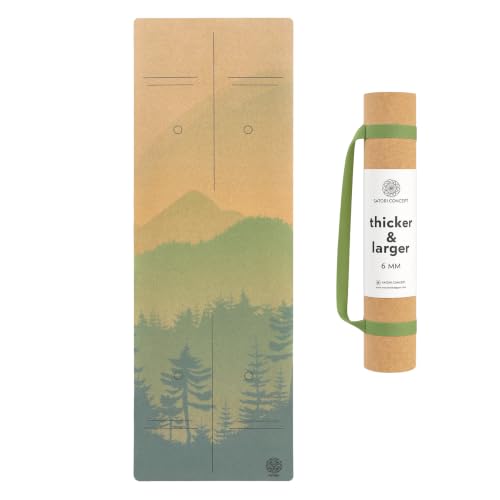
Satori Concept Cork Yoga Mat
What We Like
- Extra-large 80×26 inch surface
- Natural cork grip improves with sweat
- 6 mm thickness cushions joints
- Sustainable cork and rubber construction
Trade-offs
- At 8 lb, heavier than standard mats
- Thicker than travel-friendly options
The 80-inch length and 26-inch width give you more room than many standard mats, so taller yogis or anyone who likes spreading out during flows won’t feel cramped. The natural cork top provides a grip that strengthens with sweat, making it a good match for hot yoga or dynamic practices, while the 6 mm rubber base cushions knees and elbows without sacrificing stability. It’s a thoughtful pick if you value space and eco-friendly materials enough to carry a slightly heavier mat.
At 8 pounds, this mat is heavy enough that you won’t want to carry it in a backpack to a class across town. The JadeYoga Harmony weighs 4.9 pounds and is easier to haul, but its surface is 68 by 24 inches, so you lose the extra space this mat offers. If you practice at home or drive to the studio, the larger size and durable build make it a long-term companion.
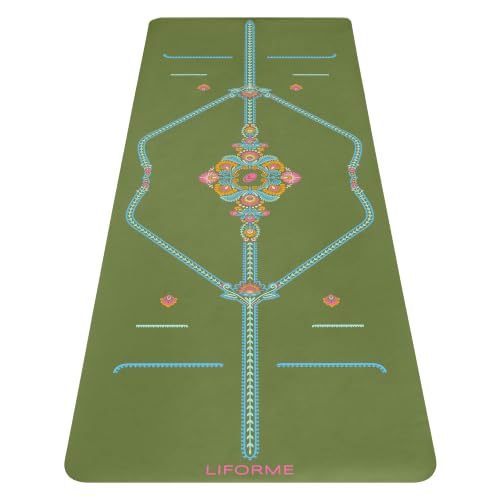
Liforme Printed Yoga Mat
What We Like
- Patented AlignForMe alignment guides
- Sweat-activated grip gets tackier when wet
- Patented AlignForMe alignment markers
Trade-offs
- At 5.5 lb, heavier than many travel mats
- Full-color print can show wear over time
The AlignForMe markers printed on the surface give you visual cues for hand and foot placement in poses like Downward Dog or Warrior II. That turns the mat into a self-teaching tool if you are working on form without an instructor. The GripForMe top layer uses an eco-polyurethane surface that gets tackier as you sweat, which makes it a good match for hot yoga or anyone whose palms get slippery mid-flow. At 72.8 inches long and 26.8 inches wide, it offers plenty of room for taller practitioners or those who like a wide stance.
At 5.5 pounds, this mat is heavy enough that carrying it to class by bike or on foot will be noticeable, the Gaiam Cork mat weighs just 2.0 pounds for comparison. The natural rubber base does have a distinct new-material odor that fades over time, according to many owners. For home practice or short drives, the weight is no concern; for daily transit commutes, it’s something to think about.
Adventure World Natural Yoga Mat

What We Like
- 5 mm thickness for cushioning
- Cork grip increases with moisture
- Natural cork resists odor retention
Trade-offs
- At 7.5 lbs, heavy to carry
- Shorter than some premium mats at 72 inches
The 7.5-pound weight means it’s not the easiest mat to carry to a studio, so it’s better suited for home use. If you need something lighter for travel, the Gaiam Cork Yoga Mat weighs only 2 pounds, though it is the same thickness. For someone who values a thick, stable surface and natural materials over portability, this mat delivers on those priorities.
Product photos
Manduka eKO Superlite Travel Yoga Mat

What We Like
- Ultra-light 2 lb foldable design
- Closed-cell surface locks out moisture
- Sustainably harvested natural tree rubber
Trade-offs
- 1.5mm thickness offers minimal cushioning
- Narrower 24-inch width limits side space
- Requires special spray cleaner, no soap
Weighing just 2 pounds and measuring 1.5mm thick, this mat folds up small enough to stash in a carry-on or daypack without a second thought. That featherweight portability is the whole point: you can roll out a textured surface with reliable traction anywhere from a hotel room floor to a park lawn. So your practice doesn’t stop just because you’re away from home. The closed-cell surface also resists moisture and sweat, which means it won’t absorb the gym floor’s mystery puddles or turn into a slip-and-slide during a humid class. For the yogi who values travel-light freedom over plush padding, this is exactly the kind of no-compromise tool that makes packing feel effortless.
The 1.5mm thickness offers minimal cushioning, so kneeling or lying on hard floors will feel every bump underneath. If your practice involves a lot of floor work or you have sensitive joints, a thicker mat like the Manduka eKO Lite (4mm) provides more padding while still using natural rubber. But for frequent travelers or anyone who wants a mat that packs small, the SuperLite’s light weight and foldable design make it a practical choice. Consider using a towel for extra knee padding on hard surfaces.
Product photos
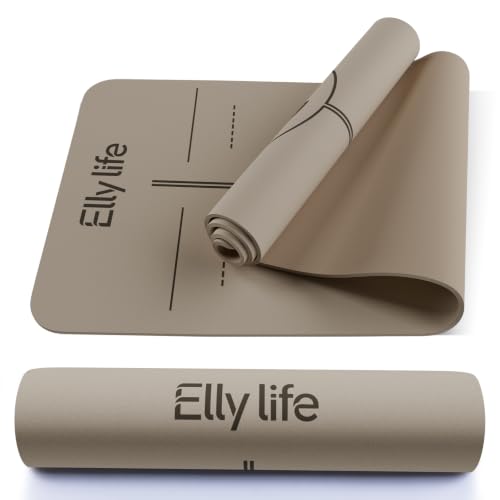
Ellylife Natural Rubber Yoga Mat
What We Like
- Extra-large surface for spacious movement
- PU top stays grippy when wet
- Printed alignment lines for form checks
- Eco-friendly PVC-free construction
Trade-offs
- At 6.3 lb, heavier than some travel mats
- 5 mm thickness less cushioning than thicker mats
The 74.8 by 26.8 inch surface is noticeably wider than standard 24-inch mats, giving your hands and feet room to stay on the mat during wide-legged poses. That extra width, combined with printed alignment lines, lets you check your pelvis and spine angles without straining to look. The PU top maintains grip even when you sweat, which keeps you stable during hot yoga or a vigorous flow.
At 6.3 pounds, this mat is heavier than a cork mat like the Gaiam (2.0 lb), so you won’t want to carry it across town every day. The 5 mm thickness cushions your wrists and knees better than a 4 mm mat, giving a good balance of ground feel and comfort. If you prioritize portability, a lighter option might suit you better, but for yogis who want a stable, grippy surface that stays put on wood, tile, or concrete, this mat delivers.
Product photos
Wimwum PU Natural Rubber Yoga Mat

What We Like
- Grip improves with sweat
- Natural rubber base stays flat
- Extra width for wide stances
- Carry strap included
Trade-offs
- Heavy at 6.8 lbs for portability
- Porous surface shows temporary sweat marks
A 6.8-pound natural rubber base anchors this mat to the floor, so it stays flat and never slides or curls during dynamic movements. That stability is a key reason it suits hot yoga, where a slippery mat can break your focus. The PU top layer offers a grip that becomes stronger as you sweat, which means you can hold poses without a towel. You get a 5mm cushion that protects knees and elbows without feeling mushy under standing balances, and the extra width (27 inches) gives broad-shouldered movers room to breathe.
The trade-off is weight: at 6.8 pounds, this is not a mat you toss in a daypack for a lunchtime class across town. It is a studio or home-gym mat that stays put. If you need something lighter for frequent trips, the Manduka eKO Lite shaves off over a pound and a half, though it gives up some of that floor-hugging heft. For anyone who practices hot yoga at home or in a dedicated studio, the Wimwum delivers exactly what the name promises. No towel needed, no sliding, just grip you can trust when the room gets steamy.
Product photos
Langjitianya Thick Cotton Yoga Mat

What We Like
- 100% organic cotton with natural plant dyes
- Absorbs sweat instead of pooling
- 8mm thick cushions spine and knees
- Folds small for travel or beach
Trade-offs
- Cotton absorbs moisture, dries slower than rubber
- No non-slip backing mentioned for hard floors
At 80 inches long and 28 inches wide, this cotton mat gives taller people and anyone who likes to stretch out plenty of room to move without hanging off the edges. The 0.2-inch thickness cushions your spine, hips, and knees in poses like Vajrasana so you don’t feel the hardness of the floor, while the 100% organic cotton and natural plant dyes keep it breathable and skin-friendly. When you sweat during hot yoga, the fabric absorbs moisture instead of letting it pool like sticky mats do. And it folds up small enough to fit in a backpack for the park or beach.
Cotton doesn’t offer the same non-slip surface as rubber mats such as the Manduka eKO Lite, so on smooth studio floors you may find your hands or feet slide a bit. At 0.3 pounds, it’s light enough to carry anywhere, but the thin profile won’t give the same stable feel as thicker mats during fast sequences. This mat works best for yoga, Pilates, and meditation practice where comfort and eco-friendly materials matter more than maximum grip.
Product photos
How We Evaluated Natural Yoga Mats
Our evaluation is research-based, drawing on product specifications, manufacturer data, expert round-ups from yoga instructors, and common themes in owner reviews. We focused on verifiable details like material composition, weight, dimensions, and thickness to compare each mat honestly.
The three criteria that mattered most were material sustainability, grip performance, and practical portability. We looked for mats made from natural cork, tree rubber, organic cotton, or jute with no PVC or synthetic foams. Grip was assessed by material type, open-cell rubber offers the best traction when dry, while cork actually improves its hold when slightly damp. Portability factored in weight and foldability, since a heavy mat can discourage regular use.
A research-led evaluation has limits: we cannot replicate years of wear in a studio or predict how a mat will smell after a hot session. That’s why we prioritized materials with proven resistance to odor and moisture, like cork and closed-cell rubber, and noted trade-offs like the need for specific cleaners or the tendency for cotton to dry slowly. For a deeper look at the options, our guide to yoga mat materials compares the pros and cons of each type.
What To Look For In Natural Yoga Mats
Choosing a natural yoga mat means weighing material, grip, cushion, and size against your practice style and where you’ll use it.
Look for natural materials (cork, tree rubber, organic cotton, jute) free of PVC, phthalates, and heavy metals. Match the mat’s thickness to your joint sensitivity and floor type, and consider weight if you carry your mat to class.
Material and Sustainability
The material defines the mat’s performance and eco-credentials. Natural tree rubber offers excellent grip and durability but can absorb sweat and has a distinct scent. Cork is antimicrobial, resists odors, and gets grippier when damp, making it ideal for hot yoga. Organic cotton and jute are breathable and washable but lack the non-slip backing needed for hard floors. For a broader look at environmentally friendly options, check our recommendations for sustainable yoga mats.
Grip and Moisture Management
Grip is the top concern for most yogis. Open-cell rubber mats like the JadeYoga Harmony provide maximum traction but absorb moisture, requiring regular cleaning. Closed-cell rubber, found on the Manduka eKO Lite, resists moisture buildup and is easier to maintain. Cork mats need a little sweat or water to activate their grip, which is why they perform so well in hot yoga. If you want a mat that stays tacky when wet, our cork yoga mats guide has more details.
Thickness and Cushioning
Thickness directly affects joint comfort and stability. Thinner mats (1.5 mm to 4 mm) are lighter and more portable but offer less padding for knees, elbows, and spine on hard floors. Thicker mats (5 mm to 8 mm) cushion sensitive joints but can feel less stable for balancing poses. The Langjitianya Thick Cotton Yoga Mat, at 8 mm, is one of the plushest natural options, while the Manduka eKO Superlite Travel Yoga Mat, at only 1.5 mm, prioritizes portability over padding.
Size and Portability
Standard yoga mats are 68 inches long and 24 inches wide. Taller practitioners or those who prefer a wider stance benefit from extra-large options like the Satori Concept Cork Yoga Mat at 80 x 26 inches. Weight matters if you walk or commute to class: the Gaiam Cork Yoga Mat weighs just 2.0 pounds, while thicker cork mats can reach 7 to 8 pounds. For travel, the Manduka eKO Superlite folds to a compact size and weighs only 2 pounds.
- Check the mat’s length against your height, add 6 inches for comfortable head and foot clearance.
- Weigh the mat’s portability against your commute distance and storage space.
- Confirm the material’s care requirements, some natural rubber mats need special cleaners and no direct sun.
- Look for a closed-cell surface if you sweat heavily and want easier maintenance.
- Consider a mat with alignment guides if you practice at home without an instructor.
A good rule of thumb: if you practice hot or vigorous yoga, choose cork or open-cell rubber for grip; if you practice gentle or restorative yoga, prioritize thickness and cushioning.
Natural Yoga Mats Compared
The table below compares the natural yoga mats across key specs, material, weight, thickness, and dimensions, so you can see at a glance which one fits your practice.
| Product | Material | Dimensions | Thickness | Weight |
|---|---|---|---|---|
| Gaiam Cork Yoga Mat | Cork top / TPE bottom | 68.0 x 24.0 inches | 0.2 inches | 2.0 pounds |
| JadeYoga Harmony Yoga Mat | Natural rubber | 68 x 24 in | 0.2 inches | 4.9 lb |
| Manduka eKO Lite Yoga Mat | 100% natural tree rubber | 71 x 24 inches | 4mm | 5.2 lbs |
| Satori Concept Cork Yoga Mat | Natural cork + tree rubber | 80 x 26 x 0.2 in | 6 mm | 8.0 lb |
| Liforme Printed Yoga Mat | Eco-polyurethane / natural rubber | 72.8 x 26.8 in | 4.2 mm | 5.5 lb |
| Adventure World Natural Yoga Mat | Natural cork & rubber | 72 x 24 inches | 5 mm | 7.5 lbs |
| Manduka eKO Superlite Travel Yoga Mat | Natural tree rubber | 71 x 24 inches | 1.5mm | 2.0 pounds |
| Ellylife Natural Rubber Yoga Mat | PU top, natural rubber bottom | 74.8 × 26.8 in | 5 mm | 6.3 lb |
| Wimwum PU Natural Rubber Yoga Mat | PU / Natural Rubber | 72 x 27 in | 5 mm | 6.8 lbs |
| Langjitianya Thick Cotton Yoga Mat | 100% organic cotton | 80 x 28 inches | 8mm | 0.3 pounds |
Frequently Asked Questions
What is the best material for a natural yoga mat?
The best material depends on your practice. Cork resists sweat and odor and works great for hot yoga. Natural tree rubber offers superior grip for dry practice but can absorb moisture. Organic cotton is breathable and washable but lacks non-slip backing.
How thick should a natural yoga mat be for hard floors?
For hard floors like wood or tile, a thickness of 5 mm to 6 mm provides good cushioning for knees and spine without sacrificing stability. Thinner mats (under 4 mm) may leave joints sore, while thicker mats (8 mm) can feel unstable for balancing poses. The Adventure World Natural Yoga Mat at 5 mm and the Satori Concept Cork Yoga Mat at 6 mm are solid choices.
Do cork yoga mats smell?
Cork is naturally antimicrobial and resists odors, so cork mats typically have little to no smell compared to natural rubber mats, which can have a strong scent when new. The cork surface also does not absorb sweat the way open-cell rubber does, helping the mat stay fresher over time.
Can I use a natural rubber yoga mat for hot yoga?
Yes, but with caveats. Open-cell rubber mats like the JadeYoga Harmony absorb sweat and become slippery if not dried quickly, so they need regular cleaning. Closed-cell rubber mats like the Manduka eKO Lite resist moisture better. For hot yoga, cork mats often perform best because their grip improves when damp. The Wimwum PU Natural Rubber Yoga Mat is specifically designed for hot yoga with a top layer that stays grippy when wet.
Are natural yoga mats more expensive than synthetic ones?
Natural yoga mats often fall in the mid-range to premium price categories due to sustainable material sourcing and manufacturing processes. That said, there are affordable options like the Gaiam Cork Yoga Mat that offer excellent value. For budget-conscious shoppers, our research-based list of affordable natural mats covers quality picks in the budget-friendly range.
The Bottom Line
The Gaiam Cork Yoga Mat earns our Best Overall pick because it combines lightweight portability, sweat-resistant natural cork, and an eco-friendly TPE bottom layer at a weight that won’t weigh you down. It’s ideal for yogis who practice hot yoga, travel to class, or want a mat that stays fresh without harsh cleaning. If you need more joint cushioning for hard floors, consider the Adventure World Natural Yoga Mat at 5 mm or the thicker cork option from Satori Concept.
For yogis who prioritize grip above all else, the JadeYoga Harmony Yoga Mat delivers superior traction with its open-cell natural rubber and the added benefit of a tree planted with every purchase. If you practice at home and want a spacious surface with sweat-resistant grip, the Satori Concept Cork Yoga Mat at 80 x 26 inches gives tall practitioners room to stretch without slipping.
The single most important factor in choosing a natural yoga mat is matching the material to your practice environment. Use cork and closed-cell rubber for hot or sweaty sessions, open-cell rubber for dry studio work, and organic cotton for gentle, breathable practice. Take your time comparing our best yoga mats guide to find the right fit for your routine.
