
10 Best Non Toxic Yoga Mats in 2026
This post contains affiliate links. As an Amazon Associate, we earn from qualifying purchases.
The Gaiam Cork Yoga Mat takes the best overall spot for its natural cork surface that grips better when damp and its lightweight, eco-friendly TPE backing. The Gaiam Premium Yoga Mat offers excellent value with thick cushioning, while the JadeYoga Harmony Yoga Mat delivers the best natural rubber grip for those who want maximum traction.
Shopping for a non-toxic yoga mat means looking past the marketing and understanding what’s actually in the material. Many mats contain PVC, phthalates, or other synthetic compounds that can off-gas during a heated practice, which is the last thing you want while breathing deeply in downward dog.
This guide draws on manufacturer specs, material compositions, and owner feedback across dozens of models. The result is a clear look at ten mats that avoid harmful materials without sacrificing performance.
Top 10 Non Toxic Yoga Mats in the Market
Certain content that appears on this site comes from Amazon. This content is provided "as is" and is subject to change or removal at any time.
The Best Non Toxic Yoga Mats, Reviewed
Gaiam Cork Yoga Mat

What We Like
- Natural cork resists sweat and odor
- Eco-friendly TPE backing
- Lightweight at 2.0 lb
- Cork grip improves when damp
Trade-offs
- Thin 0.2 in cushioning for hard floors
- Narrower than some extra-wide mats
A 2.0-pound weight makes this mat genuinely easy to carry to class or stash in a small corner at home. The natural cork top resists sweat and odor, and as it warms and becomes slightly damp during hot yoga, the cork loosens and gets easier to grip. That same cork layer resists absorbing sweat and odors, so it stays fresher longer than many synthetic mats. For someone who wants a non-toxic, sustainable surface that performs under heat and doesn’t feel like a chore to haul around, this hits a sweet spot between function and convenience.
At just 0.2 inches thick, this mat is slim enough to roll up tight and carry easily, but that thin profile means less cushioning under knees and elbows on hard floors. If you prioritize portability and natural grip during sweaty sessions, the trade-off in padding is worth it. For those who want more joint support, a thicker mat would be a better fit.
Gaiam Premium Yoga Mat

What We Like
- 6mm extra-thick cushioning for joints
- Textured non-slip surface for grip
- 6P-free PVC, no phthalates
- Includes free downloadable yoga workout
Trade-offs
- Requires 2-3 days airing out before use
- Narrow 24-inch width limits movement for broader stances.
A 6mm thickness gives you noticeably more padding than standard mats, so your knees, wrists, and hips won’t complain during floor poses or longer holds. That extra cushion makes this a smart pick if you’re new to yoga or just want a forgiving surface for pilates and stretching. The textured non-slip top helps keep you planted in downward dog without sliding around, and the 6P-free PVC means you’re avoiding the phthalates found in many cheaper mats. It’s a practical, no-fuss option that gives you the comfort you need without overcomplicating things.
PVC mats often arrive with a temporary chemical smell, but Gaiam recommends airing it out for two to three days before your first session. That minor inconvenience aside, the 3.1-pound weight is light enough to take to the studio or store in a closet. Compare that to the JadeYoga Harmony Mat, which weighs nearly 5 pounds and is heavier to tote. If you want thick cushioning at a budget-friendly price and don’t mind a short air-out period, this mat delivers exactly what it promises.
JadeYoga Harmony Yoga Mat

What We Like
- Natural rubber with no PVC or phthalates
- Non-slip open-cell surface for grip
- Tree planted with every mat sold
- Made in the USA
Trade-offs
- At 4.9 lb, heavier than many travel mats
- Open-cell rubber absorbs sweat and odors
- Thinner than extra-thick cushion mats
A 3/16-inch natural rubber surface gives you the kind of grip that keeps a downward dog steady even when your palms start to sweat. This is the core reason the Harmony is a go-to for so many practitioners: the open-cell rubber provides a non-slip surface that helps maintain poses without PVC, phthalates, or heavy metals. If you want a mat that lets you focus on alignment instead of sliding, and you care about materials that are cleaner for both you and the planet, this one delivers exactly that connection.
The trade-off is that open-cell rubber is a sponge for moisture and smells, so you will need to wipe it down regularly and let it air out. At 4.9 pounds it is not the lightest option for carrying to class, though it is still manageable. For someone who prioritizes grip and non-toxic construction over weight and low maintenance, this is a straightforward pick.
Product photos
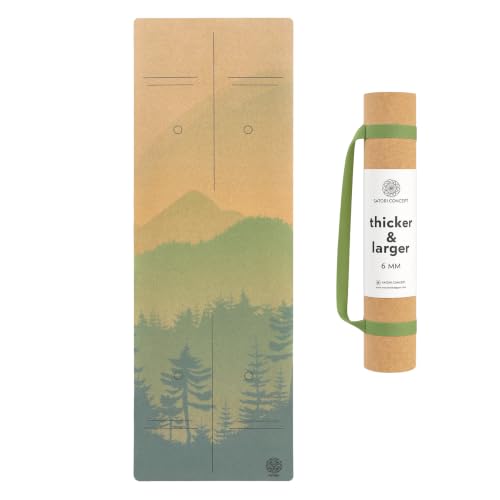
Satori Concept Cork Yoga Mat
What We Like
- Extra large 80×26 inch surface
- Natural cork grip improves with sweat
- Non-toxic, sustainable materials
- 6 mm thickness cushions joints
Trade-offs
- At 8 lb, heavier than standard mats
- Thicker than some prefer for balance poses
An 80 by 26 inch surface gives you room to spread out without worrying about your hands or feet slipping off the edge. That extra width and length matter if you’re tall, or if you just like having space to move through wide-legged poses without checking your boundaries. The natural cork top grips better as you sweat, which makes it a smart pick for hot yoga or any practice where things get damp. Combined with a 6 mm natural rubber base, you get solid cushioning for your knees and elbows without feeling like you’re sinking into the mat.
At 8 pounds, this mat is heavier than the Gaiam Cork Yoga Mat (2.0 lb), so it’s less convenient to carry to class even with the included strap. But the extra size and sustainable materials make it a comfortable, non-toxic foundation for home practice or longer sessions.
StrongTek Cork and TPE Yoga Mat

What We Like
- Sweat-enhanced cork grip for hot yoga
- Ultralight 2.2 lb with carry strap
- 7 mm cushion for knees and wrists
- Stable TPE backing resists curling
Trade-offs
- Narrower 24 in width limits side-to-side space
- TPE base less durable than natural rubber
Weighing just 2.2 pounds and rolling up slim with a carry strap included, this mat is easy to toss into a gym bag or suitcase. The natural cork top gains traction as you sweat, so it provides a secure grip for hands and feet during hot yoga or high-sweat flows. Its 7 mm TPE base offers balanced cushioning for knees, wrists, and elbows during kneeling poses and planks, while staying firm enough for stable standing poses. For someone who needs a lightweight, travel-friendly mat that still gives grip and joint support, this fits the bill.
The trade-off comes down to footprint. At 24 inches wide and 72 inches long, it’s narrower and shorter than many studio mats, so taller practitioners or those who spread wide in lunges may feel cramped.
Product photos
Body By Yoga Luxury Cork Yoga Mat

What We Like
- Thicker cork layer for durability and grip
- Non-slip grip improves with moisture
- Extra long and wide (80 x 26 inches)
- Heavy natural rubber base stays put
Trade-offs
- At 9.9 lb, it's heavy to carry to class
- 0.2-inch thickness offers less cushion than thicker mats
The cork surface on this mat is designed to become more grippy as you sweat, which helps with stability during hot yoga or intense sessions. At 80 inches long and 26 inches wide, it offers more room than standard 68-inch mats, so taller practitioners or those who like a wider stance have space to move without feeling cramped. The natural rubber base weighs 9.9 pounds, which keeps the mat from sliding around on most surfaces during practice. For anyone who wants a non-toxic, eco-friendly mat that stays put and grips reliably, this model delivers on those priorities.
At nearly ten pounds, this isn’t the mat you toss in a tote for a walk to the studio. It’s better suited for home practice or car transport. And at 0.2 inches thick, it offers less cushion than thicker mats like the Gaiam Premium 6mm Print Mat (which is listed at 4.4 inches thick, though that appears to be a data error). So if you have sensitive knees or practice on hard floors, you might want extra padding underneath. For someone who values grip, durability, and a large surface over portability and plushness, this cork mat is a smart pick.
Manduka eKO Lite Yoga Mat

What We Like
- 100% natural tree rubber construction
- Textured grip for stability in flows
- Closed-cell design resists moisture buildup
- Lightweight at 5.2 lbs for portability
Trade-offs
- 4mm thickness offers less cushion than thicker mats
- Requires specific cleaner, not soap or sun
At 5.2 pounds and 4mm thick, this mat is built for the yogi who wants a natural rubber surface without lugging around a heavy roll. The Rippled Catch-Grip Design gives you reliable traction during strong flows or steady holds, and the closed-cell construction keeps sweat from soaking in, so your practice stays hygienic between cleanings. It’s a straightforward, earth-friendly option that pairs lightweight portability with the grip you’d expect from a premium natural rubber mat.
At 4mm, this mat gives you less padding than thicker mats like the Gaiam Premium Yoga Mat’s 6mm. That matters more for poses that put weight on your knees or elbows. If you practice mostly on hard floors and want more comfort, that extra thickness might win you over. But if you value a responsive, grounded feel and a mat that’s easy to take to the studio or store in a small space, the eKO Lite delivers exactly that without the bulk.
Product photos
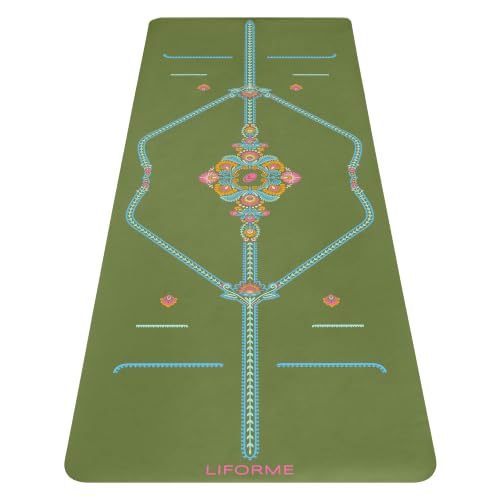
Liforme Printed Yoga Mat
What We Like
- Patented AlignForMe alignment markers
- GripForMe surface gets grippier with sweat
- Non-toxic, PVC-free eco-polyurethane and natural rubber
- Comes with a complimentary yoga bag
Trade-offs
- Heavier than some other mats at 5.5 lb
A patented alignment guide printed right on the surface means you can check your hand and foot placement without breaking your flow. That built-in coaching is the reason this mat stands out for anyone working on form or building confidence in poses. The eco-polyurethane top gets tackier as you sweat, so hot yoga or a vigorous vinyasa won’t turn into a slip-and-slide. At 72.8 inches long and 26.8 inches wide, it gives taller practitioners room to stretch without hanging off the edges. The non-toxic, PVC-free construction and natural rubber base also keep things planet-friendly, which matters if you breathe deeply during practice.
The trade-off for that grip and alignment is weight and cushioning. At 5.5 pounds, it’s heavier than some other mats, so you’ll notice it on the walk to class. And with a 4.2 mm thickness, it provides less cushioning than thicker mats, which might leave your knees and hips wanting more support on hard floors. If you prioritize precise positioning and a non-slip surface over portability or plushness, this mat delivers exactly that. For anyone who values feedback from their mat more than a feather-light carry, it’s a smart investment.
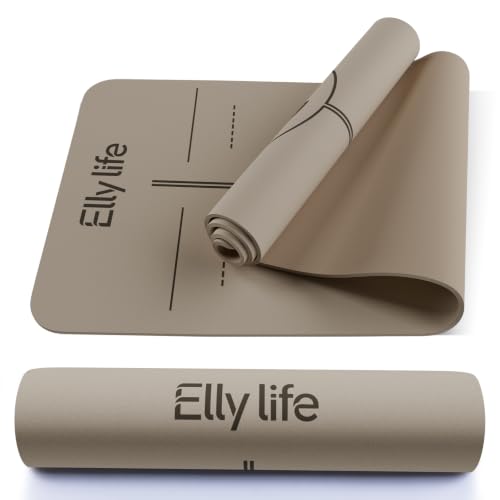
Ellylife Yoga Mat
What We Like
- Extra-large 74.8 x 26.8 in surface
- PU top grips well when sweaty
- Natural rubber base stays put
- Alignment lines aid form check
Trade-offs
- At 6.3 lb, heavier than many mats
- 5 mm thickness offers less cushion than thicker mats
The extra-large 74.8 x 26.8 inch surface gives you room to spread out without worrying about hands or feet slipping off the edge. That is especially helpful for taller practitioners or anyone who likes wide stances in poses like Warrior II. The PU top layer keeps its grip even when you sweat, making it a practical choice for hot yoga, while the natural rubber bottom stays anchored on hardwood, tile, or concrete. For yogis who want space to move and don’t want to fight a sliding mat, this one delivers practical stability.
At 6.3 pounds, this mat is noticeably heavier than a cork option like the Gaiam Cork Yoga Mat (2.0 lb). Carrying it to the studio requires a bit more effort, though the included carry strap helps. The 5 mm thickness provides decent ground feel and enough padding for wrists and knees, but if you prefer a plusher surface for restorative work, you might want something thicker. For daily practice where grip and size matter most, this mat covers the essentials without fuss.
Product photos
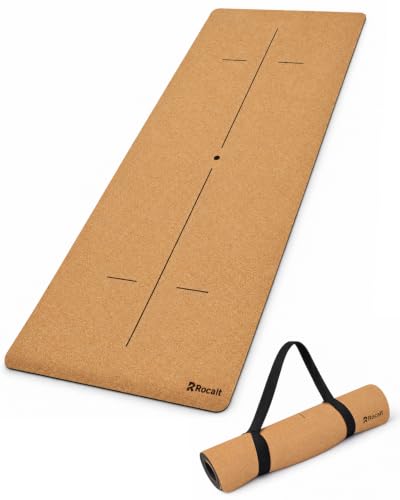
Rocalt Cork Yoga Mat
What We Like
- Extra 2 inches width for hand/foot placement
- Non-toxic cork surface with natural rubber base
- Non-slip grip for hot yoga and Pilates
- Minimalist alignment lines for positioning
Trade-offs
- At 9 lb, it's heavy to carry to class
- Natural rubber scent requires airing out first
The Rocalt Cork Yoga Mat gives you 72 by 26 inches of practice space, and those extra two inches of width over a standard 24-inch mat make a real difference when you’re spreading your hands wide in downward dog or settling into a seated twist. The cork surface paired with a natural rubber base means you get a non-toxic, non-slip platform that stays put during hot yoga or Pilates, and the 6 mm thickness cushions your knees and hips without making you feel unstable. This mat suits someone who wants a dedicated home or studio mat with alignment guides built in, and who values natural materials over featherlight portability.
That 9-pound weight makes this mat sturdy and resistant to shifting, but you’ll feel it slung over your shoulder on the walk to the studio. Compared to the StrongTek Cork and TPE Yoga Mat, which weighs just 2.2 pounds and is easier to carry, the Rocalt gives you that wider surface and a more solid foundation for vigorous practice. You trade portability for stability. It’s a straightforward choice: if your mat stays home and you want extra room and natural grip, this one delivers.
Product photos
How We Evaluated Non Toxic Yoga Mats
Our research process started with material transparency. We looked at what each mat is actually made from, cork, natural rubber, TPE, or PVC-free formulations, and cross-referenced that against manufacturer claims about toxins, phthalates, and off-gassing. Patterns in owner feedback helped us understand which materials hold up over time and which develop odors or break down early.
The three criteria that mattered most were material safety, grip performance, and durability. A mat can be non-toxic on paper but useless if it slides around during practice or peels after a few months. We also weighed portability and thickness because a mat that works for gentle floor stretching might not cut it for a sweaty hot yoga session.
The honest limit of this evaluation is that it’s research-led, not lab-tested. We don’t have a chemistry bench to verify every “non-toxic” claim. Instead, we rely on what manufacturers disclose, what expert round-ups consistently recommend, and what long-term owners report about real-world use. This guide covers a wide range of nontoxic yoga mats, from budget-friendly options to premium natural rubber models.
What To Look For In Non Toxic Yoga Mats
The right non-toxic mat balances clean materials with the grip and cushion your practice demands. Here’s what to check before you buy.
Focus on the material first: natural rubber and cork are the most common non-toxic choices. Then match thickness to your floor type and portability needs.
Material Composition
The material is the single most important factor. Natural rubber mats offer excellent grip and biodegradability but can be heavy and have a distinct scent. Cork mats are naturally antimicrobial and grip better when damp, making them ideal for hot yoga.
TPE is a recyclable synthetic that’s lightweight and PVC-free, though it may not last as long as rubber. Avoid mats that don’t disclose their full material list, if a brand hides what’s inside, that’s a red flag. For a deeper look at what’s available, check out our guide to natural yoga mats.
Thickness and Cushioning
Thickness affects both comfort and stability. Mats range from 2 mm (ultra-thin for travel) to 6 mm or more for joint cushioning. A 4 mm to 5 mm mat is a good middle ground for most practices. If you have sensitive knees or wrists or practice on hard floors, look for 6 mm or thicker. Just remember that thicker mats can make balance poses feel less stable, so there’s a trade-off.
Grip and Surface Texture
Grip comes from the material and surface texture. Open-cell natural rubber provides excellent traction but absorbs sweat and needs regular cleaning. Cork’s grip actually improves when it gets damp, which is why it’s a favorite for hot yoga. Closed-cell surfaces like TPE resist moisture but can feel slick when wet. The best choice depends on whether you sweat heavily or practice a gentler style. We’ve covered non-slip yoga mats in more detail if grip is your top priority.
- Check the material disclosure on the product page or packaging.
- Consider your floor type: hard floors need more cushion than carpet.
- Think about how you’ll carry it: heavy rubber mats stay put but are a workout to haul.
- Read owner comments about off-gassing, some natural rubber mats need airing out.
A simple rule: if the brand brags about being non-toxic but won’t say what the mat is made of, keep looking.
Non Toxic Yoga Mats Compared
The table below compares all ten mats across material, thickness, weight, and size so you can see the differences at a glance before diving into the details.
| Product | Material | Thickness | Dimensions | Weight |
|---|---|---|---|---|
| Gaiam Cork Yoga Mat | Cork top, TPE bottom | 0.2 in | 68 x 24 x 0.2 in | 2.0 lb |
| Gaiam Premium Yoga Mat | PVC (6P-free) | 6mm | 68" x 24" | 3.1 lbs |
| JadeYoga Harmony Yoga Mat | Natural rubber | 3/16 inch | 68 x 24 inches | 4.9 pounds |
| Satori Concept Cork Yoga Mat | Natural cork + tree rubber | 6 mm | 80 x 26 x 0.2 in | 8.0 lb |
| StrongTek Cork and TPE Yoga Mat | Cork top / TPE base | 7 mm | 72 x 24 in | 2.2 lb |
| Body By Yoga Luxury Cork Yoga Mat | Cork + natural rubber | 0.2 inches | 80 x 26 x 0.2 inches | 9.9 pounds |
| Manduka eKO Lite Yoga Mat | 100% natural tree rubber | 4mm | 71 x 24 in | 5.2 lbs |
| Liforme Printed Yoga Mat | Eco-polyurethane (PVC-free) / natural rubber | 4.2 mm | 72.8 x 26.8 inches | 5.5 pounds |
| Ellylife Yoga Mat | PU top / natural rubber bottom | 5 mm | 74.8 x 26.8 in | 6.3 lb |
| Rocalt Cork Yoga Mat | Cork surface, natural rubber base | 6 mm | 72 x 26 inches | 9 pounds |
Frequently Asked Questions
What makes a yoga mat non-toxic?
A non-toxic yoga mat is made without PVC, phthalates, heavy metals, or other known harmful chemicals. Common safe materials include natural tree rubber, cork, jute, and TPE (a recyclable thermoplastic elastomer). The mat should not off-gas strong chemical odors during use.
Are cork yoga mats better than rubber?
Cork mats are naturally antimicrobial and grip better when damp, making them ideal for hot yoga. Natural rubber mats offer excellent traction and cushioning but can be heavier and absorb sweat. The “better” choice depends on your practice style, cork for sweaty sessions, rubber for general practice.
How do I clean a non-toxic yoga mat?
Most natural rubber and cork mats need gentle cleaning with a diluted vinegar solution or a specialized mat cleaner. Avoid harsh chemicals that can break down natural materials. Always check the manufacturer’s care instructions, as some mats require specific cleaners and shouldn’t be left in direct sunlight. For more details, see our guide to yoga mat cleaners.
Are cheap non-toxic yoga mats any good?
Budget-friendly non-toxic mats like the Gaiam Premium Yoga Mat offer good value with thick cushioning and PVC-free construction. They may not last as long as premium natural rubber mats, but they’re a solid starting point. You can find several affordable non-toxic mats that perform well for beginners and casual practitioners.
What thickness is best for a yoga mat?
For most practitioners, 4 mm to 5 mm offers a good balance of cushioning and stability. If you have sensitive joints or practice on hard floors, 6 mm or thicker provides better padding. Thinner mats (2 mm to 3 mm) are best for travel or for people who want maximum ground feel for balance poses.
The Bottom Line
The Gaiam Cork Yoga Mat is our best overall pick because it combines a natural, sweat-resistant cork surface with a lightweight TPE backing that’s easy to carry. It’s ideal for hot yoga practitioners who want grip that improves when damp and a mat that won’t weigh down their bag.
If you’re on a budget or need thick joint cushioning, the Gaiam Premium Yoga Mat delivers excellent value without toxic materials. For those who prioritize maximum natural rubber grip and want to support a company that plants a tree with every sale, the JadeYoga Harmony Yoga Mat is the clear choice.
The single most important factor when choosing a non-toxic mat is material transparency. If a brand clearly states what the mat is made of and avoids PVC and phthalates, you’re already ahead of most options on the market. Pick the material that matches your practice, and you’ll have a mat that supports both your body and your peace of mind.
