
10 Best Yoga Mats For Sweaty Hands in 2026
This post contains affiliate links. As an Amazon Associate, we earn from qualifying purchases.
For yogis whose palms get slick mid-practice, the Gaiam Dry-Grip Yoga Mat stands out as the best overall for its moisture-wicking topcoat that keeps a steady hold without needing a towel. The Flaè Athletics Premium PU Yoga Mat earns best sweat-activated grip, while the Liforme Printed Yoga Mat is our pick for hot yoga.
Sweaty hands turn downward dog into a slip-and-slide, breaking focus and making every pose feel unstable. The real challenge is finding a surface that grips harder as you sweat, not one that turns into a slick mess.
We researched specs, manufacturer materials, expert round-ups, and patterns in owner feedback to find the yoga mats that actually hold up when palms get damp. This guide breaks down what to look for and which mats deliver.
Top 10 Yoga Mats For Sweaty Hands in the Market
Certain content that appears on this site comes from Amazon. This content is provided "as is" and is subject to change or removal at any time.
The Best Yoga Mats For Sweaty Hands, Reviewed
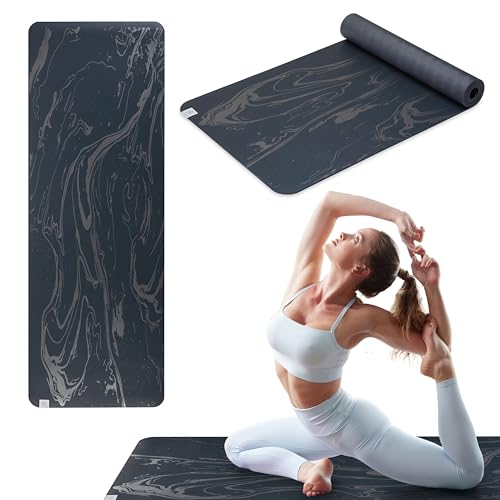
Gaiam Dry-Grip Yoga Mat
What We Like
- Moisture-wicking topcoat for sweaty grip
- Cushioned support for joints
- Lightweight and easy to carry
- Suitable for hot yoga and high-intensity workouts
Trade-offs
- Usable mat length not provided in specs
- Narrow 24.1-inch width limits arm placement
A moisture-wicking topcoat that actively pulls sweat away from your hands is the reason this mat earns top marks for sweaty practices. That Dry-Grip surface means you can hold Downward Dog or Warrior II without slipping, even in a hot yoga room where other mats turn into slip-and-slides. It also cushions your knees, wrists, and spine during floor work, so you’re not fighting for stability while your joints ache. For anyone who sweats hard, whether in Bikram, Vinyasa, or a high-intensity flow, this mat is the friend that keeps you grounded without needing a separate towel draped over the top.
That works fine for seated poses or shorter practices, but if you’re tall or like to sprawl out in Savasana, you’ll find your feet hanging off the end. It’s also lightweight at 4.8 pounds and rolls up easily for carrying to the studio, so portability wins over real estate. Best for the sweaty yogi who prioritizes grip over ground coverage and doesn’t mind a cozier practice space.
Ellylife Natural Rubber Yoga Mat
What We Like
- Matte PU top grips well when wet
- Natural rubber base stays put on floors
- Extra-long and wide for room to move
- Comes with carry strap and storage bag
Trade-offs
- At 7.3 lb, heavier than many mats
- 5 mm thickness offers less cushioning than thicker mats
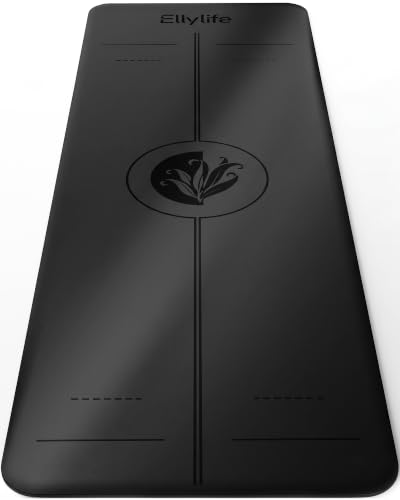
The top surface uses matte PU, which maintains grip even when you sweat, and the natural rubber bottom stays firmly in place on wood, tile, or concrete. At 74.8 inches long and 26.8 inches wide, the mat gives you plenty of room to move. Printed alignment lines help you quickly check your form during practice.
The trade-off is weight and cushioning. At 7.3 pounds, this mat is heavier than many alternatives, such as the Gaiam Cork Yoga Mat at 2.0 lb. The 5 mm thickness offers good ground feel while cushioning your wrists, knees, and spine, but it is firmer than thicker mats. If you prioritize portability or plush cushioning, a lighter mat might suit you better.
Product photos
Flaè Athletics Premium PU Yoga Mat
What We Like
- PU surface grips more as you sweat
- Natural rubber base for stability
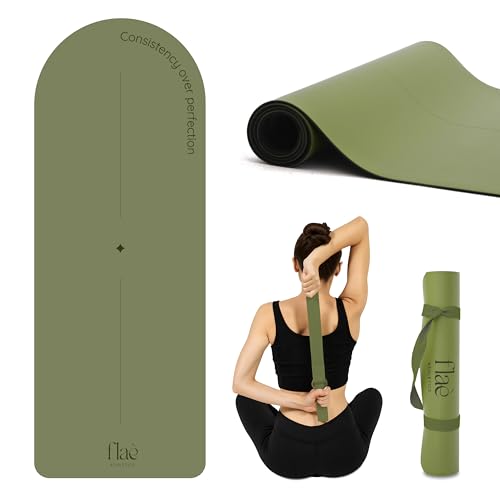
- Arch-shaped design adds extra room
- Strap doubles as a stretching tool
Trade-offs
- At 0.1 inches, very thin for joint comfort
- Requires gentle care: wipe, air dry, avoid oils
Sweat is usually the enemy of a good yoga mat, but Flaè Athletics turned it into an ally. The PU surface is engineered to interact with moisture, so the more you perspire during a hot class or intense flow, the better your grip gets. That natural rubber base underneath keeps the mat planted on the floor, which means you won’t slide around when you’re holding a warrior pose or transitioning through a vinyasa. It’s a clever design for anyone whose palms turn into slip ‘n slides halfway through practice.
At just a tenth of an inch thick, this mat prioritizes traction over cushioning, so if your knees or wrists are sensitive, you’ll want extra padding underneath. The care routine is simple: wipe it with a soft damp cloth after each use and let it air dry, and avoid oils, lotions, and harsh cleaning products to preserve the surface. For yogis who value a steady, sweat-activated grip over plushness, this design makes sense.
Product photos
Liforme Printed Yoga Mat
What We Like
- Grip improves when sweaty
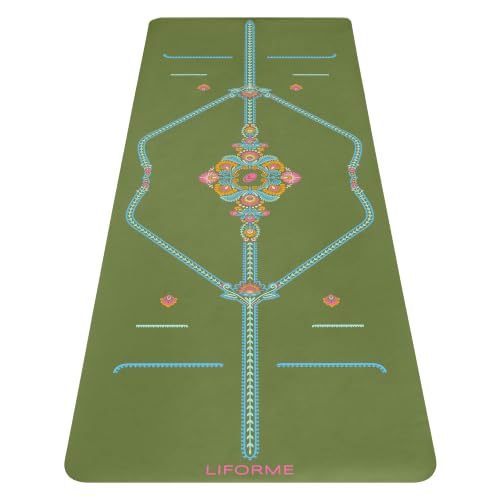
- Patented alignment markers
- Eco-friendly, non-toxic materials
- Includes free yoga bag
Trade-offs
- At 5.5 lb, heavier than cork mats
- 4.2 mm thickness less cushioning than 5 mm mats
The Liforme’s GripForMe surface is the key reason it lands the top spot for hot yoga: the more you sweat, the better it grabs your hands and feet. That means no slipping in downward dog or warrior poses, even when the room turns into a sauna. It also comes with Liforme’s patented AlignForMe markers printed right on the mat, so you can check your foot and hand placement without guessing. At 72.8 inches long and 26.8 inches wide, there’s plenty of room for taller yogis or those who like a wider stance. The eco-polyurethane top and natural rubber base are PVC-free and non-toxic, which matters when you’re breathing deeply on it for an hour.
At 5.5 pounds, this mat is noticeably heavier than something like the Gaiam Cork mat (2.0 lb), so carrying it to and from class adds a little heft. The 4.2 mm thickness also offers less cushioning than the 5 mm Ellylife Natural Rubber mat, which might be a factor if you have sensitive knees or practice on hard floors. Still, for anyone who struggles with slippery hands in a hot yoga class, the Liforme’s sweat-activated grip is a genuine solution that doesn’t rely on towels or extra gear.
Plyopic Ultra Grip PRO Yoga Mat
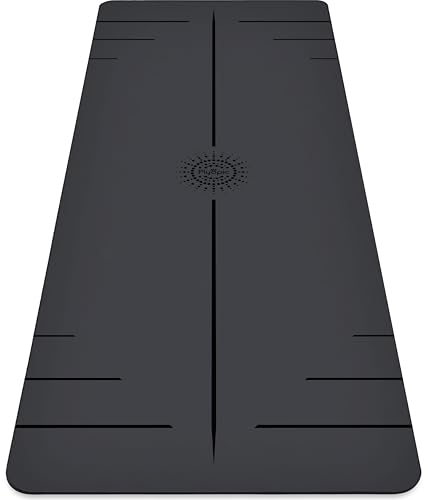
What We Like
- Extreme dry and wet grip
- PoseMap alignment for hand and foot placement
- Dense natural rubber cushions sensitive knees
- Carry strap included
Trade-offs
- Natural rubber base has a strong smell when new
- Heavier than cork or TPE mats for carrying to class
The Plyopic Ultra Grip PRO uses a revolutionary UltraGrip material that keeps your hands and feet planted even as sweat builds during hot yoga or a long flow. That means you can hold a pose without sliding or constantly wiping your palms. The dense natural rubber base cushions sensitive knees and wrists, while the PoseMap alignment lines help you check your positioning at a glance. If you practice hot yoga or tend to get clammy hands, this mat is built to keep you stable when other mats let you slip.
At 5.3 pounds and 0.2 inches thick, this mat is not the lightest or most cushioned option for travel or very hard studio floors. Compared to the Gaiam Dry-Grip Yoga Mat, which uses a sweat-resistant dry-grip surface, the Plyopic focuses on maintaining grip as moisture increases rather than repelling it. For yogis who want reliable traction in sweaty conditions and appreciate built-in alignment guidance, this mat delivers where it counts most.
Product photos
Gaiam Cork Yoga Mat

What We Like
- Natural cork resists sweat and odor
- Eco-friendly TPE bottom layer
- Cork grip improves when slightly damp
- Lightweight at 2.0 lb
Trade-offs
- At 68 x 24 in, it is shorter than many mats
- Only 0.2 in thick offers minimal cushioning
A natural cork surface that actually gets grippier as you start to sweat, that is the whole trick here. Gaiam’s cork mat uses moisture-proof cork on top and a TPE bottom made from eco-friendly materials, so you get a sustainable build that stays fresh even after a hot session. The cork naturally blocks odors and dirt, which means less scrubbing and more breathing. At just two pounds, it is also the lightest mat in this guide, making it a breeze to roll up and carry to class or stash in a closet. If you want something that pairs planet-friendly materials with a surface that works with your sweat instead of against it, this mat fits the bill.
If your main concern is keeping your grip steady when your palms get wet, the cork’s natural response to moisture is hard to beat. The trade-off is size and cushioning. At 68 by 24 inches, this mat is noticeably shorter and narrower than many competitors like the Liforme Printed Yoga Mat, which gives you nearly five extra inches of length and more width for sprawling poses. And with only 0.2 inches of thickness, you will feel the floor through it during kneeling poses or any move that puts pressure on your knees or elbows. That makes it a better fit for quick flows or travel than for long restorative sessions where padding matters.
JadeYoga Harmony Yoga Mat

What We Like
- Natural open-cell rubber for superior grip
- Free of PVC, phthalates, and heavy metals
- 1 tree planted per mat sold
- Made in the USA
Trade-offs
- Open-cell rubber absorbs sweat, needs regular cleaning
- At 24 in wide, narrower than most competitors
- 0.2 in thickness offers less cushion for hard floors
A natural open-cell rubber surface gives this mat a non-slip grip that helps you hold poses with confidence. At 4.2 pounds and 3/16 inch thick, it balances portability and stability, a reason teachers who carry their mat to class often choose it. The construction contains no PVC, phthalates, or heavy metals, and the company plants one tree for each mat sold, which aligns with an eco-conscious practice.
At 68 inches long and 24 inches wide, the JadeYoga Harmony Yoga Mat is shorter and narrower than many competitors, so it may feel tight for taller practitioners or those who like to spread out. The mat is made from natural open-cell rubber, which provides a non-slip surface that helps you hold poses confidently. Because it lacks a sweat-repelling top layer, owners report it needs to be cleaned after each session to maintain its grip.
Product photos
ZAPPUP PU & Natural Rubber Yoga Mat
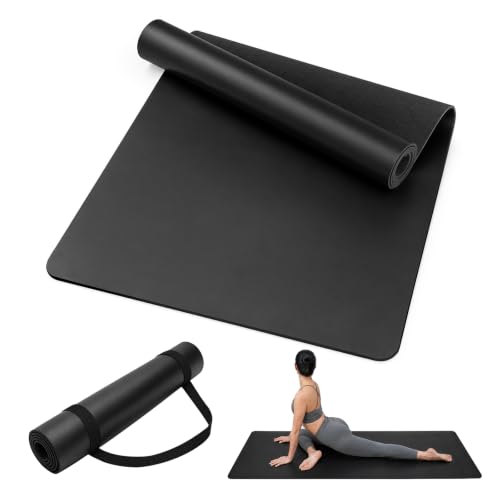
What We Like
- Sweat-absorbent PU top layer grips more when wet
- Natural rubber base anchors firmly on floors
- Includes adjustable strap for easy carrying
- Extra length and width for fuller stretches
Trade-offs
- At 5 mm, less cushioning than thicker mats for knees
- Not wide enough for taller or broader users
The 72 x 27-inch surface uses a PU top layer that absorbs sweat and grips more as you perspire, turning moisture into an advantage during hot yoga. The natural rubber base locks onto hardwood, concrete, or gym floors so you won’t have to adjust it mid-flow. At 5 mm thick, it rolls up tight with the included adjustable strap, letting you carry it hands-free to class or the studio.
The ZAPPUP mat’s PU top layer actively absorbs moisture as you sweat. That helps you hold poses even in hot yoga, but the 5 mm cushioning means you’ll feel hard floors more during kneeling poses than you would on a thicker mat. Because the natural rubber base anchors firmly to the floor, you won’t have to stop and adjust it mid-workout. Reviewers report the included strap makes it easy to roll up and carry, leaving your hands free on the way to class or the gym.
Product photos
Plyopic All In One Yoga Mat

What We Like
- Eco-friendly natural rubber base
- Limited edition designs
- Sweat-grip surface for non-slip hold
Trade-offs
- At 0.1 inches, very thin for hard floors
- 0.1-inch thickness offers minimal cushioning on hard floors
The Plyopic All In One Yoga Mat pairs a dense 3.5mm natural rubber base with a sweat-grip surface that stays non-slip even when your hands are wet, so you can hold poses without sliding during hot yoga or Bikram classes. That rubber base is SGS certified and eco-friendly, and the mat’s 0.1-inch thickness keeps it lightweight at 5.3 pounds, making it easy to carry to the studio. For anyone who struggles with slippery palms, this design removes the need for a separate towel or grip aids.
It’s also a bit narrower than the Ellylife Natural Rubber Yoga Mat, so if you spread wide in warrior poses, you might find your toes creeping off the edge. But if your main battle is slippery hands, not joint comfort or extra width, the Plyopic’s towel top solves that problem more directly than a standard dry-grip surface.
This mat is best for hot yoga and practitioners with sweaty hands who want a non-slip surface that works when wet. It is not ideal for those who need thick cushioning for hard floors or extra width for wide-stance poses, as the 0.1-inch thickness and 25.5-inch width limit comfort and coverage in those areas.
Product photos
KEEP Non-Slip Large Yoga Mat
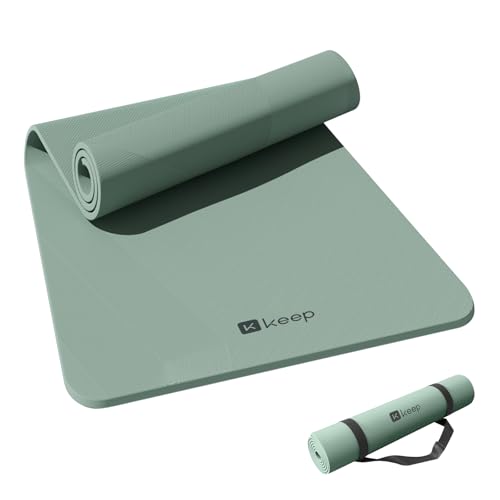
What We Like
- 32-inch width gives extra room
- Double-sided non-slip texture
- Lightweight at 2.8 pounds
- Free carrying strap included
Trade-offs
- 7 mm thickness adds cushion but reduces ground feel
- Pale green color shows dirt quickly
A 32-inch width is the standout feature here. That’s six inches wider than most standard mats, so you can spread out for wide-legged poses or dynamic flows without worrying about your hand slipping off the edge. The double-sided non-slip design uses a fingerprint-like texture on top and a full anti-slip pattern on the bottom, which helps keep the mat planted even on smooth floors. That extra real estate makes this a smart pick if you’re tall, broad-shouldered, or just like having room to move without checking your boundaries.
The TPE material makes this mat lightweight and eco-friendly, but it lacks the sweat-activated grip of natural rubber or PU surfaces. Reviewers note that during hot yoga, extra pressure may be needed to stay steady. The Gaiam Dry-Grip mat has a dedicated sweat-resistant top layer that improves grip when wet.
Product photos
How We Evaluated Yoga Mats For Sweaty Hands
We based this guide on a thorough review of product specifications, manufacturer documentation about top-layer materials, and patterns in owner feedback across multiple sources. Our research focused on what makes a mat functional when moisture is a factor.
Three criteria mattered most: grip performance when wet, material composition, and stability on different floors. A mat that works dry but fails when damp is useless for sweaty hands, so we prioritized topcoats like polyurethane, natural rubber, and cork that improve traction with moisture. We also considered weight, portability, and cleaning requirements since some high-grip materials need more care.
A research-led evaluation like this has limits. The recommendations here are based on what the materials are designed to do and what experienced practitioners consistently report.
What To Look For In Yoga Mats For Sweaty Hands
The right mat for sweaty hands comes down to the top-layer material and how it behaves when wet. Here’s what matters most.
Look for a mat with a polyurethane (PU) top layer, natural rubber, or cork, these materials gain grip when damp. Avoid standard PVC mats that get slippery with sweat.
Top-Layer Material
The surface you touch is everything. Polyurethane (PU) tops are the gold standard for sweaty hands, they absorb moisture and become tackier as you sweat. Natural rubber offers excellent grip when wet but is porous and needs regular cleaning. Cork also performs well when damp and resists odor naturally. For a detailed breakdown, check our guide to yoga mat materials to compare how each surface behaves.
Standard PVC mats are fine for dry practice but turn into a slip hazard when palms get wet. If you already own a PVC mat, a yoga mat towel can help, but dedicated mats for sweaty hands work better.
Thickness and Cushioning
Thicker mats provide more joint comfort for knees and wrists but can reduce ground feel for balance poses. Thinner mats offer better stability and are easier to carry but offer less padding. The trade-off is especially noticeable for hot yoga mats where grip is prioritized over cushioning.
For sweaty hands, we recommend at least 4 mm thickness if you practice on hard floors. If you need more cushion, pair a thinner grip mat with a separate pad rather than sacrificing traction.
Size and Portability
Standard mats are 68 inches long and 24 inches wide, but taller or broader practitioners need extra room. Extra-long mats and extra-wide mats give you space for wide stances without stepping off. The best cork mats tend to run narrower, so check dimensions.
Weight matters if you carry your mat to class. Natural rubber mats are heavier (5-7 lb) but grip better. Slip-resistant mats with PU tops often weigh less while still performing well.
- Check the usable surface dimensions, not just the mat’s total size
- Look for a carry strap or bag included with heavier mats
- Consider a mat towel as backup for extremely sweaty sessions
- Avoid mats with shiny finishes, they get slippery fast
- Read cleaning instructions before buying porous materials like open-cell rubber
A mat that grips when wet is the single most important feature; everything else is secondary.
Yoga Mats For Sweaty Hands Compared
The table below compares all ten mats side by side so you can quickly see which one fits your needs.
| Product | Surface Material | Thickness | Weight | Dimensions |
|---|---|---|---|---|
| Gaiam Dry-Grip Yoga Mat | Moisture-wicking topcoat | N/A | 4.8 pounds | L 24.1 inches, W 4.5 inches, H 4.0 inches |
| Ellylife Natural Rubber Yoga Mat | Matte PU (top), natural rubber (bottom) | 5 mm (0.2 in) | 7.3 lb | 74.8 x 26.8 in |
| Flaè Athletics Premium PU Yoga Mat | PU (sweat-activated); Base: Natural rubber | 0.1" | 5.5 pounds | 72" x 26" x 0.1" |
| Liforme Printed Yoga Mat | Eco-polyurethane; Base material: Natural rubber | 4.2 mm | 5.5 lb | 72.8 x 26.8 in |
| Plyopic Ultra Grip PRO Yoga Mat | UltraGrip (PVC-free, vegan) | 0.2 in | 5.3 lb | 72 x 26 x 0.2 in |
| Gaiam Cork Yoga Mat | Cork top, TPE bottom | 0.2 in | 2.0 lb | 68 x 24 x 0.2 in |
| JadeYoga Harmony Yoga Mat | Natural open-cell rubber | 3/16 in (0.2 in) | 4.2 lb | 68 x 24 in |
| ZAPPUP PU & Natural Rubber Yoga Mat | PU (sweat-absorbent); Base material: Natural rubber (non-slip) | 5 mm (0.2 in) | N/A | 72 x 27 in |
| Plyopic All In One Yoga Mat | N/A | 0.1 inches | 5.3 pounds | 71 x 25.5 x 0.1 inches |
| KEEP Non-Slip Large Yoga Mat | TPE | 7 mm | 2.8 pounds | 72"Lx32"Wx7mm Thick |
Frequently Asked Questions
What is the best yoga mat material for sweaty hands?
Polyurethane (PU) tops are the best material for sweaty hands because they absorb moisture and become tackier as you sweat. Natural rubber and cork also perform well when damp. Avoid standard PVC mats that get slippery.
How do I clean a yoga mat for sweaty hands?
Clean porous mats like natural rubber after every use with a gentle spray of water and mild soap, then air dry. PU and cork mats need a quick wipe-down and thorough drying. Never use oils or harsh cleaners that break down the grip layer.
Can I use a towel on a yoga mat for sweaty hands?
Yes, a yoga mat towel can help if you already own a slippery mat. Place it over your mat and dampen it slightly for better traction. However, dedicated mats with PU or rubber tops grip better than towel-covered mats.
Is cork or rubber better for sweaty yoga hands?
Cork works well when slightly damp and resists odor naturally, but it needs moisture to activate grip. Natural rubber offers superior wet grip but absorbs sweat and requires more cleaning. For heavy perspiration, rubber often performs better overall.
How thick should a yoga mat be for hot yoga?
For hot yoga, a mat thickness of 4 to 5 mm balances grip, stability, and joint comfort. Thicker mats reduce ground feel for balance poses. Thinner mats are more portable but offer less cushion for knees and wrists.
The Bottom Line
The Gaiam Dry-Grip Yoga Mat is our best overall pick for anyone whose hands get sweaty during practice. Its moisture-wicking topcoat keeps you stable without needing a towel, and it stays lightweight enough to carry to class. This mat suits most practitioners who want reliable grip and cushioned support.
If you sweat heavily or practice hot yoga, the Liforme Printed Yoga Mat gets grippier when wet. It also includes alignment markers for precise positioning. For those on a budget who still want excellent wet grip, the Flaè Athletics Premium PU Yoga Mat offers a sweat-activated surface that improves as you perspire. It is thin and best for experienced yogis who don’t need extra cushion.
The single most important factor when shopping for sweaty hands is the top-layer material. Choose polyurethane, natural rubber, or cork, and you will stay grounded through every pose.
