
How to Build Muscle at the Gym: What the Evidence Says
This post contains affiliate links. As an Amazon Associate, we earn from qualifying purchases.
To build muscle at the gym, train each muscle group for at least 10 sets per week and use loads anywhere from 30 to 100 percent of your one-rep max. The 2026 ACSM position stand found that load and frequency mattered less than total weekly volume, which is useful to know when you are figuring out how to build muscle at the gym.
That 10-set threshold is the part most gym floors get wrong. A lifter can spend a long session in the building and still walk out with too few hard sets for chest, because warm-ups, phone breaks, and one heroic set at the end all feel like how to build muscle at the gym without counting toward the total.
What follows is the prescription the research actually supports: how heavy, how many sets, how often, and the four places where the major reviews contradict each other.
Key Takeaways
- At least 10 sets per muscle group per week is the hypertrophy floor, and the 2026 ACSM stand and the Bernárdez-Vázquez umbrella review land on it separately.
- Load is flexible for size. Every load from 30 to 100 percent of 1RM built comparable muscle in the BJSM network meta-analysis.
- Load is not flexible for strength. Loads of at least 80 percent of 1RM are what maximise voluntary strength.
- Failure is optional. ACSM found training to momentary muscle fatigue did not consistently change outcomes.
- The logbook beats the programme. If you cannot name your recent numbers for a lift, you are not progressing, you are auditioning.
What the 2026 Evidence Actually Says About Building Muscle
The ACSM published its updated position stand on 5 March 2026. The document supersedes the 2009 version and pulls together 137 systematic reviews covering more than 30,000 participants, with the literature search running to October 2024.
The 2026 ACSM position stand synthesises 137 systematic reviews covering more than 30,000 participants, with literature searched to October 2024. The stand sets the hypertrophy volume floor at 10 or more sets per muscle group per week, and reports that loads from 30 to 100 percent of one-rep max produced comparable muscle growth.
What the ACSM stand actually changed
The emphasis moved. When weekly volume was matched, training a muscle once a week and training it more than five times a week produced the same hypertrophy, according to the stand.
That volume-matched caveat is the hinge this whole article swings on. Nearly every argument you have read online about training frequency quietly assumes volume stays fixed while you shuffle the days around.
Anyone asking how long to build muscle wants a date. These reviews measure size and strength across multi-week programmes rather than handing out deadlines, which is why the honest answer keeps coming back to consistency over calendar math.
The full ACSM resistance training position stand is free to read, and the hypertrophy section rewards a slow pass if you want the primary detail rather than my summary of it.
How Much Weight Should You Lift to Build Muscle?
Start lighter than your ego wants.
I spent my first year in a gym convinced that heavy lifting would make me bulky quickly. What actually happened was slower and more useful. My strength climbed first, my shirts fit the same, and any visible size turned up months later. That gap between strength and size explains why the how to build muscle at the gym load question has a looser answer than the internet suggests.
For strength, the number is firm. The 2026 stand puts the threshold at 80 percent of 1RM or above, and the BJSM resistance training strength and hypertrophy review converges on the same figure.
For size, the number is wide open. That same network meta-analysis found all load prescriptions comparably promoted muscle hypertrophy, and the ACSM stand reports the same working range of 30 to 100 percent of 1RM.
- 80 percent and up for strength: 2 to 3 sets, full range of motion, placed early in the session, at least twice a week.
- 30 to 100 percent for size: any load that leaves you one to three reps short of failure works, so pick the one your joints tolerate on a Tuesday.
- 30 to 70 percent for power: 24 reps or fewer per set, fast on the way up, Olympic-style lifts if someone qualified is watching.
Easy to miss: A bar that feels heavy on the first rep but still moves fast is the right load. A bar that feels heavy and grinds to a halt on rep three is a strength test wearing a hypertrophy costume.
If you want a shortcut past the guesswork, the exercises to build muscle list covers the movement patterns worth loading first.
How Many Sets Per Week Actually Build Muscle?
Ten sets per muscle group per week is the floor. The 2026 ACSM stand and the muscle hypertrophy training variables umbrella review reach that number independently, which is about as close to consensus as this field gets.
The effect is not trivial. The BJSM network put higher-load, multiset training at twice a week at an SMD of 0.66 (95% CrI 0.47 to 0.85) for hypertrophy versus control. That network covered 119 studies and 3,364 participants, 47 percent of them women. The parallel strength network was larger again: 178 studies, 5,097 participants, 45 percent women, with an SMD of 1.60 (95% CrI 1.38 to 1.82) for three sessions a week.
A set counts when it is hard enough to matter. Leave one to three reps in the tank and log it. A set that ends far from failure does not qualify, no matter how it feels.
Common mistake: Counting warm-up sets and easy first sets toward the weekly total. An easy set adds fatigue rather than stimulus, and a lifter who logs it can sit below the weekly threshold for months without understanding why nothing changes.
Ten sets sounds like a lot until you price it out. A few sets each of pressing, rowing, a fly, and a lateral raise gets a chest and back day to the line without adding a single extra minute to the session.
If you would rather copy a structure than build one, the workouts to gain muscle page has ready-made versions of that math.
Where the Research Disagrees, and What to Do About It
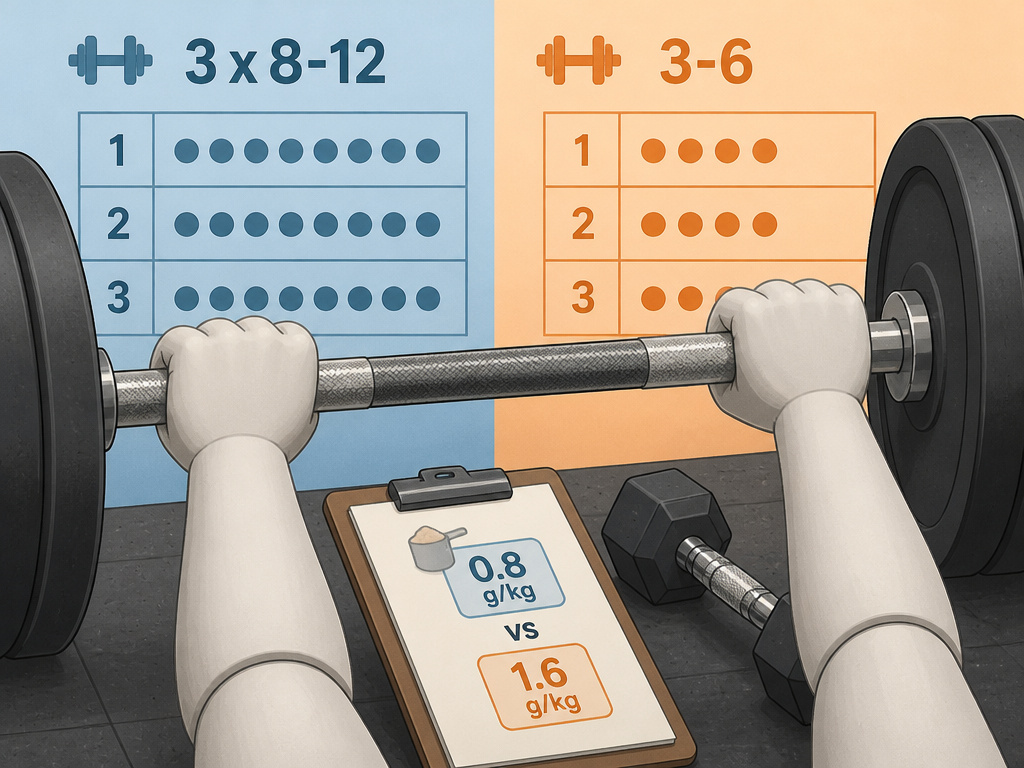
Anyone who tells you the science is settled has not read the science.
Four variables have genuinely conflicting published positions. None of them is a scandal. They reflect different review methods, different populations, and different definitions of the same word.
| Variable | Position one | Position two |
|---|---|---|
| Sets and reps | Krzysztofik review: 3-6 sets of 6-12 | Cleveland Clinic: 3 sets of 8-12 |
| Training to failure | ACSM 2026: no consistent effect | Krzysztofik review: hypertrophy-maximising |
| Blood flow restriction | ACSM 2026: no consistent effect | Umbrella review: may help some people |
| Training frequency | ACSM 2026: no difference with volume equated | BJSM 2023: 3x/week ranks highest for strength |
| Protein per day | Cleveland Clinic: 0.8-1.0 g/kg | Wider literature: about 1.6 g/kg |
The failure question
ACSM reports that training to momentary muscle fatigue did not consistently impact training outcomes. The maximizing hypertrophy systematic review frames advanced techniques, failure work included, as hypertrophy-maximising.
Both can be true at once. Failure produces a lot of fatigue for a stimulus you can get by stopping a rep short, and the fatigue is what costs you the next session. Save failure for the final set of the final exercise and you get the technique benefit without the recovery bill.
The frequency question
ACSM found one day a week and more than five days a week made no difference when total volume was equated. BJSM ranks three sessions a week highest for strength and two for hypertrophy, in a comparison where volume was not equated.
Match the volume first. Then pick the frequency you will actually attend.
I have watched more beginners quit over a programme they could not follow than over a programme that was too easy. Pick the frequency you will show up for, then build the sets around it. A split you skip half the time is a smaller split with guilt attached.
The Cleveland Clinic muscle building strategies sit at the more prescriptive end of this, with a fixed 3 sets of 8 to 12 and 5 lb jumps for upper body and 10 lb for lower body. That is a fine starting point. It is not the only one the evidence allows.
The 3-Day Full-Body Template That Fits a Real Week
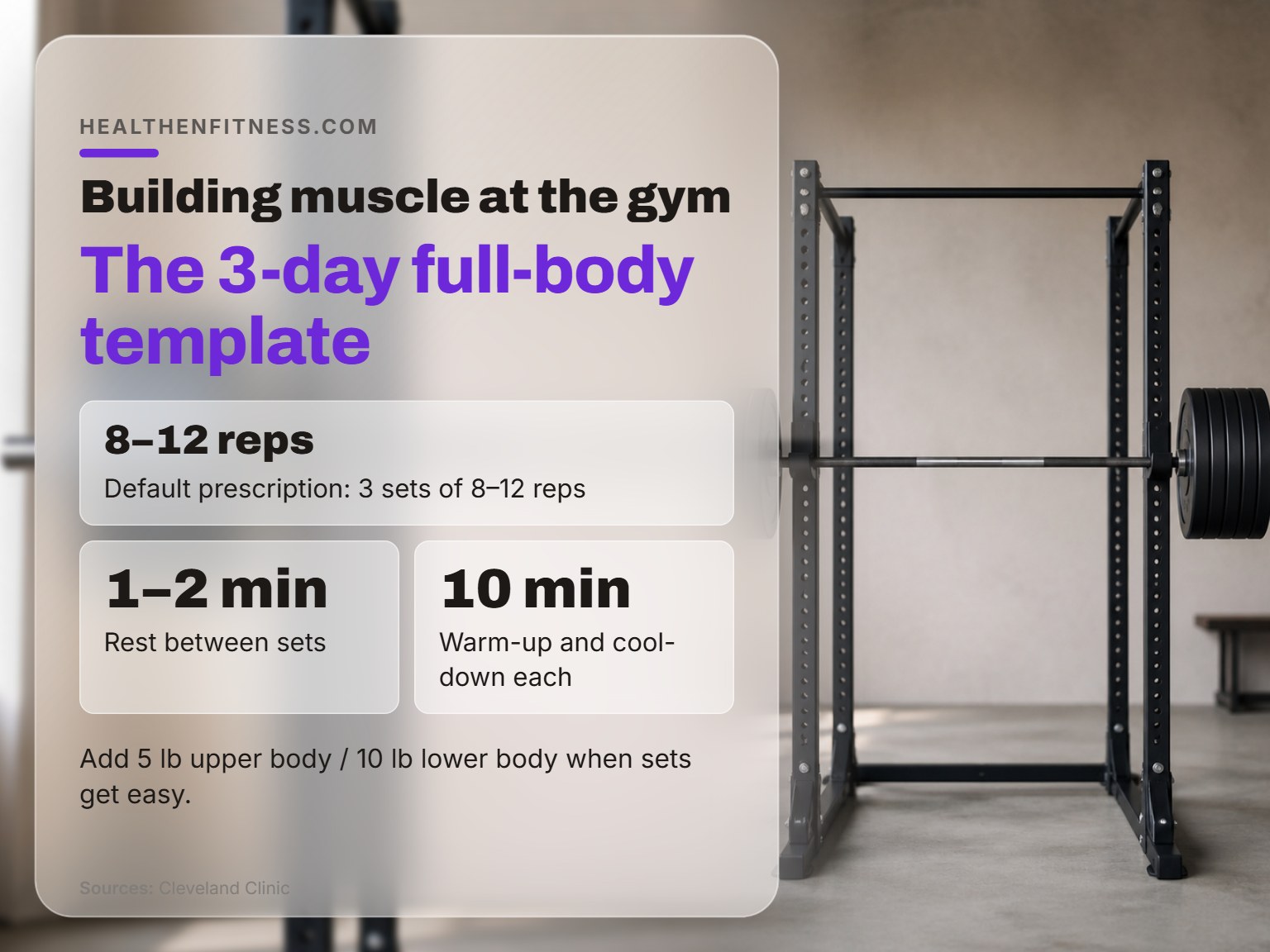
Three days, six movements, one rule: the same lifts come back every week so the numbers mean something.
Before you start: A bar loaded past what your trunk can brace will round your spine before your legs give out, so start with an empty bar and add weight gradually. Loading one side of a bar and lifting it off the rack tips the whole thing, so put plates on both sleeves before you unrack. A sharp shoulder pinch on any press means end the set there, because pressing through it turns a minor niggle into a long layoff.
- Pick six movements covering a squat, a hinge, a push, a pull, a carry, and a core drill. Skip the hinge and your posterior chain goes untrained while your lower back quietly absorbs the work.
- Set the load so reps 8 through 12 are hard but the bar still moves fast. Choosing a weight you could press 20 times turns the set into a warm-up with extra steps.
- Run 2 to 3 sets per movement in month one. Jumping straight to high set counts produces soreness and a second session you talk yourself out of.
- Rest 1 to 2 minutes between sets, per the Cleveland Clinic guidance. Cutting rest far below the recommended 1 to 2 minutes to “keep the heart rate up” drops the load you can handle and the stimulus with it.
- Log every set in a notebook or an app. A number you cannot remember is a number you cannot beat.
- Repeat the same session for several weeks before changing a movement. Constant exercise rotation removes the only comparison that tells you anything.
The warm-up and cool-down
The Cleveland Clinic guidance calls for a 10-minute warm-up and a 10-minute cool-down. That is more than most people budget and less than most people fear. A few minutes of easy cardio plus ramp-up sets on the first lift covers the warm-up; walking and a few slow hinges cover the rest.
The first set always feels heavier than it should. After a few ramp-up sets, the bar comes off the rack smoothly and the plates stop rattling against the sleeves, and that is the set that counts.
If the free-weight area still feels like a foreign country, the machines at the gym are a legitimate place to start. A barbell and a squat rack will still be there when you are ready for them.
Skip it if: your shoulder pinches overhead or your knees ache the day after squats. Swap the movement for a machine variation, drop the load, and build back gradually.
Why the Lowering Phase Matters More Than Your Last Rep
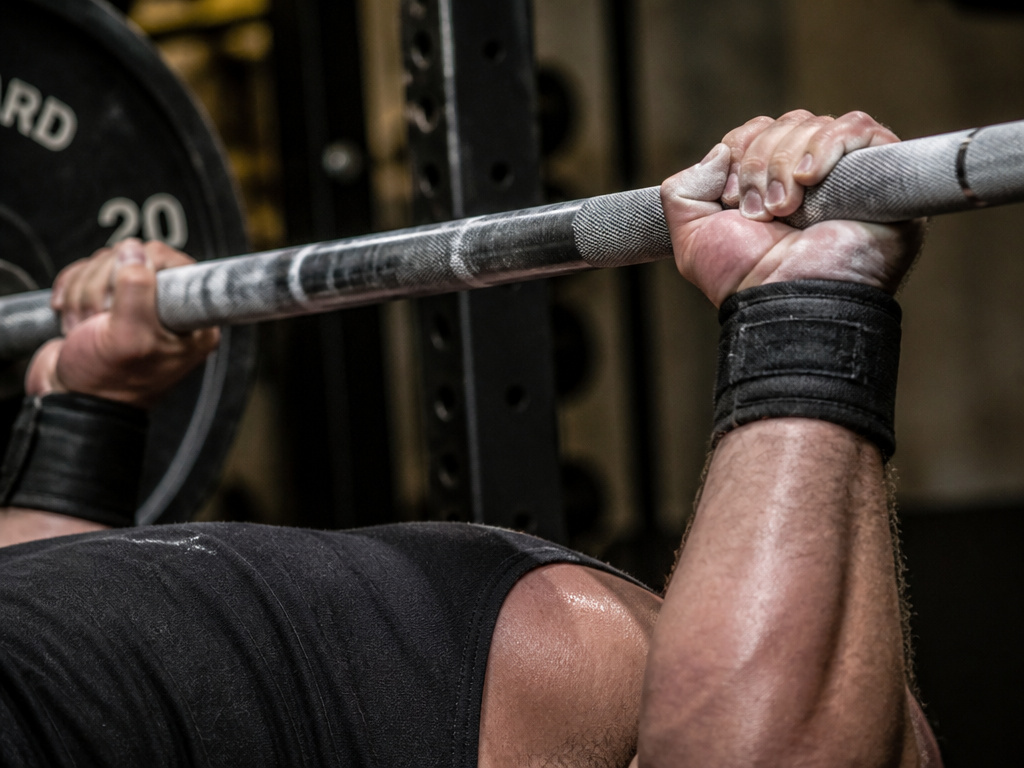
The way down carries most of the growth signal.
The 2026 ACSM stand reports that eccentric overload enhances hypertrophy compared with concentric-only training. In plain language, lowering a weight under control builds more muscle than lifting it does.
That does not license glacial tempos, which some influencers film for the algorithm.
A controlled lowering phase beats an extra set. The lowering phase adds stimulus without adding a single plate to the bar, and it costs you nothing but patience.
Lower a bench press under control and the last part of the way down your triceps start to shake. That shake is the part doing the work, and it is the reason a lighter bar lowered well beats a heavier bar dropped fast.
Do You Need to Eat Differently to Build Muscle?
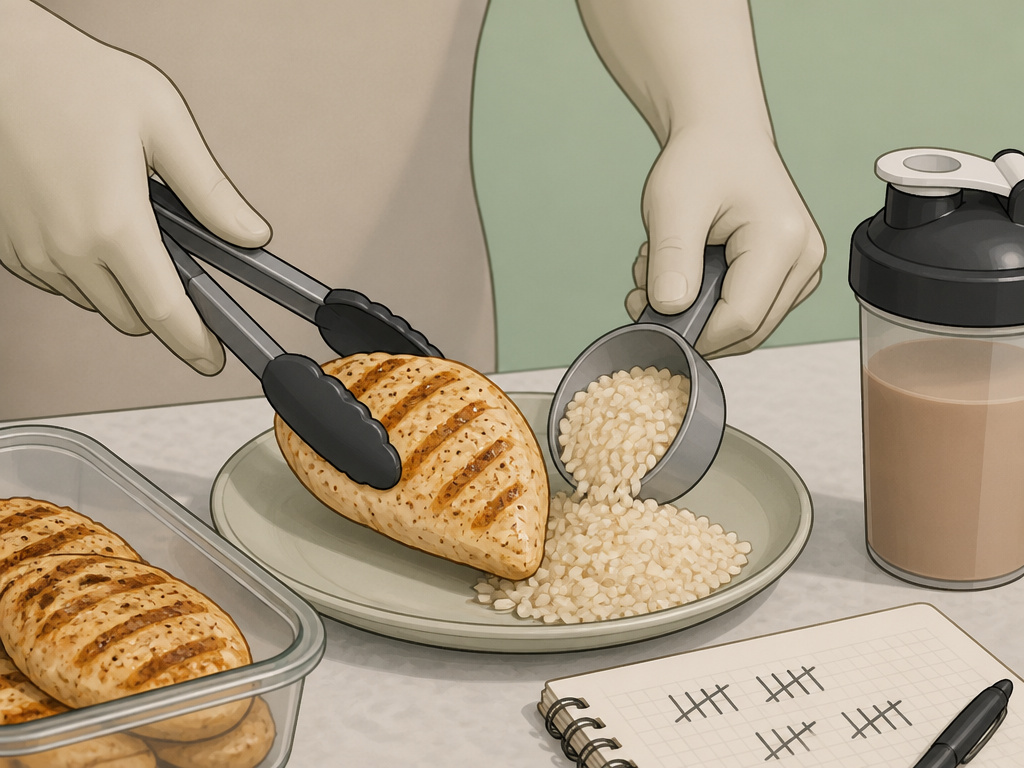
Have you actually counted your protein this week, or are you going off how you feel?
The Cleveland Clinic guidance puts intake at 0.8 to 1.0 grams per kilogram of body weight per day, which is the recommended dietary allowance rather than a hypertrophy target. Wider sports-nutrition literature cites roughly 1.6 g/kg, and none of the six sources behind this article states that higher figure. I am telling you the gap exists instead of picking a side I cannot source.
I am also not the person to build you a macro plan. Food and training interact in ways that deserve a dietitian, and I would rather hand you off than guess at your situation.
- Anchor each meal with a protein source before you worry about anything else on the plate.
- Spread it across the day rather than loading it all into one post-workout shake.
- Eat enough total food that your weight is drifting up slowly, not sprinting.
The muscle-building foods guide covers the practical side of that list. If your goal is size without much fat gain, build muscle without fat walks through the slower version.
What to Do When Progress Stalls
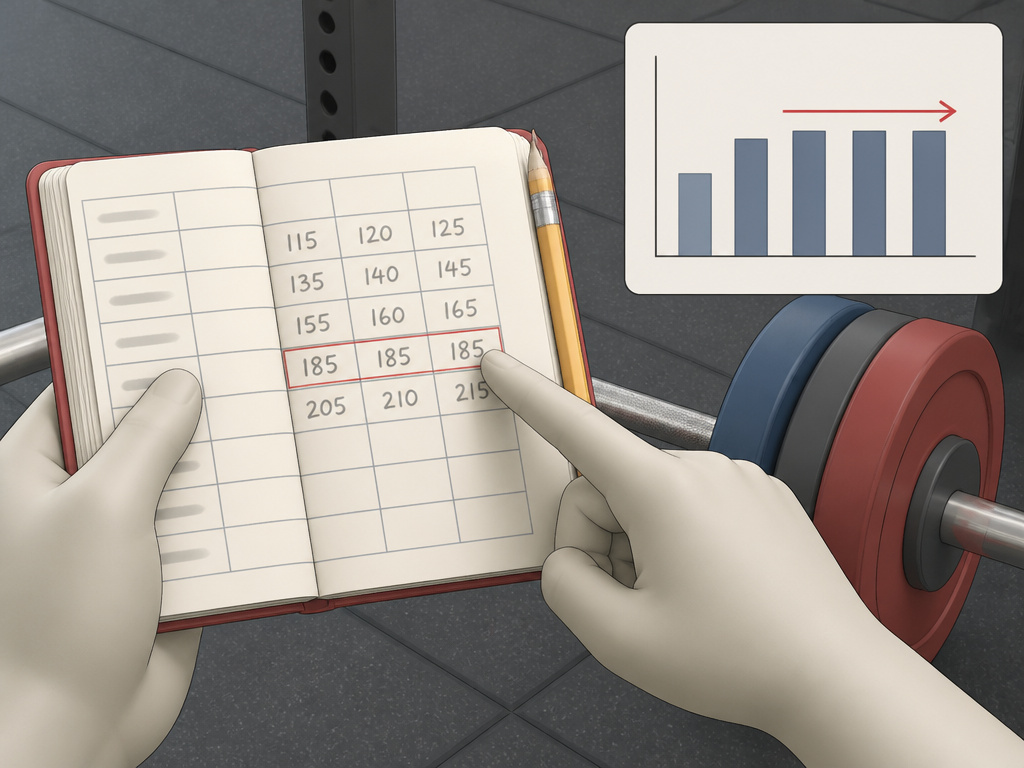
A stall tells you which variable to check next.
| Symptom | Likely cause | Fix |
|---|---|---|
| Same weight for several weeks | Weekly volume under 10 sets | Add sets to the lagging muscle |
| Sore for days | Too many sets, too soon | Cut sets back for a while |
| Stronger, but no size change | Load climbing, sets flat | Hold the load, add sets instead |
| Elbow aches on pressing | Grip width or bar path | Widen the grip, rebuild the load |
Check the logbook before you check the programme. A lifter who has added reps on the same weight over several weeks is progressing fine and simply has not noticed.
If the numbers genuinely have not moved, the answer is almost always volume or sleep, in that order. Adding a fourth exercise to fix a stalled lift is like adding more paprika to a soup that needs salt. You are fixing the wrong thing.
The Bottom Line
Here is the honest version: if you cannot describe your last four weeks of sets for a given muscle group from memory or a log, that is the problem to fix first. Not your split, not your tempo, not which pre-workout is on the shelf.
The evidence base is unusually clear on the big pieces. Ten or more sets per muscle group per week builds size. Loads of 80 percent of 1RM and above build strength. Loads anywhere from 30 to 100 percent build comparable muscle. Failure is optional, frequency is negotiable once volume is matched, and the lowering phase is free stimulus most people throw away.
Two concessions before you go. If you are a competitive athlete training for a specific sport, this general guidance will read as conservative, and it should, because it was never written for you. And if your question is about body composition or a medical dietary need, a dietitian is the right call and I am not a substitute for one.
Your first step this week is small: write down the sets you actually did for one muscle group. Just one. Do that for a week and you will know more about your own training than any programme template can tell you.
Frequently Asked Questions
How many days a week should you train to build muscle?
The 2026 ACSM stand places strength work at two or more sessions per week. The BJSM network meta-analysis ranks three sessions a week highest for strength and two for hypertrophy, in a comparison where weekly volume was not equated. Pick the number of days you will genuinely attend, then match your sets to it.
Can you build muscle with light weights?
Yes, within limits. The BJSM network found all load prescriptions comparably promoted muscle hypertrophy, and the ACSM stand reports the same 30 to 100 percent of 1RM range. Light weights stop working when the set ends far from failure, because a set that is easy is not a set that counts.
Is 3 sets of 10 enough to build muscle?
It depends on how many muscle groups those sets cover and how hard they are. The Krzysztofik review recommends 3 to 6 sets of 6 to 12 reps for hypertrophy, while the Cleveland Clinic defaults to 3 sets of 8 to 12. Both sit under the 10-sets-per-muscle-group-per-week threshold once you add up a full week.
Do you have to train to failure?
No. The 2026 ACSM position stand reports that training to momentary muscle fatigue did not consistently impact training outcomes. The Krzysztofik review takes the opposite view and frames failure techniques as hypertrophy-maximising. Stopping one to three reps short captures most of the stimulus with far less recovery cost.
Does blood flow restriction training work?
The sources split. ACSM 2026 found blood flow restriction did not consistently affect outcomes, while the Bernárdez-Vázquez umbrella review states it may be beneficial for some individuals. It is not a like-for-like swap for loaded training, and it is not the first tool to reach for.
How much protein do you need to build muscle?
The Cleveland Clinic guidance cites 0.8 to 1.0 grams per kilogram of body weight per day. That is the recommended dietary allowance rather than a hypertrophy-specific target, and the wider sports-nutrition literature cites a higher figure that none of the six sources here states. Treat the clinical number as a floor.
