
How Much Sleep Do Athletes Need? It Depends on the Athlete
This post contains affiliate links. As an Amazon Associate, we earn from qualifying purchases.
How much sleep do athletes need is a personal number.
That gap between what you think you need and what you actually log is the whole problem, and it is why the how much sleep do athletes need question matters. It shows up as slower reactions, a flatter mood, and sessions where the bar feels heavier than the number printed on it.
What follows is the honest version of this topic: what the research actually supports, where the major guidelines openly disagree with each other, and the nap protocol that has real numbers behind it rather than vibes.
Key Takeaways
- Individualise the target. The 2021 expert consensus in the British Journal of Sports Medicine rejects a blanket 7-to-9-hour rule for athletes and says to build the number around your own perceived sleep need.
- Habitual short sleep means under 7 hours a night. That’s how the consensus defines it in elite athletes, and it’s the pattern most of them fall into.
- Keep naps under 30 minutes when your window is tight, or you’ll wake up groggy from dropping into deeper sleep stages.
- Bank sleep before you lose it. A protected window of 9 to 10 hours in bed is the extension tool the consensus recommends ahead of travel or competition.
- Screen for sleep disorders first. Sleep-focused strategies are likely to be ineffective while an untreated sleep problem is running the show.
What the Research Actually Says About Athlete Sleep
The 2021 expert consensus in the British Journal of Sports Medicine is the document most performance staff work from, and it opens by admitting the evidence base is thin. Much of the research on athlete sleep uses inconsistent and unreliable methods, so when you compare a how much sleep do athletes need, the recommendations lean on the best available data rather than hard proof.
A blanket rule hides that entirely.
Competition makes it worse, and the numbers are specific.
The consensus names the main drivers of chronic sleep disturbance. They’re worth checking against your own week:
- High training loads, particularly sharp increases
- Travel, especially late-night or early-morning departures and eastward flights
- Competition stress, which starts before the event and outlasts it
- Being an individual-sport athlete rather than a team-sport athlete
Stack a few of those and you get the pattern the consensus calls habitual short sleep: under 7 hours a night, most nights. That pattern compounds into sleep debt you can’t clear with one long lie-in on Sunday.
Why Do the Guidelines Disagree on Sleep Duration?
Because they’re answering different questions. The general adult guidance and the athlete-specific guidance were written for different populations, and neither group has quietly updated to match the other.
Here’s the disagreement laid out plainly:
| Source | Position on duration | What it means for you |
|---|---|---|
| AASM/SRS 2015 joint consensus | Adults: 7 hours or more nightly | A population floor, not an athlete target |
| BJSM 2021 expert consensus | 7-9 hours is “unlikely ideal” for athletes; individualise | Build your own number from perceived need |
The AASM sleep duration consensus statement sets 7 hours as the regular nightly floor for healthy adults. That’s a public-health minimum. It was never built to answer what a sprinter needs the week before a championship.
The BJSM consensus goes the other way. It states outright that a one-size-fits-all target such as 7 to 9 hours a night is unlikely to be ideal for athletes, and it recommends an individualised approach based on the athlete’s own perceived sleep need. It declines to name an athlete-specific number at all.
Nobody has reconciled these three positions, and the consensus is honest about that. Anyone telling you there’s a settled athlete number is selling certainty that doesn’t exist.
What the general guidance is still good for is the boring foundation.
The Nap Protocol That Has Actual Numbers Behind It
Naps get treated as laziness by people who’ve never trained twice in a day. The consensus treats them as a tool with a dosage.
Here’s the protocol, in order:
- Set the window at 15 to 20 minutes. Shorter windows are fine, but keep the whole thing under 30 minutes. Go past that and you drop into deeper sleep stages, and you’ll wake with sleep inertia, which is the groggy, thick-headed feeling that ruins the next hour.
- Take 150 to 200 mg of caffeine immediately before you lie down. This is the “coffee-nap,” and the consensus recommends it specifically for the mid-afternoon slot. Caffeine takes roughly 20 minutes to bite, so it lands as you wake.
- Set your alarm about 10 minutes longer than the nap itself. That buffer covers the time it takes to actually fall asleep, which is the part everyone forgets to budget.
- Get bright light and wash your face when you wake. Both are recommended additions to the routine, and both are cheaper than another coffee.
- Skip naps entirely if you struggle to fall asleep at night. This one matters more than the rest. If night-time sleep onset is already difficult, adding daytime sleep makes it harder.
That third step is the one I’d underline. A 20-minute nap isn’t 20 minutes of your day. It’s 30, once you count the falling-asleep time the consensus tells you to plan for.
If your night sleep is already fragile, the nap isn’t free. The consensus is blunt about this: athletes with difficulty falling asleep at night should avoid naps altogether rather than trade a good night for a decent afternoon.
The case for daytime naps holds even when your night sleep is fine. The consensus notes that naps improve mood, alertness, and cognitive performance in people who already get the sleep they need. They’re not just a patch for a deficit.
And the caffeine and sleep relationship is exactly why the timing matters. Caffeine before a nap works because the nap is short. Caffeine at 4pm when you’re not napping is a different calculation entirely.
Where this goes sideways: Napping for 45 minutes because it “feels more restorative.” You’ll wake mid-cycle with sleep inertia, and the consensus specifically recommends under 30 minutes to avoid it.
How Do You Find Your Own Sleep Number?
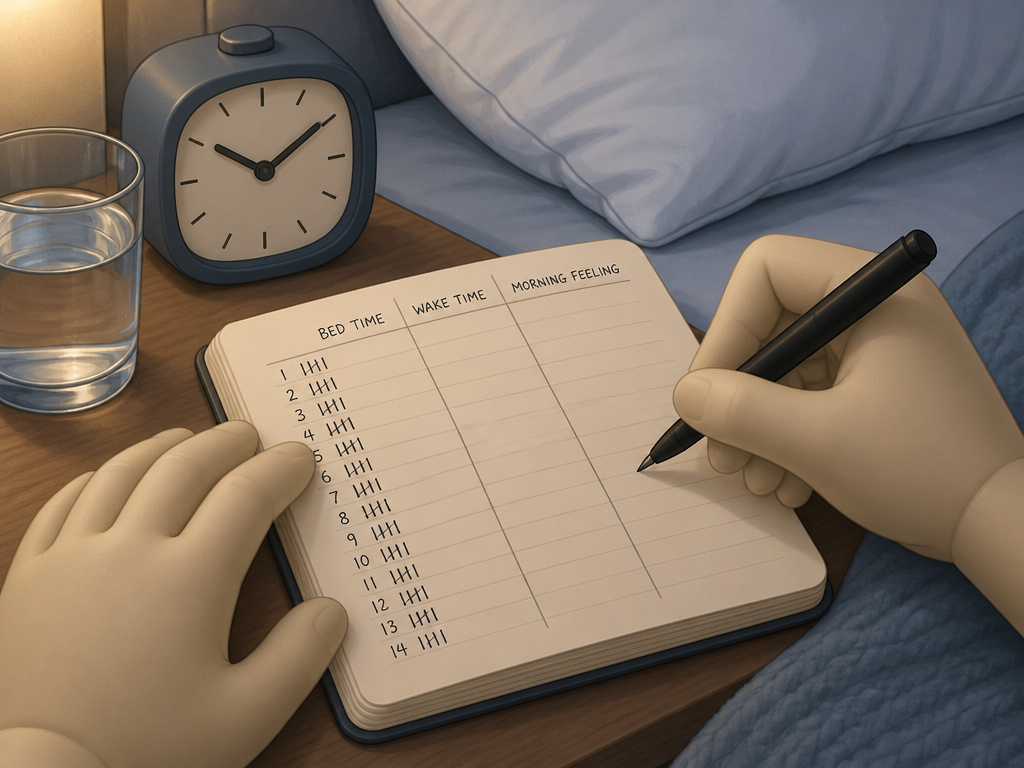
Start with a log, not a guess. Two weeks of honest data beats any calculator.
The two-week log
Write down three things each morning: what time you went to bed, what time you got up, and how you felt an hour after waking. That’s it. No app, no score, no streak to protect.
After 14 days you’ll see your actual average, not your intended one. Those are usually different numbers, and the gap is the useful part.
The consensus position is that you should set your target from your own perceived sleep need rather than a chart. Your log is how you find that perceived need in the first place. If you feel genuinely restored on 7.5 hours and dreadful on 6.5, you’ve found your floor.
The perceived-need question
Ask yourself one question on a normal, non-travelled, non-competition week: how much sleep would I get if nothing woke me up?
That answer, not a guideline, is your starting target. The consensus builds its whole individualised approach on it.
The number is the easy part. Hitting it consistently is the work.
One honest caveat: I coach general fitness, not elite sport. For a competitive athlete chasing a performance goal, the programming side of this is beyond what I’d confidently advise on. The sleep numbers above are the research’s, not mine.
Where Sleep Tracking Goes Wrong
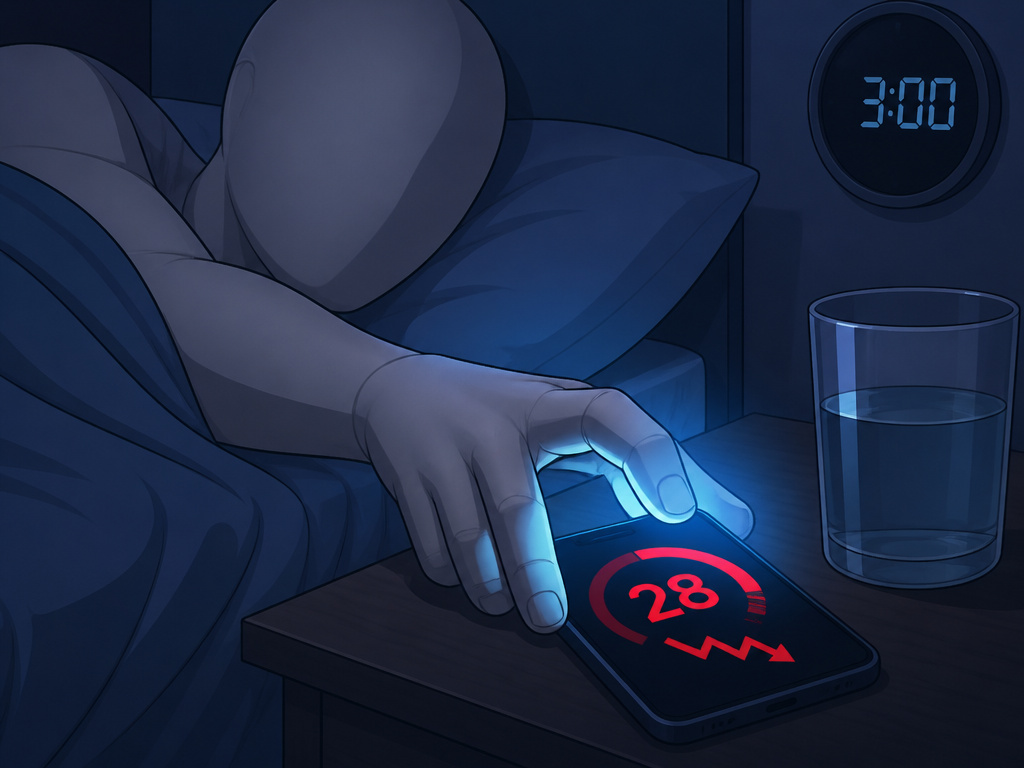
A sleep tracker can make your sleep worse. The consensus says so directly, and it’s the least-quoted line in the whole document.
The concern is specific: some athletes become preoccupied with their sleep monitor data, and that preoccupation increases anxiety around sleep, which then produces worse sleep. The device creates the problem it’s measuring.
You know the shape of it. You wake at 3am, thumb the phone awake to check the score, and it reads badly. Now you’re awake for good, and the number is the reason.
Before you sync a wearable to a team dashboard, know who can see it.
Here’s how to tell whether tracking has tipped over:
- You check the score before you check the clock. The number is the first thing you look at, and it sets your mood for the morning.
- A bad score changes your session. You go lighter because the app said so, not because your body did.
- You’re napping to fix a number rather than because you’re tired.
None of that means trackers are useless. The consensus asks practitioners to weigh the pros and cons for each athlete, which is a long way from “everyone should wear one.”
Sleep Extension: Banking Hours Before Competition
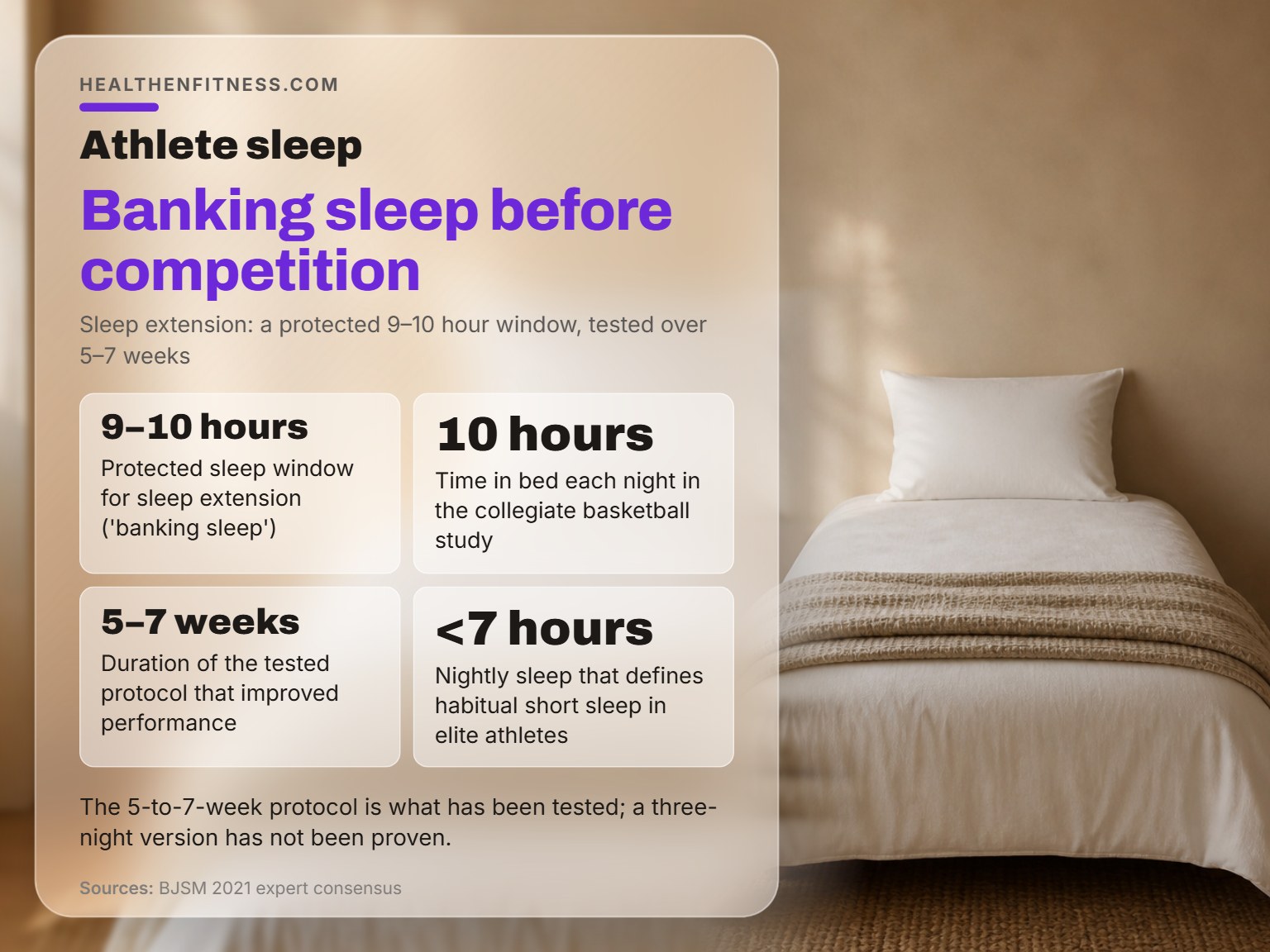
Sleep extension means scheduling a longer sleep opportunity than normal, usually a protected window of 9 to 10 hours. The consensus calls the strategy “banking sleep,” and the point is to arrive at a period of anticipated sleep loss with a surplus rather than a deficit.
The strongest evidence for it comes from collegiate basketball. Players who held a 10-hour time in bed schedule every night for 5 to 7 weeks improved reaction time, sprint times, mood, and free-throw shooting accuracy.
Read that again. Free-throw accuracy. A sleep intervention moved a fine motor skill.
Here’s how competition-night sleep loss breaks down by scenario:
| Scenario | Typical sleep lost | Countermeasure |
|---|---|---|
What a 9-to-10-hour window actually looks like
It’s not 10 hours of sleep. It’s 10 hours of protected time in bed, which is a different and more achievable thing. If you normally get up at 6:30, a 10-hour window means lights out at 20:30.
That’s an early night, and it’s the part people abandon first. The consensus is clear that the benefits come from the window being protected, not from trying harder to fall asleep faster.
More protected sleep time is the lever; the recovery processes that follow are downstream of it.
One limitation worth naming: the consensus says future research should focus on the role and impact of sleep extension and napping on sleep health and performance in elite athletes. The 5-to-7-week protocol is what has been tested. Nobody has proven a three-night version works.
Frequently Asked Questions
Is 8 hours enough for an athlete?
There’s no settled athlete number. The 2021 BJSM consensus says a blanket 7-to-9-hour target is unlikely to be ideal and recommends individualising to your own perceived need.
How long should an athlete nap?
Under 30 minutes if your window is short, so you avoid waking with sleep inertia from deeper sleep stages. The consensus specifically recommends a 15-to-20-minute mid-afternoon coffee-nap, with caffeine taken just before you lie down.
Should I nap if I sleep badly at night?
The consensus says no. Athletes who have problems falling asleep at night should avoid naps altogether, because daytime sleep makes night-time sleep onset harder rather than easier. Fix the night first.
Does sleep extension actually improve performance?
In collegiate basketball players, a 10-hour time in bed schedule held for 5 to 7 weeks improved reaction time, sprint times, mood, and free-throw shooting accuracy. The consensus notes that future research should focus on the role and impact of sleep extension and napping on sleep health and performance in elite athletes.
What if I’m sleeping enough but still exhausted?
That’s a screening question, not a scheduling one. The consensus recommends sleep screening as part of managing athlete health, with referral to a sleep specialist for clinical diagnosis where needed. Sleep-focused strategies are likely to be ineffective while an untreated sleep disorder is present.
The Bottom Line
One threshold worth carrying with you: if you’re consistently under 7 hours a night, you’re in the territory the consensus defines as habitual short sleep, and no nap protocol fixes that on its own.
The second thing is a concession. Everything above assumes a reasonably healthy sleeper. If you snore heavily, wake gasping, or fall asleep within minutes of sitting still during the day, the individualised-target conversation is the wrong conversation. Get screened first.
And a warning about certainty. The consensus itself says the quality of much of the available research on athlete sleep is poor, largely because the methods have been inconsistent and unreliable. Anyone quoting you a precise athlete sleep number with total confidence is quoting past the evidence.
Today, just write down what time you went to bed and what time you got up. That’s the whole task. Do it for two weeks and you’ll have a real number to work from instead of somebody else’s.
