
10 Best Rehabilitation Equipment For Hospital Therapy Gyms
This post contains affiliate links. As an Amazon Associate, we earn from qualifying purchases.
For hospital therapy gyms, the Yeezoo 7FT Physical Therapy Parallel Bar stands out as the Best Overall pick. Its industrial-grade steel build, adjustable height and width, and floor-mount stability make it reliable for daily balance and gait work. The Fabrication Enterprises Wood Platform Parallel Bars earn the Best Adjustable Height & Width award for long gait sessions. The THERABAND Resistance Bands Set takes the Best Non-Latex Beginner Set spot for sensitive-skin patients.
Outfitting a therapy gym means balancing heavy-duty fixed equipment with portable tools that work across treatment rooms, bedside, and outpatient spaces. The real challenge is finding gear that supports multiple patient types, from early-stage stroke recovery to post-surgical strength work, without blowing the budget on specialty items that only serve one function.
This guide is research-based, drawing from manufacturer specifications, expert round-ups, and patterns in owner feedback across ten product categories. We highlight the specific use case for each pick so you can match equipment to your facility’s patient population and floor plan.
Top 10 Rehabilitation Equipment For Hospital Therapy Gyms in the Market

Certain content that appears on this site comes from Amazon. This content is provided "as is" and is subject to change or removal at any time.
The Best Rehabilitation Equipment For Hospital Therapy Gyms, Reviewed
Yeezoo 7FT Physical Therapy Parallel Bar

What We Like
- Adjustable height and width for customized setups
- Industrial-grade steel supports up to 333 lbs
- Pre-drilled holes for floor mounting stability
- Rust-resistant powder coating for easy cleaning
Trade-offs
- At 60 lb, it is heavy to reposition alone
- Requires permanent floor mounting for full stability
A 333-pound weight capacity on industrial-grade steel means this parallel bar can handle serious upper-body rehab work without wobble or worry. With four height settings and three width options, it adapts to different patient sizes and exercises, from gait retraining to posture correction. The pre-drilled base plates and included expansion screws let you bolt it down for rock-solid stability, so therapists can focus on the patient, not the equipment shifting mid-session.
At 60 pounds and with holes pre-drilled for permanent floor mounting, this bar is clearly meant to stay put in a dedicated rehab space. It supports up to 333 pounds thanks to industrial-grade steel and reinforced joints, so it can handle daily use by a range of patients. The four height settings and three width options let you dial in the setup for gait training, posture correction, or upper body work, but don’t plan on moving it around between sessions.
Product photos
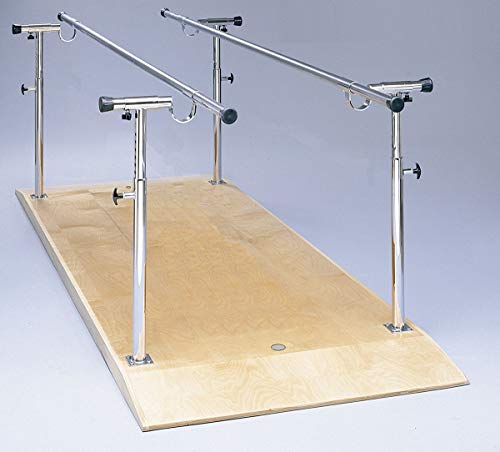
Fabrication Enterprises Wood Platform Parallel Bars
What We Like
- 10 ft length for long gait training
- Height adjustable from 26" to 44"
- Width adjustable from 19" to 26"
- Stable wood platform base
Trade-offs
- No built-in handgrip texturing noted
- Large footprint requires dedicated floor space
A 10-foot working length means patients can take full, natural strides without turning mid-walk. That is exactly what a hospital therapy gym needs for gait retraining and balance work. The height range from 26 to 44 inches accommodates everyone from a child to a tall adult, while the width adjustment between 19 and 26 inches lets you narrow or widen the bars for different body frames or specific rehab exercises. That kind of fit flexibility is rare in a single unit, and the wood platform keeps the whole setup grounded and stable under load.
Compared to the Yeezoo 7FT parallel bar, this model gives you three extra feet of walkway, which matters more for a hospital setting than for a smaller home rehab space. If your gym has limited square footage or you need a portable bar that breaks down, this one’s footprint might feel oversized.
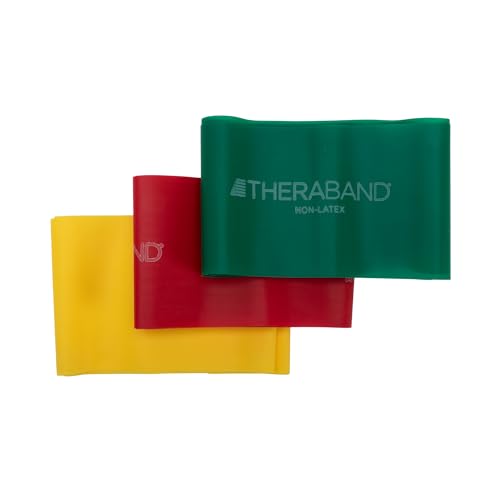
THERABAND Resistance Bands Set
What We Like
- Non-latex for sensitive skin and latex-free hospitals
- Color-coded bands for easy progression tracking
- Lightweight and portable for therapy anywhere
- Beginner-friendly low-impact resistance training
Trade-offs
- Low resistance range limits advanced strength work
- Each band only 5 feet long restricts some exercises
The three bands deliver from 3 pounds up to 6.7 pounds of resistance, so this set is built for safe, gradual progression in early-stage rehab or beginner strength work. The non-latex material is a standout for hospital therapy gyms that enforce latex-free policies or for patients with sensitive skin, and each band wipes clean easily between uses. At just 0.1 pounds and 59.1 inches long, it slides into a gym bag or drawer, making it just as practical for bedside or at-home follow-up as it is in a clinic setting. For someone taking first steps after an injury, the low resistance and gentle feel can help rebuild confidence without overwhelming the user.
The trade-off is that the low resistance ceiling caps out quickly once a patient regains strength. For heavier loading or advanced conditioning, you will need to step up to a higher-resistance band set or free weights. Compared to the Sammons Preston Cuff Weight 15 lb, which is a weighted cuff for direct limb loading, these bands offer different movement patterns but cannot match the progressive overload needed for later-stage rehab. Still, for a latex-free, hospital-safe starter kit that supports gradual gains, this set serves its purpose without overwhelming a beginner.
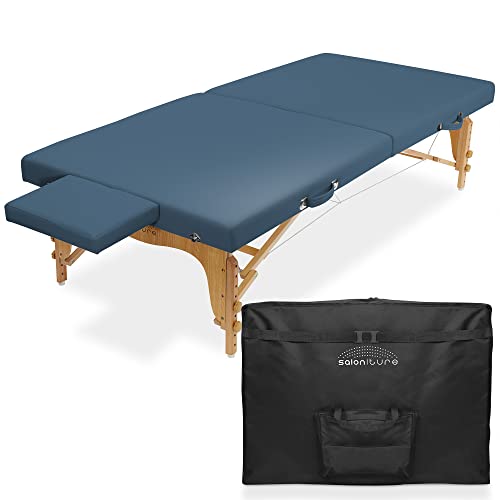
Saloniture Portable Physical Therapy Massage Table
What We Like
- 450 lb weight capacity
- 2" thick high-density foam cushioning
- Oil and water-proof PU leather cover
- Folds with carry case for portability
Trade-offs
- 24" max height limits standing therapist use
A 450-pound weight capacity puts this table in a class of its own for hospital therapy gyms where bariatric patients or heavy-duty stretching routines are the norm. The hardwood frame and steel support cables handle that load without flex, while the 2-inch high-density foam keeps clients comfortable even during longer sessions. For facilities that need one table that can safely support a wide range of body types without sacrificing cushioning, this is the straightforward answer.
The 450-pound weight capacity means this table can accommodate a wide range of client sizes, making it a practical choice for busy clinics. At 37 pounds, it’s light enough to carry with the included nylon case and shoulder strap, yet the hardwood frame and steel cables keep it sturdy during stretching or deep-tissue work. The maximum height of 24 inches suits floor-level or seated treatments, but therapists who prefer standing may find it low. Unlike the Yeezoo parallel bars, which are built for gait training, this table is designed for manual therapy and hands-on care.
Product photos
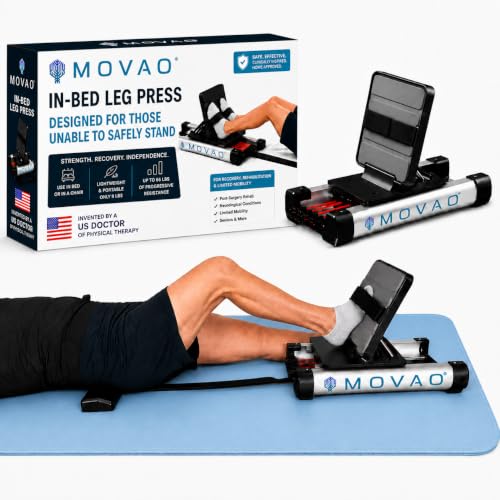
MOVAO Mini In-Bed Leg Press For Rehab
What We Like
- 6 progressive resistance levels for early recovery
- Works on bed, chair, wheelchair, or floor
- 9 lb portable with carry case included
- Smooth linear glide with padded footplate
Trade-offs
- Feels light for anyone leg pressing over 100 lb
- Needs firm surface or board under soft mattress
This leg press tops out at roughly 66 lb of band tension, which is exactly the sweet spot for stroke survivors, post-surgery patients, or anyone rebuilding basic leg strength from a bed or chair. It’s designed for early-stage recovery, not heavy gym work, so you can start with the lightest cord and progress at your own pace. The unit weighs just 9 lb, folds compactly, and comes fully assembled with a carry case, meaning it can travel from a hospital bed to a recliner or even a wheelchair without fuss. Stabilizer straps and carabiners keep it from sliding on firm surfaces, and the padded footplate glides on precision rails for smooth, joint-safe movement.
The MOVAO is built for early-stage recovery, not the gym. If your patient can already leg press over 100 lb at the gym, this will feel too light. That’s by design, it’s built for the ICU-to-home care journey, not for maxing out plates. The MOVAO swaps cords in under 60 seconds, includes a spare, and is best used on a firm surface like a firm mattress, hospital bed, recliner, floor, or sturdy chair. On a very soft pillow-top mattress, the included stabilizer straps or a board underneath will keep it steady. For therapists and caregivers who need a lightweight, progressive leg press that meets patients where they are, this is a focused solution.
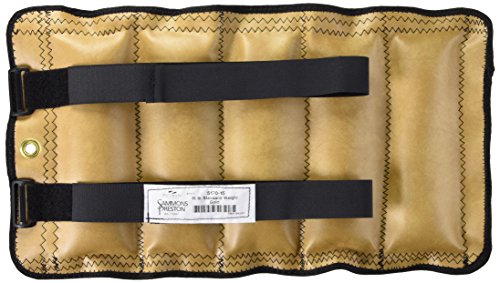
Sammons Preston Cuff Weight 15 lb
What We Like
- Lead-free steel fill for safe strength training
- Two adjustable Velcro straps secure position
- D-ring closure for easy on and off
- Circular grommet for simple hanging storage
Trade-offs
- Sold individually, not as a pair
- Single weight limits bilateral training without buying two
A single 15-pound cuff means you can add serious resistance to ankle or wrist exercises without needing a whole rack of dumbbells. The lead-free steel fill keeps it clinic-safe, and the two Velcro straps with a D-ring closure hold it snug during walking, jogging, or plyometric drills. This makes it a natural fit for athletes rebuilding strength after an injury or for therapy gyms that need reliable, adjustable weight that won’t slide around mid-rep. The gold color and reinforced exterior stitching are part of the design, and the circular grommet at the end lets you hang it up fast when the session is done.
A single 15-pound cuff weight is a serious step up from lighter options, so someone fresh out of surgery or just starting rehab might find it too demanding right away. Compared to something like the THERABAND Resistance Bands Set, which offers progressive resistance in a much lighter package, this cuff demands a bit more baseline strength before it feels right. But for a therapy gym that already has lighter options, this single 15-pound cuff fills a gap for progressive loading without taking up much shelf space.
Product photos
OPTP Dynamic Duo Balance & Stability Trainers
What We Like
- Slip-resistant base for safety on various surfaces
- Set of 2 allows individual or tandem use
- Multi-plane movement for foot and ankle rehab
- Compact size stores easily in therapy gyms
Trade-offs
- 2-inch height limits challenge for advanced users
- Not suitable for users needing high instability or deep ankle range
A slip-resistant base that grips most surfaces means you can focus on balance work without worrying about the trainer sliding mid-rep. At just over two pounds per unit, these compact discs are easy to grab from a shelf and set up anywhere in the gym. They are designed for dynamic stability, multi-plane movement, and rehabilitation, making them a versatile tool for physical therapy and conditioning.
The two-inch height and eight-inch diameter keep the difficulty moderate, so these are best for early-stage rehab or gentle balance work. For users who need deeper ankle range or higher instability, the YCCHENG Adjustable Arm Leg Pedal Exerciser is a different tool entirely. It’s a portable pedal exerciser for seniors and stroke therapy, not a balance trainer. But for slip-resistant, low-risk balance training that supports early recovery, these two little discs earn their spot in the cart.
Drive Medical Overdoor Exercise Pulley System

What We Like
- Mounts over any standard door
- Includes 8-foot traction rope
- Comes with adjustable spreader bar
- Works seated or standing
Trade-offs
- 0.1 lb unit requires user to provide resistance
- Weighs only 0.1 pounds, so no built-in resistance
An 8-foot rope and overdoor mount let you start shoulder rehab without bolting anything to a wall or buying a heavy frame. That simplicity is exactly what a hospital therapy gym needs when multiple patients cycle through different stations each day. The included 12-inch adjustable spreader bar and water bag are part of the kit. For early-stage shoulder recovery or post-surgery mobility, this system gets the job done with zero setup fuss.
At 0.1 pounds, the pulley system is lightweight enough to toss in a gym bag or carry between rooms, making it easy to set up wherever there’s a door. The included water bag can be filled to add gentle resistance, but the real strength of this device is in guiding the shoulder through a full range of motion during rehab. Reviewers find it especially useful for early-stage recovery when the goal is mobility, not heavy loading. If you later need more resistance, you can supplement with cuff weights or bands, but on its own this is a mobility-first tool.
Product photos
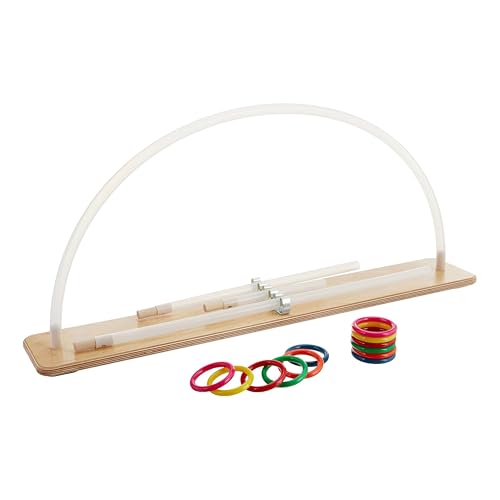
Rolyan Graded ROM Arc Range Of Motion Exerciser
What We Like
- Four adjustable arc heights for progression
- Lightweight 2.2 lb design for portability
- Non-latex construction for allergy safety
- 12 colorful rings for visual tracking
Trade-offs
- Plastic tube limits weight-bearing compared to metal
- No wall-mount option for fixed installation
Four arc heights from 15 to 30 inches let you adjust the challenge as your shoulder, elbow, or wrist motion improves. Sliding the 12 colorful rings from one end of the plastic tube to the other builds controlled movement, exactly what a frozen shoulder or torn rotator cuff needs during rehab. At 2.2 pounds, the whole unit is light enough to carry between rooms or take to a therapy session.
The Rolyan Graded ROM Arc weighs just 2.2 pounds, so you can easily move it from a treatment table to the floor without straining your back. Its non-latex construction makes it suitable for users with latex sensitivities, and the 12 colorful rings let both patient and therapist track progress at a glance as the rings are slid along the plastic tube. The arc is designed specifically for upper extremity rehabilitation after conditions like frozen shoulder or rotator cuff surgery, not for supporting body weight or heavy resistance work.
Product photos
YCCHENG Adjustable Arm Leg Pedal Exerciser

What We Like
- Adjustable height and resistance for custom rehab
- Lightweight and compact for easy storage
- Stable with rust-resistant steel and suction cups
- Built-in LCD monitor for progress tracking
Trade-offs
- Suction cups limit placement to smooth floors
- At 14.9 lbs, heavier than some portable options like resistance bands
The YCCHENG MC26 pedal exerciser combines adjustable resistance and height so you can work your arms or legs while seated in a chair or sofa. That makes it a practical tool for seniors, stroke recovery, and muscle weakness rehab. Its 265-pound weight capacity and four suction cups keep it stable on smooth floors, and the compact 17.7 x 17.5-inch footprint means it tucks into a corner when not in use. A built-in LCD screen tracks time, distance, calories, and counts, helping you monitor progress without guesswork.
Portability is the trade-off here: at 14.9 pounds, it’s lighter than a parallel bar setup like the Yeezoo 7FT unit, but still heavier than a mini leg press or resistance bands. The suction cups work well on tile or linoleum, but they won’t grip carpeted gym floors. For a hospital therapy gym that needs a versatile, space-conscious option for both upper and lower body rehab, this bike delivers steady, low-stress movement without taking over the room.
Product photos
How We Evaluated Rehabilitation Equipment For Hospital Therapy Gyms
We reviewed specifications, manufacturer documentation, and patterns in owner feedback to build this list. Since hospital therapy gyms serve patients at vastly different recovery stages, we prioritized versatility, safety, and durability over flashy features.
The four criteria that mattered most: weight capacity and build quality. Can it survive daily clinical use? Adjustability matters too, does it accommodate different patient heights and abilities? Portability is key: can it move between treatment rooms or bedside? And safety features like non-slip bases, stable mounting, and latex-free materials where needed.
A research-led evaluation has limits, we can’t replicate years of daily wear in a clinic. But by cross-referencing specs with what physical therapists and hospital buyers report in their reviews, we identified the gear that holds up under real conditions. For specialized needs like knee rehab machines or stroke recovery equipment, we recommend consulting those dedicated guides.
What To Look For In Rehabilitation Equipment For Hospital Therapy Gyms
Choosing the right gear starts with understanding your patient mix and floor layout. A parallel bar that works for a heavy gait patient won’t suit a bedside leg press setup, and a resistance band set that serves early rehab may frustrate advanced strength work.
Focus on weight capacity, adjustability, portability, and safety certifications. Match each piece to a specific recovery phase, early, mid, or late-stage rehab, rather than buying one-size-fits-all equipment.
Weight Capacity And Build Quality
Hospital therapy equipment takes more abuse than home gear. Look for steel frames with powder coating or rust-resistant finishes. The Yeezoo 7FT bar supports 333 pounds with industrial-grade steel, while the Saloniture table handles 450 pounds for bariatric patients. Avoid plastic-heavy construction for weight-bearing tools like parallel bars or treatment tables.
Adjustability Range
A single parallel bar should serve a 5-foot patient and a 6-foot-4 patient. The Fabrication Enterprises bars adjust from 26 to 44 inches in height and 19 to 26 inches in width. For arm-leg bikes, check seat height range and resistance levels. The YCCHENG Adjustable Arm Leg Pedal Exerciser offers adjustable height and resistance, but its suction cups limit it to smooth floors, a detail that matters if your gym has carpet.
Portability And Storage
Not every therapy session happens in the gym. The MOVAO Mini In-Bed Leg Press weighs 9 pounds and works on beds, chairs, or wheelchairs. The Drive Medical Overdoor Pulley System mounts on any standard door with no installation. For gear that stays put, like parallel bars, pre-drilled floor-mounting holes add stability.
- Verify floor-mounting requirements for parallel bars before purchase
- Check suction cup compatibility with your flooring type
- Measure door clearance for overdoor pulley systems
- Confirm carry case dimensions for portable equipment
- Look for latex-free materials if your facility treats allergic patients
A general rule: buy the heaviest-duty parallel bar your floor space and budget allow, it will outlast two cheaper alternatives.
Rehabilitation Equipment For Hospital Therapy Gyms Compared
The table below compares each piece of rehabilitation equipment by its primary use case, key specs, and best-fit patient population.
| Product | Weight | Dimensions | Material |
|---|---|---|---|
| Yeezoo 7FT Physical Therapy Parallel Bar | 60.0 pounds | L 84.3 inches, W 32.0 inches, H 43.5 inches | Industrial-grade steel |
| Fabrication Enterprises Wood Platform Parallel Bars | N/A | 10 ft L x 19" – 26" W x 26" – 44" H | Wood platform |
| THERABAND Resistance Bands Set | 0.1 lbs | 59.1 x 4.0 inches | Non-latex |
| Saloniture Portable Physical Therapy Massage Table | 37 lbs | 72.75" L x 33.5" W | Hardwood frame |
| MOVAO Mini In-Bed Leg Press For Rehab | 9 lb | 24.5 × 11.5 × 5.5 in | N/A |
| Sammons Preston Cuff Weight 15 lb | 15 lb | N/A | Lead-free steel |
| OPTP Dynamic Duo Balance & Stability Trainers | 2.4 pounds | 8.2 x 8.2 x 2.0 inches | Professional-grade, slip-resistant base |
| Drive Medical Overdoor Exercise Pulley System | 0.1 pounds | 18.25 inches in length x 15.5 inches in width x 14.25 inches in height | N/A |
| Rolyan Graded ROM Arc Range Of Motion Exerciser | 2.2 pounds | 36" x 3/4" x 6" | Natural wood, Plastic tube |
| YCCHENG Adjustable Arm Leg Pedal Exerciser | 14.9 pounds | 17.7 x 17.5 x 36.5 inches | Rust-resistant steel tubes |
Frequently Asked Questions
What rehabilitation equipment does a hospital therapy gym need?
A well-equipped therapy gym typically needs a parallel bar for gait training, a treatment table for manual therapy, resistance bands for early-stage rehab, an arm-leg pedaler for cardiovascular work, and balance trainers for proprioception. The specific gear depends on whether the facility serves stroke patients, post-surgical cases, or general orthopedic rehab.
How much weight should therapy gym equipment support?
Weight capacity varies by equipment type. Parallel bars should support enough weight to accommodate bariatric patients. Treatment tables need a high weight capacity for heavy stretching and manual therapy. Resistance bands and cuff weights are lower-capacity tools, focus on progressive levels rather than maximum weight.
Can rehabilitation equipment be used for stroke recovery?
Yes, many pieces are designed specifically for stroke rehab. The MOVAO Mini In-Bed Leg Press works for early-stage leg recovery, while the YCCHENG Arm Leg Pedal Exerciser supports seated arm and leg cycling.
What is the difference between a therapy parallel bar and a standard gym parallel bar?
Therapy parallel bars are height- and width-adjustable to accommodate patients of different sizes and abilities. Standard gym parallel bars have fixed dimensions and are designed for bodyweight strength work. Therapy bars also feature floor-mounting options for stability during gait training, which standard bars rarely offer.
Are resistance bands safe for latex-allergic patients?
Standard resistance bands are often made of latex, which can trigger allergic reactions. The THERABAND Resistance Bands Set uses non-latex material, making it safe for sensitive-skin patients and latex-free hospital environments. Always check the material composition before purchasing bands for a therapy gym.
The Bottom Line
The Yeezoo 7FT Physical Therapy Parallel Bar is the best overall choice for hospital therapy gyms that need a heavy-duty, adjustable parallel bar for daily balance and gait training. Its 333-pound capacity and floor-mount stability make it ideal for fixed clinic spaces serving a wide range of patient sizes.
If your facility needs a longer bar for extended gait sessions, the Fabrication Enterprises Wood Platform Parallel Bars offer 10 feet of length with height and width adjustability. For facilities prioritizing latex-free options and early-stage rehab, the THERABAND Resistance Bands Set provides a safe, portable starter set.
The single most important buying factor is matching each piece of equipment to a specific recovery phase and patient population. A parallel bar that serves heavy gait patients is a different purchase than a 9-pound in-bed leg press for stroke recovery, and buying the wrong one wastes both floor space and budget.
