
10 Best Supportive Gym Shoes in 2026
This post contains affiliate links. As an Amazon Associate, we earn from qualifying purchases.
The Reebok Nano X5 Men’s Cross Training Shoes earn the Best Overall spot for their dual-density midsole that balances heel stability with forefoot comfort. That makes them the rare shoe that works for lifting, short runs, and circuit training alike. For heavy squats, the adidas Dropset Vario delivers maximum support, while the Reebok Nano Gym 1.0 offers a budget-friendly option without sacrificing arch support.
Finding a supportive gym shoe means balancing stability for lifting with cushioning for cardio and lateral moves. Too much of one usually means compromising the other. A shoe that keeps your foot aligned through a deadlift, a box jump, and a side shuffle requires thoughtful construction, not just marketing claims.
This guide is research-based, drawing on manufacturer specifications, expert round-ups, and patterns in owner feedback across ten models. We focused on midsole design, outsole traction, arch support, and weight to help you match a shoe to your training style. Whether you lift heavy, mix cardio and strength, or need all-day comfort, one of these picks fits your routine.
Top 10 Supportive Gym Shoes in the Market
Certain content that appears on this site comes from Amazon. This content is provided "as is" and is subject to change or removal at any time.
The Best Supportive Gym Shoes, Reviewed
Reebok Nano X5 Men's Cross Training Shoes

What We Like
- Dual-density midsole for heel stability and forefoot comfort
- Breathable Flexweave upper for lightweight movement
- Metasplit outsole adapts to lifting and short runs
- Removable insole with built-in arch support
Trade-offs
- At 1.0 lb, lighter than some prefer for heavy lifting stability
- Decoupled outsole reduces stability for maximal lifts
A dual-density midsole with firmer foam in the heel and responsive foam in the forefoot means this shoe gives you stability when you’re under a barbell and comfort when you’re jumping onto a box. It’s built for the person who wants one pair of gym shoes that can handle strength work, short runs, and everything in between. The breathable Flexweave upper keeps your feet from overheating during circuit-style training, and the removable insole with arch support lets you customize the fit if you need more or less support.
The trade-off here is weight: at just one pound, the Nano X5 is noticeably lighter than something like the adidas Dropset 4 Power Trainer, which weighs over two pounds. That lightness makes it great for dynamic workouts and running, but if your main focus is heavy squats or deadlifts, you might prefer a denser, heavier shoe that feels more planted. The decoupled Metasplit outsole also improves flexibility for movement-based training, but on loose or uneven ground it can feel a bit less locked in. For most gym-goers who mix lifting with cardio and agility work, though, this balance is exactly right.
adidas Dropset Vario Training Shoes

What We Like
- TPU torsion system for heavy lifts
- Repetitor Foam for stable cushioning
- Breathable mesh keeps feet cool
- Low-profile design enhances ground connection
Trade-offs
- Heavier than some cross-training shoes at 2.1 pounds
A TPU midfoot torsion system runs through the sole to lock your foot in place during heavy squats and deadlifts, helping you maintain proper form under load. That targeted support is paired with Repetitor Foam, which gives you a stable, responsive platform without sinking or wobbling, exactly what you want when the weight gets serious. The low-profile design keeps your foot close to the floor for better ground connection, while the wide-fit construction adds lateral stability. This shoe is built for lifters who prioritize a solid foundation over flashy features, and it delivers on that promise without sacrificing breathability or comfort during warmups.
The trade-off for that stability is weight: at 2.1 pounds per shoe, the Dropset Vario is heavier than the Reebok Nano X5 (1.0 pounds). That extra mass is fine for a lifting-focused session, but if your training mixes in a lot of jumping, agility drills, or treadmill work, you might feel the heft. The wide fit is designed for lateral stability, so it suits lifters who need that extra room, but it may not be the best choice if you prefer a snugger fit. For dedicated strength work, though, the Dropset Vario gives you a rock-solid base that lets you focus on the lift, not the shoe.
Product photos
Nike Free Metcon 5 Training Shoes

What We Like
- Wide heel for stable lifting base
- Softer foam core cushions foot
- Internal weave supports midfoot during cuts
Trade-offs
- Heavier than Reebok Nano X5 (1.8 vs 1.0 lb)
- Listed as a women's road running shoe, not for trail or hiking use
The wide heel creates a solid foundation for squats and presses, so you can push through heavy sets without wobbling. That stability is paired with a softer foam core that cushions landings during box jumps or quick step-ups. For women who mix strength work with cardio bursts, this shoe balances two needs that usually fight each other: a flat lifting base and enough comfort for dynamic moves.
The trade-off shows up in the weight. At 1.8 pounds, the Free Metcon 5 is noticeably heavier than the Reebok Nano Gym 1.0 (1.0 pound), which might feel sluggish during fast agility drills or long metcons. The softer foam also compresses more under very heavy loads than a firmer training shoe would, so if your sessions are almost all barbell work, a denser platform might feel more direct. For the lifter who wants one shoe for both the rack and the rig, this design hits a smart middle ground.
Product photos
adidas Dropset 4 Power Trainer
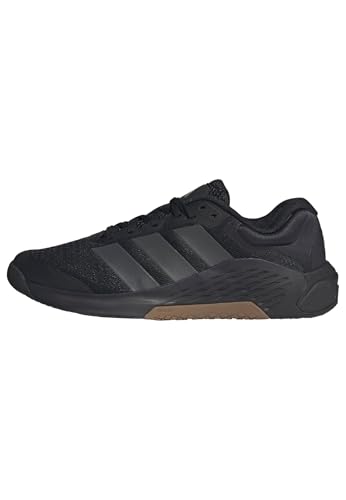
What We Like
- Continental rubber outsole for wet/dry grip
- Full-length Repetitor foam for energy return
- Geofit heel pods lock in support
Trade-offs
- At 2.1 lb, heavier than Nano X5 (1.0 lb)
- Heavier than Reebok Nano X5 for fast transitions
At 2.1 pounds, the Dropset 4 is heavier than the Reebok Nano Gym 1.0, which weighs 1.0 pound. That extra weight comes from the Geofit heel pods and Continental rubber outsole, which provide locked-in support and reliable traction on gym floors. For lifters who want a stable, grippy shoe for daily training, the trade-off in weight is worth the durability and grip.
Product photos
Reebok Nano Gym 1.0 Athletic Shoes

What We Like
- Removable insole with arch support
- TPU heel clip for lateral support
- Breathable mesh upper for airflow
- EVA midsole and rubber sole for traction
Trade-offs
- EVA midsole less stable for heavy deadlifts or max squats
A removable insole with built-in arch support means you can dial in the exact level of foot support your workout demands. Whether you leave the stock insole in or swap it for your own orthotic, that flexibility works well. A TPU heel clip locks your heel in place during lateral moves, and a breathable mesh upper keeps air moving. This makes a genuinely versatile gym shoe for anyone who shifts between cardio, lifting, and bodyweight work. It’s the kind of design that suits the person who wants one pair of shoes that can handle a morning jog, an afternoon squat session, and a quick walk without feeling like they’re wearing a compromise.
The Reebok Nano Gym 1.0 weighs just 1.0 pounds, making it one of the lightest cross-training shoes available. It’s lighter than the adidas Dropset Vario (2.1 pounds) or the PUMA Voltaic Evo (2.4 pounds), so it won’t weigh you down during runs or agility drills. Its EVA midsole and breathable mesh upper are designed for mixing short runs, lunges, and light-to-moderate lifting. Everyday gym-goers get a versatile shoe that doesn’t sacrifice comfort. For those who stick to general fitness routines rather than max-effort squat sessions, this shoe delivers the support you need without the bulk.
Nike Air Max Alpha Trainer 6
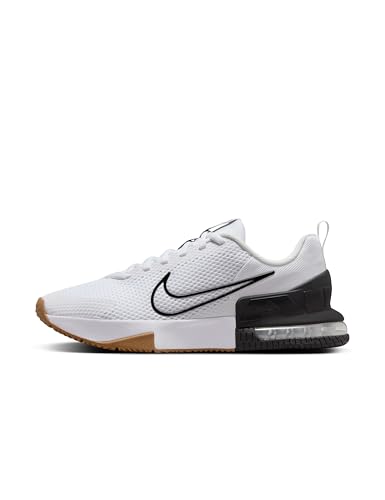
What We Like
- Heel Max Air unit tuned for stability
- Flat wide sole with rubber tread for traction
- Foam midsole and collar for lasting comfort
- Flex grooves in forefoot aid natural movement
Trade-offs
- Not designed for running or high-impact cardio
- No arch support mentioned for flat feet or plantar fasciitis
A heel Max Air unit that’s been fine-tuned for stability sets this shoe apart when you need to feel planted under a barbell or during balance-heavy moves. The flat, wide sole with a rubber tread pattern gives you traction on gym floors, while foam cushioning under both forefoot and heel softens each rep. That combination of targeted support and intentional padding makes it a smart pick for anyone whose workout involves standing, lifting, and holding positions rather than sprinting or jumping around.
The trade-off is that at just one pound, this shoe feels lighter and less substantial than something like the adidas Dropset 4 Power Trainer, which weighs over twice as much. That lightness helps with agility and lunges, the forefoot flex grooves are designed for exactly that, but if you prefer a heavier, more grounded feel for heavy deadlifts or pressing, you might notice the difference. It’s a comfortable, stable option for general gym work, especially if cushioning is your priority.
Product photos
New Balance 608 V5 Cross Trainer
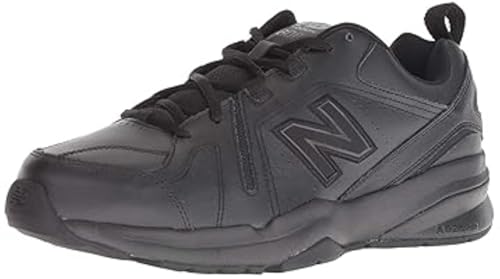
What We Like
- ABZORB heel absorbs impact
- Suede leather upper for durability
- Dual density collar supports ankle
- Phantom Liner reduces irritation
Trade-offs
- Not designed for heavy lifting or agility drills
- Suede upper limits breathability for intense workouts
The ABZORB heel crash pad and EVA foam midsole are designed to absorb impact and provide lightweight cushioning, which helps soften steps during everyday activities like standing or walking. The suede leather upper offers supportive structure that holds its shape over time, and the dual density collar wraps around the ankle for stability without irritation. This shoe suits someone who wants a comfortable, wide-fitting cross trainer that works for light gym use and daily wear, with a classic look that breaks in nicely.
The suede upper, while sturdy and classic-looking, lacks the breathability of mesh, so your feet may run warm during fast circuits. The ABZORB heel cushioning and EVA foam midsole prioritize all-day comfort over the firm ground feel some lifters want. The Reebok Nano X5 offers a different focus for those who put stability first under a barbell, while this New Balance suits routines that mix light training with plenty of walking or standing.
PUMA Voltaic Evo Cross Trainer

What We Like
- TPU shank for lateral stability
- SoftFoam+ cushioned insole
- Full-length rubber outsole for grip
- Wide-foot friendly fit
Trade-offs
- At 2.4 lb, heavier than Reebok Nano X5
- Not sized for women or narrow feet
A full-length rubber outsole and a built-in TPU shank work together to keep your foot planted during quick pivots and side-to-side drills. That makes the PUMA Voltaic Evo Cross Trainer a natural fit for anyone whose gym sessions involve agility work, ladder drills, or lateral hops. The SoftFoam+ insole adds plush heel cushioning, so you get impact protection without losing ground feel. A supportive cage overlay and TPU toe cap wrap the foot securely, which helps when you’re cutting hard or bracing for a heavy push.
The trade-off is weight. At 2.4 pounds, this shoe is noticeably heavier than the Reebok Nano Gym 1.0, which comes in at just 1.0 pound. If your priority is pure speed or you’re doing high-rep jump work, the extra heft might slow you down. But for cross-training that demands stability and grip over raw lightness, the Voltaic Evo’s construction earns its place. The wide-foot design also means a roomier toe box than many competitors, so those with broader feet won’t feel pinched during lateral moves. It is a deliberate, grounded shoe built for control, not sprinting.
OrthoComfoot Orthotic Walking Shoes
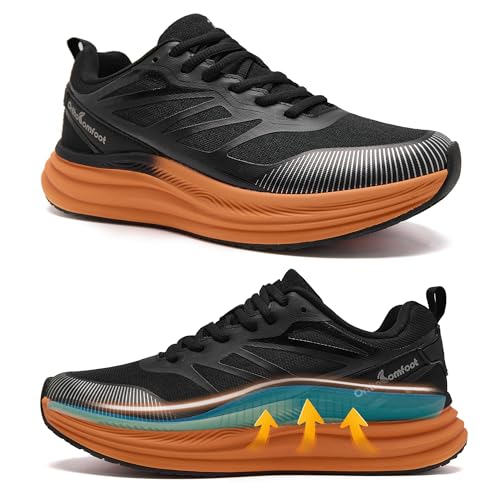
What We Like
- Firm orthotic arch support for flat feet
- Thick shock-absorbing midsole reduces joint impact
- Breathable mesh upper keeps feet cool
- Non-slip rubber outsole with multi-directional tread
Trade-offs
- At 0.6 pounds, lighter than most cross trainers
- Outsole optimized for road surfaces, not gym floor agility
A firm orthotic structure built into the midsole makes these shoes a direct answer for anyone dealing with plantar fasciitis, heel pain, or overpronation during runs or walks. That built-in support targets the arch specifically, so you get stable footing on road surfaces without needing separate insoles. The thick shock-absorbing midsole cushions each step, which helps reduce foot fatigue over longer distances or all-day wear. This pair suits runners and walkers who prioritize arch support and joint protection over the multi-directional demands of gym floor work.
The outsole tread is designed for road surfaces, which means it provides reliable grip for running and walking on pavement. If your gym routine includes heavy lifting, agility drills, or court sports, you might prefer a shoe with a broader stability platform. But for steady cardio, daily walks, and relief from arch pain, this design delivers exactly what it promises.
Product photos
FitVille Extra Wide Cross Training Shoes
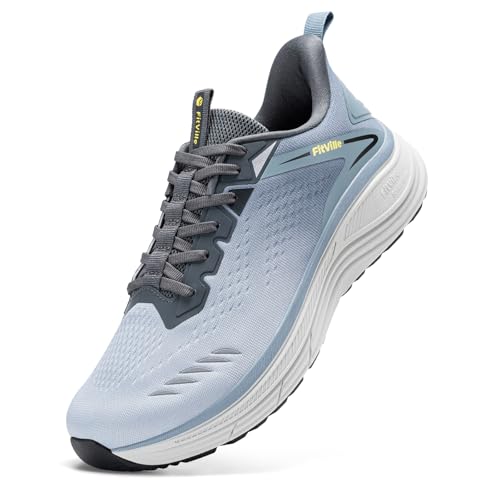
What We Like
- Generous toe box for wide feet
- Max cushion midsole absorbs shock
- Upgraded ArchCore insoles support arch and heel
- Slip-resistant outsole for gym floors
Trade-offs
- Lightweight build limits heavy-duty stability work
- Not designed for heavy lifting stability
A generous toe box and higher instep give wide feet room to move without squeezing, addressing common issues like flat feet or plantar fasciitis. The max cushion midsole absorbs shock and adds a little spring, making these shoes comfortable for gym sessions or walking the dog. Upgraded ArchCore insoles support your arch and cradle your heel, with moisture-wicking properties for steady comfort during daily wear or light athletic use.
The FitVille Extra Wide Cross Training Shoes are built for wide feet, with a generous toe box and higher instep that eliminate pinching for anyone with flat feet or plantar fasciitis. The max cushion midsole absorbs shock and adds spring to every step, making it ideal for walking the dog, running errands, or standing all day. The lightweight, breathable upper keeps feet comfortable during workouts or daily wear, and the slip-resistant outsole grips gym floors and trails with confidence.
Product photos
How We Evaluated Supportive Gym Shoes
We started by combing through manufacturer data on midsole compounds, outsole patterns, and weight specifications for dozens of cross-training and gym-specific shoes. From there, we cross-referenced expert round-ups from strength coaches and footwear reviewers to understand which design features actually translate to better support under load. Owner feedback patterns helped us spot real-world durability and comfort trends that specs alone miss.
Four criteria drove our rankings. Midsole and outsole construction matters most. A stable base for heavy lifts and responsive cushioning for cardio don’t always coexist, so we looked for smart engineering like dual-density foams and TPU shanks. Arch support was critical, especially for lifters with flat feet or plantar fasciitis; removable insoles earned bonus points. Weight affects how a shoe feels during dynamic movement, a heavy shoe can fatigue your feet in a metcon. Versatility separated single-use shoes from those that truly earn their spot in your gym bag.
A research-led evaluation has honest limits. We haven’t tested these shoes ourselves, so we rely on published specs, expert consensus, and consistent owner reports. Use this as a starting point, and if possible, try a pair on before committing, foot shape and personal preference still matter. For a deeper look at what makes a shoe supportive, our gym shoe buying guide breaks down the key factors.
What To Look For In Supportive Gym Shoes
Choosing a supportive gym shoe is about matching your training demands to the shoe’s construction. Here are the three criteria that matter most.
Look for a stable, flat base for lifting, enough midsole cushioning for cardio, and arch support that matches your foot type. Removable insoles let you add orthotics. Weight affects speed; heavier shoes offer more stability.
Midsole and Outsole Design
The midsole is where support lives. A dual-density midsole, like the one in the Reebok Nano X5, uses a firmer material around the heel for stability during lifts and a softer foam under the forefoot for comfort during runs and jumps. For heavy lifting, a flat, wide outsole with minimal compression, think the adidas Dropset Vario’s TPU torsion system, keeps your foot connected to the floor. The debate between flat and cushioned shoes for lifting comes down to your primary activity: flat soles for maximal stability, cushioned soles for mixed training.
Arch Support and Foot Type
Your arch dictates how much support you need. Flat feet and overpronation require a firmer, structured arch, often built into the insole or midsole. Removable insoles are a major advantage, they let you swap in custom orthotics or a higher-arch aftermarket insole. The OrthoComfoot Orthotic Walking Shoes and the FitVille Extra Wide Cross Training Shoes both prioritize arch support for flat feet and plantar fasciitis. For a targeted look at shoes for flat feet, our dedicated guide covers women’s options specifically.
Weight and Versatility
Shoe weight directly affects how agile you feel. Lighter shoes are better for cardio, agility drills, and fast transitions. Heavier shoes offer more stability for heavy squats and deadlifts but can feel clunky during burpees or box jumps. The best all-around gym shoe balances these trade-offs, light enough for metcons, stable enough for working sets.
- Check if the outsole has flex grooves in the forefoot for natural movement during lunges and jumps.
- Confirm the heel is wide enough to feel planted during a squat.
- Look for a TPU heel clip or external shank for lateral stability.
- Ensure the upper is breathable, mesh flexweave works better than suede for sweaty sessions.
- Test the fit with the socks you actually train in.
A shoe that fits well at the store will feel different under a barbell. Always prioritize heel lockdown and toe room over looks.
Supportive Gym Shoes Compared
The table below compares all ten supportive gym shoes side by side, highlighting weight, best use, and key support features to help you narrow your choice.
| Product | Weight | Upper Material | Arch Support |
|---|---|---|---|
| Reebok Nano X5 Men's Cross Training Shoes | 1.0 pounds | Flexweave | Removable insole |
| adidas Dropset Vario Training Shoes | 2.1 pounds | Breathable mesh | N/A |
| Nike Free Metcon 5 Training Shoes | 1.8 pounds | N/A | N/A |
| adidas Dropset 4 Power Trainer | 2.1 pounds | N/A | N/A |
| Reebok Nano Gym 1.0 Athletic Shoes | 1.0 pounds | Breathable mesh | Removable insole with arch support |
| Nike Air Max Alpha Trainer 6 | 1.0 pounds | N/A | N/A |
| New Balance 608 V5 Cross Trainer | 0.9 pounds | Suede leather | N/A |
| PUMA Voltaic Evo Cross Trainer | 2.4 pounds | N/A | N/A |
| OrthoComfoot Orthotic Walking Shoes | 0.6 pounds | Breathable mesh | Firm orthotic structure |
| FitVille Extra Wide Cross Training Shoes | N/A | N/A | Upgraded ArchCore insoles |
Frequently Asked Questions
What makes a gym shoe supportive for lifting?
A supportive lifting shoe has a stable, non-compressible sole, a wide heel base, and a secure midfoot lockdown. Flat soles or low-profile midsoles keep your foot from sinking during heavy squats and deadlifts. Look for TPU shanks, dual-density foam, or torsion systems, these prevent the shoe from collapsing under load.
Can I use supportive gym shoes for running?
Most supportive gym shoes are cross-trainers, not dedicated running shoes. They handle short runs (under a mile) and sprints well, but the stable, flat sole that helps with lifting limits the heel-to-toe transition needed for longer distances. If running is your primary workout, look for a shoe designed specifically for running with adequate cushioning and motion control.
How do I know if I need arch support in my gym shoes?
If your feet roll inward (overpronation) or you experience arch pain, heel pain, or shin splints after training, you likely need more arch support. A quick test: wet your foot and stand on a paper towel. A full footprint with little curve suggests flat feet that benefit from structured arch support. For shoes for overpronation, look for firmer midsoles and medial posts.
What is the difference between flat shoes and cushioned shoes for lifting?
Flat shoes have minimal midsole foam and a hard, flat outsole that maximizes ground contact and stability for heavy lifts. Cushioned shoes have thicker midsoles that absorb impact but can feel unstable under maximal loads. The choice depends on your priority: flat for powerlifting, cushioned for mixed training that includes jumps and runs.
Are wide-fit gym shoes less supportive than standard-width shoes?
Not necessarily. Many wide fit gym shoes maintain the same midsole and outsole construction as their standard-width counterparts. The extra room is in the toe box and forefoot, not the heel or midfoot where support matters most. The key is finding a wide shoe that still locks the heel down, a loose heel compromises stability regardless of width.
The Bottom Line
The Reebok Nano X5 is the best supportive gym shoe for most people because it balances stability, cushioning, and weight into one package that handles lifting, cardio, and circuits without compromise. If heavy squats and deadlifts are your focus, the adidas Dropset Vario offers the rigid platform and torsional support that dedicated lifters need. For budget-conscious gym-goers, the Reebok Nano Gym 1.0 delivers removable arch support and breathability at a lower cost.
Women who lift can rely on the Nike Free Metcon 5 for a stable heel that still cushions high-impact moves. Those with wide feet or flat feet should look at the FitVille Extra Wide for its generous toe box and arch-supporting insole. The New Balance 608 V5 is the pick if you want a shoe that transitions from the gym floor to the sidewalk without looking like gym gear.
The single most important factor in choosing a supportive gym shoe is matching the midsole firmness and outsole flatness to your primary training style. A versatile shoe like the Nano X5 covers most bases, but if your routine leans heavily into one discipline, maximal lifting or high-impact cardio, a shoe built specifically for that task will serve you better.
