
10 Best Recumbent Cross Trainers For Knee Rehabilitation
This post contains affiliate links. As an Amazon Associate, we earn from qualifying purchases.
For knee rehabilitation, the Sunny Health & Fitness Smart 2-in-1 Recumbent Elliptical is the best overall pick because it combines 16 resistance levels with app-guided workouts for safe, progressive recovery. The Teeter FreeStep Recumbent Cross Trainer Stepper offers a physical-therapy-inspired stride for joint protection, while the HCI Fitness CardioStep provides a 360° swivel seat for easy accessibility.
Anyone recovering from knee injury, surgery, or chronic pain needs a machine that delivers low-impact motion without forcing the joint through a painful range of motion. The wrong machine can aggravate an injury; the right one builds strength gradually while protecting the knee.
This guide is based on a thorough analysis of manufacturer specifications, expert round-ups on knee-safe exercise equipment, and patterns in owner feedback. We focused on resistance range, stride mechanics, seat accessibility, and overall stability to help you choose confidently.
Top 10 Recumbent Cross Trainers For Knee Rehabilitation in the Market


Certain content that appears on this site comes from Amazon. This content is provided "as is" and is subject to change or removal at any time.
The Best Recumbent Cross Trainers For Knee Rehabilitation, Reviewed
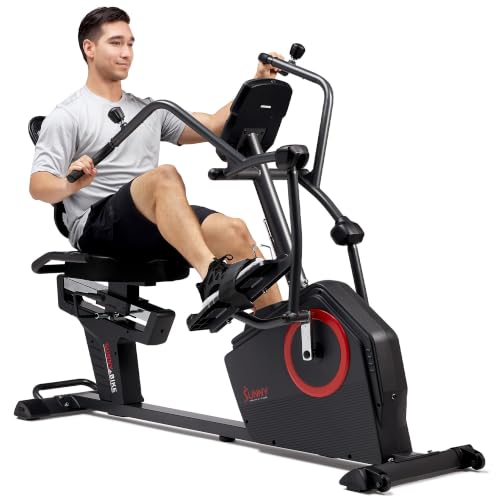
Sunny Health & Fitness Smart 2-in-1 Recumbent Elliptical
What We Like
- 16 electromagnetic resistance levels
- 24 workout programs including Watt Control
- Free SunnyFit app with 2,000+ workouts
- Easy step-through frame design
Trade-offs
- At 113.1 lb, it's heavy to move
- Seat adjustment range limited to 30.1-39.6 in inseam
A 300-pound weight capacity and a wide, cushioned seat with breathable mesh backrest make this a stable, comfortable choice for knee rehab. The 16-level electromagnetic resistance changes smoothly from the console, so you can start light and gradually build strength without sudden jolts. With 24 workout programs, including Watt Control and Heart Rate Control modes that automatically adjust resistance, you get precise, low-impact cardio that adapts to your recovery pace. The open step-through frame also means less awkward balancing when getting on and off, which matters when your knee is still tender.
The trade-off is size and weight: at 113.1 pounds and nearly six feet long, this machine takes up noticeable floor space and isn’t something you’ll easily tuck into a closet. For comparison, the Teeter FreeStep is heavier at 150 pounds but has a smaller footprint, so if you’re tight on room, that one might fit better. Still, the Sunny’s combination of app connectivity, preset programs, and adjustable handle positions gives you more ways to vary your workout without leaving the seat, perfect for keeping workouts varied without overloading your joints.
Teeter FreeStep Recumbent Cross Trainer Stepper

What We Like
- Patented physical therapy stride licensed from PT steppers
- Zero-impact motion eases stress on knees and back
- 20-level magnetic resistance with quiet operation
- Free personal training app included
Trade-offs
- At 150 lb, it is heavy to move without transport wheels
- Heart rate monitor sold separately
- Footprint requires 59 inches of floor space
A 350-pound weight capacity and a patented stride licensed from commercial physical therapy steppers mean this machine is built to handle real rehab work without compromising joint safety. The zero-impact stepping motion aligns your hips, knees, and ankles in a natural path, so you engage muscles more evenly while keeping stress off the joints that often flare up after injury or surgery. For anyone recovering from knee issues and wanting a machine that feels like it came straight from a PT clinic, the Teeter FreeStep delivers that gentle, controlled motion right in your living room.
The trade-off is heft: at 150 pounds, this is a substantial piece of gear, though the transport wheels help you reposition it across a room. Compared to some other recumbent cross trainers that weigh less, the Teeter asks more of your floor space and your willingness to move it. But if your priority is joint-friendly movement that mimics professional rehab equipment, that extra weight and footprint buy you a stability and stride quality that lighter machines simply cannot match.
Product photos
HCI Fitness CardioStep Recumbent Semi-Elliptical Cross Trainer
What We Like
- 360° swivel seat for easy entry
- 450 lb max user weight capacity
- 32 levels of electronic resistance
Trade-offs
- At 230 lb, very heavy to move
- 66" length needs substantial floor space
- Semi-elliptical motion not a full elliptical stride
The machine weighs 230 pounds and is 66 inches long, so it needs a permanent spot in your home and is not easy to move around. If floor space is limited, the Teeter FreeStep weighs 150 pounds and has a 350-pound weight capacity, though it does not include a swivel seat. For buyers who have enough room and value easy access, the CardioStep’s swivel seat and high weight capacity are practical features.
Sunny Health & Fitness Performance Recumbent Cross Trainer
What We Like
- Bluetooth connects to free SunnyFit app
- Dual arm handles for full-body workout
- Easy step-through seat for safe access
- Includes heavy-duty waterproof floor mat
Trade-offs
- Mat adds storage item to manage
- No preset resistance levels listed for independent adjustment
The Bluetooth connectivity and free SunnyFit app give you access to workout tracking and community features right away, which is a practical bonus for anyone wanting guided exercise without extra subscriptions. The dual motion arm exercisers and elliptical foot pedals let you work upper and lower body together or separately, which can be useful for low-impact training. The easy step-through seat makes getting on and off straightforward, especially if balance is a concern.
The Sunny Health & Fitness Performance Recumbent Cross Trainer connects to the SunnyFit app via Bluetooth. That lets you track progress, set goals, and compete on leaderboards, so you get guided workouts without needing a separate device. Its low-impact design protects joints while still challenging you, and the dual-motion arm exercisers work both upper and lower body together or independently. The easy on-off step-through frame makes getting seated safe and simple, and the included heavy-duty, waterproof mat absorbs vibration to protect your floor and equipment.
HCI Fitness PhysioStep LXT Recumbent Linear Stepper

What We Like
- 400 lb weight capacity supports larger users
- Oversized orthopedic seat with lumbar support
- Adjustable seat fits 4'6" to 6'4" heights
- Patented low-impact linear stepping motion
Trade-offs
- At 210 lb, it's heavy to move frequently
- 2.5' x 5' footprint requires dedicated floor space
A 400-pound weight capacity makes this the most accommodating recumbent cross trainer for heavier users recovering from knee issues. The oversized 20-inch orthopedic foam seat with lumbar support and swivel handle means you can settle in comfortably without straining your joints, while the patented linear stepping motion keeps impact low through the entire stride.
At 210 pounds, this machine is heavy enough that you will want to place it in a permanent spot rather than moving it often. The Teeter FreeStep weighs 150 pounds, so the PhysioStep LXT is noticeably more substantial, but that extra heft supports the higher weight capacity. Its 2.5 by 5-foot footprint fits in most rooms, but the weight means it stays put once set up.
Product photos
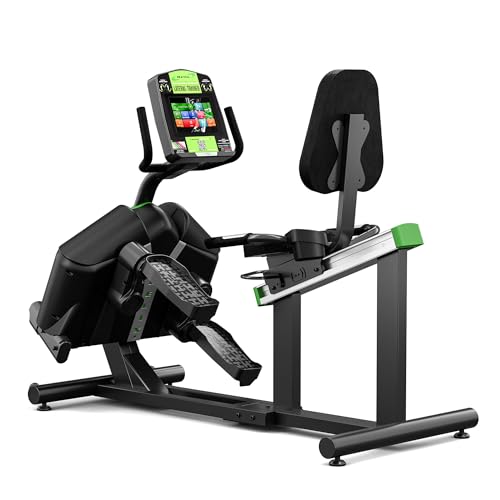
Helix Recumbent HR3500 Seated Lateral Trainer
What We Like
- Non-impact, joint-safe lateral motion
- Strengthens hips, knees, and stabilizer muscles
- 20 resistance levels and 9 preset programs
- Maintenance-free design
Trade-offs
- At 220 lb, very heavy to move
- No arm exercise included for upper body
The Helix Recumbent HR3500 uses a lateral (side-to-side) stride that targets the stabilizer muscles around the hips and knees, muscles that many forward-stepping recumbent trainers largely ignore. With 20 resistance levels and 9 preset programs, you can gradually rebuild strength without any impact on sore joints. The seated, non-impact design is clinically shown to be safer and more effective than other ellipticals, stepper exercise machines, or stationary bikes, making it a strong option for knee-friendly cardio.
The main trade-off is weight: at 220 pounds, this is one of the heaviest machines in this guide, so you will want to place it where it will stay. The lateral movement may take a few sessions to feel natural compared to the more intuitive forward stride of some other recumbent trainers. But if knee-friendly side-to-side strengthening is your priority, the Helix delivers a targeted workout that no other recumbent cross trainer in this roundup offers.
LFEYYD Recumbent Exercise Bike with Arm Exerciser

What We Like
- 16-level magnetic resistance for gradual rehab
- Arm exerciser enables full-body low-impact motion
- Bluetooth app tracks workout data
Trade-offs
- At 87 lb, moving it still requires effort
- No preset workout programs for guided sessions
A 16-level magnetic resistance system means you can dial in exactly the right tension for early recovery rides or build up to more challenging cardio as your knee strengthens. The sliding seat with press-lever adjustment and supportive backrest help you find a comfortable position without aggravating joints, while the arm exerciser keeps your upper body engaged for balanced, low-impact movement. This is the pick for anyone who wants rehab-friendly features without overspending, it covers the essentials for steady, gentle progress at home.
The 87-pound weight means you will appreciate those transport wheels, but it is still lighter than many competitors, making it easier to tuck away when not in use. If your priority is a straightforward, budget-friendly machine that respects your knees and your space, this one delivers where it counts.
Product photos
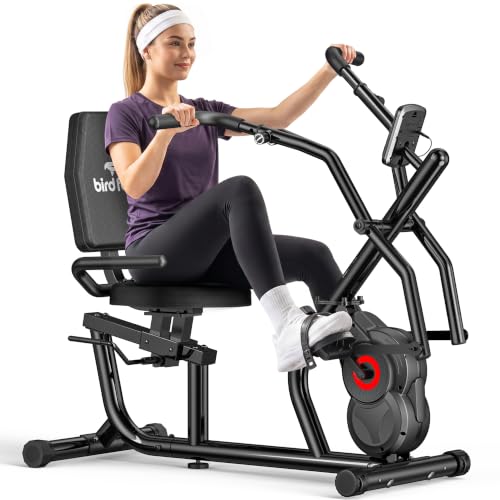
Birdfeel Recumbent Exercise Bike with Arm Exercise
What We Like
- Ultra-quiet magnetic drive
- Thick padded seat and backrest
- Joint-friendly low-impact motion
- Heavy-duty steel frame, 400 lb capacity
Trade-offs
- No preset programs or app connectivity
- 8 resistance levels limit advanced progression
A 50-pound frame and 400-pound capacity might sound contradictory, but this Birdfeel model uses a heavy-duty steel build that stays manageable to move. The front wheels help you reposition it, so you can shift it between rooms without much effort. The 8-level magnetic resistance keeps things whisper-quiet, so early morning sessions won’t wake the household, and the arm bars let you engage upper and lower body together. That full-body motion, paired with the low-impact motion, is suitable for steady, safe movement that protects joints during recovery.
The Birdfeel Recumbent Exercise Bike with Arm Exercise weighs only 50 pounds, which makes it easy to move around the house using the front wheels. You give up preset programs and Bluetooth connectivity, so you’ll rely on the LCD monitor for real-time tracking and adjust resistance manually via the dial. For someone recovering from knee injury who just wants a straightforward, comfortable ride, that simplicity is a strength. But if you crave structured workouts or app-based coaching, the Sunny Health & Fitness 2-in-1 Recumbent Elliptical offers 12 presets and a free app, though it weighs more than double. The Birdfeel prioritizes ease of setup, quiet operation, and joint-friendly motion over complexity, and that makes it a smart choice for rehab-focused home use.
Product photos
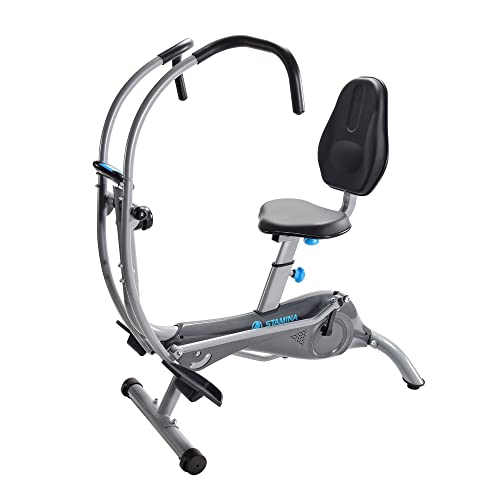
Stamina EasyStep Recumbent Stepper with Arm Workout
What We Like
- Compact size fits small spaces
- Built-in wheels for easy storage
- 8 levels of quiet magnetic resistance
- Adjustable seat and backrest
Trade-offs
- 70.5 lb weight limits room-to-room portability
- 250 lb capacity lower than some competitors
- No swivel seat for easier mounting
At 45.2 inches long, this recumbent stepper fits into tighter floor plans than many similar machines, making it a practical choice for a small home gym or apartment corner. The built-in wheels and 70.5-pound frame let you tilt and roll it to storage when not in use, and the adjustable padded seat with backrest helps you find a comfortable riding position. For anyone who wants upper-body engagement through the padded handlebars without sacrificing floor space, this unit keeps the footprint manageable.
Product photos
Inverapy RCT2025 Recumbent Cross Trainer

What We Like
- Patent-pending leg harness stabilizer system
- Swivel seat with low step-through mounting
- Multi-angular pedals for personalized positioning
- Chain-driven linkage stops pedal movement immediately
Trade-offs
- At 124 lb, moving it around is a two-person job
- Assembly required out of the box
- No built-in workout programs or app connectivity
The patent-pending leg harness stabilizer system keeps your feet positioned throughout the stride, which is useful if you want consistent foot placement without gripping the pedals. The swivel seat and low step-through frame make mounting and dismounting easy, a practical feature for anyone who finds high step-overs difficult. Multi-angular pedals let you adjust foot angle to match your preferred riding position. If controlled, supported motion is your goal, this machine provides the structure to achieve it.
At 124 pounds, the Inverapy RCT2025 is heavy enough that you will need to set it up in a permanent spot rather than stashing it away after each use. Compared to the Sunny Health & Fitness Smart 2-in-1 Recumbent Elliptical, which comes with app connectivity and preset programs, the Inverapy focuses on its patent-pending leg harness stabilizer system and straightforward design. That trade-off works well if your priority is stable, low-impact motion with a harness that keeps your leg aligned, but if you rely on guided workouts to stay motivated, you might miss the digital extras.
How We Evaluated Recumbent Cross Trainers For Knee Rehabilitation
Our research began by studying the specific mechanics of knee-friendly motion. We examined manufacturer documentation for each machine’s stride path, resistance system, and frame geometry, then cross-referenced those details with expert round-ups on knee rehabilitation machines and low-impact machines for bad knees. Owner feedback patterns helped us identify which machines consistently delivered comfort during early recovery versus those better suited for later strengthening phases.
Four criteria mattered most for this category. Resistance range determines how precisely you can increase load during rehab, too few levels and you jump from too easy to too hard. Stride mechanics matter because some machines mimic a natural walking motion while others use a lateral or linear path that targets different stabilizer muscles. Seat accessibility is critical for anyone with limited mobility after surgery. Finally, frame weight and footprint affect whether the machine stays put during use and fits your home.
A research-led evaluation has limits: we cannot claim personal testing of every machine, so we rely on aggregated owner experiences and published specs. What we can offer is a clear map of which features matter for each stage of knee recovery and how the top recumbent cross trainers compare on those features.
What To Look For In Recumbent Cross Trainers For Knee Rehabilitation
Choosing the right machine for knee rehab means understanding how each feature affects your joint during recovery. The table below summarizes the key differences between our top picks.
Focus on resistance range, stride type, seat accessibility, and build stability when comparing machines for knee rehabilitation.
Resistance Levels and Progression
The number of resistance levels directly affects how gradually you can increase load during rehab. Machines with 16 or more levels, like the Sunny 2-in-1 and the Teeter FreeStep, allow tiny increments that prevent sudden strain. Some models, like the Birdfeel, offer only 8 levels, which may work for early rehab but limit progression later. Look for magnetic resistance systems, which operate quietly and require no maintenance.
Stride Mechanics and Joint Path
The stride path determines which muscles and joints bear the load. Linear steppers mimic a walking or stepping motion, ideal for rebuilding gait patterns. Lateral motion trainers, like the Helix HR3500, target stabilizer muscles around the knee and hip, which can be valuable after certain injuries. The Teeter FreeStep uses a patented physical therapy stride licensed from professional PT steppers, making it a standout for post-surgery recovery. Understanding these differences helps you match the low-impact rehab equipment to your specific rehab goals.
Seat Design and Accessibility
After knee surgery, simply getting on the machine can be the hardest part. Swivel seats, found on the HCI Fitness CardioStep and Inverapy RCT2025, let you sit down facing the machine and rotate into position, eliminating twisting motions. Step-through frames, like those on the Sunny models, allow you to walk directly into the seat without lifting your leg over a crossbar. The HCI PhysioStep LXT adds an oversized orthopedic seat with lumbar support for longer sessions.
Weight Capacity and Frame Stability
A stable frame prevents wobble during motion, which is essential when your knee needs predictable, controlled movement. Higher weight capacities usually indicate heavier, more stable frames. The HCI Fitness CardioStep supports 450 lb, while the HCI PhysioStep LXT handles 400 lb. Lighter machines under 100 lb are easier to move but may feel less solid during use.
- Check the inseam range: some machines accommodate heights from 4’6″ to 6’4″, others only 5’2″ to 5’10”
- Measure your floor space: machines range from 4 feet to over 5.5 feet in length
- Verify the seat adjustment mechanism: some use a pin-lock system, others a sliding rail
- Look for transport wheels if you plan to store the machine between sessions
A machine that feels stable at your body weight will keep your knee safe during every rep.
Recumbent Cross Trainers For Knee Rehabilitation Compared
The table below compares the recumbent cross trainers side by side, highlighting resistance levels, stride type, weight capacity, and key design features for knee rehabilitation.
| Product | Resistance Levels | Dimensions | Weight |
|---|---|---|---|
| Sunny Health & Fitness Smart 2-in-1 Recumbent Elliptical | 16 electromagnetic | 71.7 x 33.3 x 50.8 in | 113.1 lb |
| Teeter FreeStep Recumbent Cross Trainer Stepper | 20 magnetic | 59.0 x 32.7 x 54.8 in | 150 lb |
| HCI Fitness CardioStep Recumbent Semi-Elliptical Cross Trainer | 32 levels | 66.0 x 25.0 x 56.0 in | 230 lb |
| Sunny Health & Fitness Performance Recumbent Cross Trainer | Magnetic | N/A | N/A |
| HCI Fitness PhysioStep LXT Recumbent Linear Stepper | N/A | 60.0 x 30.0 x 40.0 in | 210 lbs |
| Helix Recumbent HR3500 Seated Lateral Trainer | 20 | N/A | 220.0 pounds |
| LFEYYD Recumbent Exercise Bike with Arm Exerciser | 16-level magnetic | 52.5 x 26.5 x 43.5 in | 87.0 lb |
| Birdfeel Recumbent Exercise Bike with Arm Exercise | 8-level magnetic | 61.4 x 24.6 x 42.3 in | 50.0 pounds |
| Stamina EasyStep Recumbent Stepper with Arm Workout | 8 levels magnetic | 45.2 x 28 x 52 in | 70.5 lb |
| Inverapy RCT2025 Recumbent Cross Trainer | N/A | 53.0 x 35.8 x 45.7 in | 124.0 lb |
Frequently Asked Questions
What type of recumbent cross trainer is best for knee rehabilitation after surgery?
A machine with a zero-impact stride and gradual resistance progression is ideal. The Teeter FreeStep Recumbent Cross Trainer Stepper uses a patented physical therapy stride that mimics the motion used in professional PT settings, making it a strong choice for post-surgery recovery. Look for at least 16 resistance levels and a seat that offers easy entry without twisting.
Can I use a recumbent cross trainer if I have severe knee pain?
Yes, but start with the lowest resistance and focus on range of motion rather than intensity. Machines with a linear stepping motion, like the HCI PhysioStep LXT, provide a controlled path that reduces lateral stress on the knee. Always consult your physical therapist before starting any new exercise routine during active pain.
What is the difference between a recumbent elliptical and a recumbent stepper?
A recumbent elliptical uses a smooth, oval-shaped pedal path that mimics a cycling motion, while a recumbent stepper uses a vertical or linear stepping motion closer to walking. Both are low-impact, but recumbent ellipticals tend to engage more muscle groups through a longer stride, while steppers often allow more precise control over knee angle during each repetition.
How much resistance do I need for knee rehab?
A machine with at least 16 resistance levels allows you to increase load in small increments, which is safer for recovering knees. The Sunny Health & Fitness Smart 2-in-1 offers 16 levels plus Watt Control mode, which maintains a constant power output regardless of your cadence. Fewer resistance levels may jump from too easy to too challenging as you progress.
Should I choose a machine with arm exercisers for knee rehab?
Arm exercisers can help distribute effort across your upper body, reducing the load on your knees during longer sessions. Models like the Sunny Performance Recumbent Cross Trainer and the LFEYYD Recumbent Exercise Bike include dual arm handles that let you engage your arms and core. This full-body involvement can improve overall conditioning without increasing knee strain.
The Bottom Line
The Sunny Health & Fitness Smart 2-in-1 Recumbent Elliptical is the best overall choice for most people recovering from knee issues. Its 16 resistance levels, 24 workout programs, and step-through frame make it a stable, feature-rich partner for guided rehab at home. If your priority is the gentlest possible stride, the Teeter FreeStep’s physical therapy-inspired motion is worth paying more for.
For heavier users or those who need a high weight capacity, the HCI Fitness PhysioStep LXT supports up to 400 lb with an oversized orthopedic seat. Budget-conscious shoppers should consider the LFEYYD Recumbent Exercise Bike, which offers 16 resistance levels and arm exercisers at an affordable price point. The single most important factor is picking a machine whose stride path and resistance range match your specific rehab stage, start conservatively and progress slowly.
