
6 Best Organic Yoga Mats Under 200 in 2026
This post contains affiliate links. As an Amazon Associate, we earn from qualifying purchases.
The Y O Gayo Handmade Organic Cotton Yoga Mat wins as Best Overall because it combines 100% organic cotton construction with machine-washable convenience and a lightweight build that travels well. For those wanting a reversible surface, the Dalisa Organic Cotton Yoga Mat earns Best Reversible Design, while the Manduka eKO Yoga Mat takes Best Natural Rubber Mat for grippy studio sessions.
Shopping for an organic yoga mat means balancing material purity with the practical needs of your practice. Cotton mats absorb sweat beautifully but offer less cushion, while natural rubber provides grip but weighs more. You want something that aligns with your values without compromising how the mat performs during downward dog or savasana.
This guide is built from manufacturer specifications, material data, and patterns we found in owner feedback across the category. We focused on what matters most for an organic mat at this price point: material certification, grip performance, weight and portability, and cushion thickness. The result is a shortlist of six mats that genuinely earn their eco-friendly label.
Top 6 Organic Yoga Mats Under 200 in the Market
Certain content that appears on this site comes from Amazon. This content is provided "as is" and is subject to change or removal at any time.
The Best Organic Yoga Mats Under 200, Reviewed
Y O Gayo Handmade Organic Cotton Yoga Mat

What We Like
- Handwoven from 100% organic cotton
- Moisture-wicking and absorbent for hot yoga
- Lightweight and easy to travel with
- Machine washable for easy cleaning
Trade-offs
- At 0.1 inches thick, offers minimal cushion
- Narrower than some yoga mats at 26 inches wide
A 100% organic cotton mat that’s handwoven without dyes or harsh chemicals means your skin touches nothing but natural fiber during practice. That absorbent, moisture-wicking weave is a real friend when your palms get sweaty in a hot class, it won’t smell like synthetic mats do, and it breathes so you stay comfortable. At just 2.2 pounds, you can fold or roll it into a bag and take it anywhere, from the studio to the beach, without feeling like you’re hauling gear. This is the mat for someone who values eco-conscious materials and traditional craftsmanship over thick padding.
The trade-off is that 0.1-inch thickness gives you almost no cushion, so if your practice involves lots of kneeling or lying on a hard floor, you’ll feel every bit of it. Unlike the Manduka eKO Lite Yoga Mat with its 4mm of natural rubber cushion, this cotton rug is really a top layer for grip and sweat absorption rather than a standalone mat. You’ll want to place it over a carpet or a thicker mat for comfort. It’s also narrower than the Langjitianya Thick Cotton Yoga Mat’s 28-inch width, so broader-shouldered folks might find the 26 inches a bit snug.
Product photos
Dalisa Organic Cotton Yoga Mat
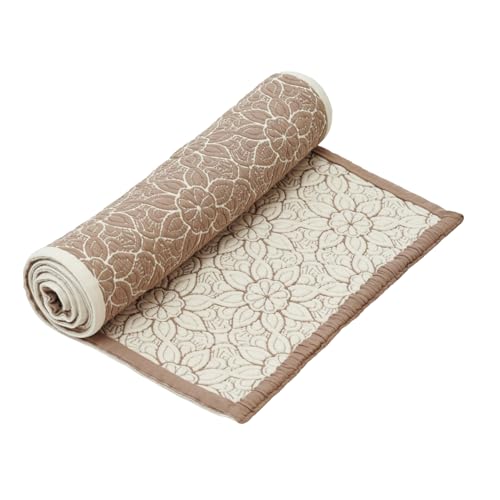
What We Like
- OCS Certified Organic Cotton top and bottom
- Non-slip support piece for smooth floors
- Lightweight with reusable cotton carry bag
Trade-offs
- At 24 x 67 inches, shorter than some alternatives
- 0.2-inch thickness offers minimal cushioning
The Dalisa Organic Cotton Yoga Mat weighs just 2.4 pounds and comes with a reusable cotton carry bag, so you can easily take it from home to studio to travel without extra bulk. Its OCS Certified Organic Cotton surface feels naturally soft against the skin, while the flat-woven construction keeps the mat smooth and lying flat during practice. The non-slip support piece adds grip on smooth floors, helping you stay steady through yoga, pilates, or stretching. For someone who wants a lightweight, sustainable mat that packs up neatly, this fits the bill.
The trade-off here is size and cushioning. At 67 inches long, this mat is shorter than the Y O Gayo Handmade Organic Cotton Yoga Mat, which measures 74 inches. With only 0.2 inches of thickness, the Dalisa provides minimal padding, so your knees may feel the floor in kneeling poses. If you prefer more cushion under bony spots, a thicker mat might work better. But for a lightweight, reversible organic option that stows in its carry bag, the Dalisa delivers what it promises.
Product photos
Cifupy Handmade Cotton Yoga Mat

What We Like
- Ultra-lightweight at 0.8 lb
- Absorbent and quick-dry cotton
- Eco-friendly hand-woven construction
- Works for hot yoga and travel
Trade-offs
- Folds or rolls, but not as compact as some
- Only 3 mm thick, offers little cushion for knees
At just 0.8 pounds, this cotton mat is one of the lightest options you can grab for yoga on the go. That feathery weight means you can toss it in a backpack or carry it to the beach without a second thought. The absorbent organic cotton handles sweaty hands and feet better than synthetic mats ever could, so it’s a natural fit for travelers, hot yoga enthusiasts, and anyone who values a breathable, eco-friendly surface that dries fast and won’t trap odors.
With only 3 mm of cotton, there’s almost no padding, so if you have sensitive knees or practice on a hard floor, you’ll feel every point of contact. By comparison, the Manduka eKO Lite Yoga Mat at 4 mm gives you more cushion and a rubber grip, but it weighs over six times as much. The Cifupy shines when you want to pack light and stay cool, just don’t expect it to replace a thick mat for restorative or floor-based poses.
Product photos
Manduka eKO Lite Yoga Mat

What We Like
- Textured grip for control in any style
- Lightweight and portable for smaller spaces
- Closed-cell design resists moisture and buildup
- Tear and scratch resistant for lasting use
Trade-offs
- At 71 inches, short for taller practitioners
- 4mm thickness offers less cushion for joint-sensitive users
- Requires special cleaner; avoid soap and sun exposure
The textured surface, called a Rippled Catch-Grip Design, enhances grip and stability across styles, from strong flows to slow holds. Made from 100% natural tree rubber and non-toxic materials, this mat offers a lighter, portable design for smaller spaces. Its closed-cell construction prevents moisture and buildup, so the mat stays clean with proper care.
At 4mm thick, this mat provides responsive cushion, but the Manduka eKO Yoga Mat is 5mm thick for those who prefer more padding. The 71-inch length suits many practitioners, though taller individuals may find it shorter than the 79-inch eKO option. For those who prioritize grip and a lightweight design, this natural rubber mat offers a textured surface and easy portability.
Manduka eKO Yoga Mat

What We Like
- 100% natural tree rubber construction
- Closed-cell design resists moisture and buildup
- 5mm thickness offers responsive cushion
Trade-offs
- Strong natural rubber scent when new
- Heavier than cotton mats at 7.5 lbs
A 5mm thickness from 100% natural tree rubber gives this mat a responsive, grounded feel that supports both vigorous flows and long held poses without bottoming out.
The trade-off comes with that new-mat scent: natural rubber has a noticeable smell that fades with fresh air and regular use, but it’s something to expect if you’re sensitive to odors. At 7.5 pounds, it’s noticeably heavier than a cotton mat like the Y O Gayo Handmade Organic Cotton Yoga Mat, making it less convenient for carrying to class. For home practice or studio sessions where you don’t haul your mat far, the eKO’s durable grip and eco-friendly build make it a worthwhile choice.
Product photos
Langjitianya Thick Cotton Yoga Mat

What We Like
- Absorbs sweat without pooling
- Eco-friendly natural plant dyes
- Folds small for travel and beach
Trade-offs
- Cotton absorbs moisture, so drying time matters
- 0.3 pounds is too light for stable fast-paced flows
This mat is a smart pick if you want a thick, absorbent surface that handles sweat without turning slippery. The light weight makes it easy to toss in a backpack for outdoor practice or a trip to the park.
That same featherlight build comes with a catch: at just 0.3 pounds, the mat can slide or bunch during fast-paced flows where you need stable traction. Compared to the Y O Gayo Handmade Organic Cotton Mat, which weighs 2.2 pounds, this one prioritizes portability over grip. If your practice is mostly gentle stretching, meditation, or hot yoga where you want sweat absorption, the cushion and eco-friendly materials make it a comfortable, washable choice. For dynamic vinyasa or poses that demand a locked-in surface, you might want something heavier.
Product photos
How We Evaluated Organic Yoga Mats Under 200
Our research started with the materials themselves. We looked at every mat’s construction claims, organic cotton certification, natural rubber sourcing, and any third-party verification like OCS certification, to separate genuine eco-friendly mats from those using the word “natural” loosely. We also reviewed manufacturer specifications for thickness, weight, dimensions, and care instructions to understand what each mat actually delivers in daily use.
We then cross-referenced those specs with patterns in owner feedback across hundreds of reviews. The criteria that mattered most were material purity (is it truly organic or natural?), grip in both dry and sweaty conditions, portability for studio and travel use, and cushioning for joint comfort. A mat that claims to be organic but sheds fibers or slides on hardwood floors doesn’t serve anyone.
An evaluation has honest limits. We can’t tell you how a specific mat feels during a long hot flow. What we can do is give you the facts about what each mat is made of, what owners consistently report, and which trade-offs to expect, so you can choose the one that fits your practice.
What To Look For In Organic Yoga Mats Under 200
Choosing the right organic mat means understanding how material, thickness, and weight affect your practice. Here is what to prioritize.
Focus on certified organic materials, then match thickness to your practice style and floor type. Cotton suits gentle or hot yoga; rubber suits grip-intensive flows. Weight and portability matter if you carry your mat daily.
Material Certification and Fiber Type
The term “organic” is not regulated for yoga mats the way it is for food, so look for specific certifications. The Dalisa mat carries OCS (Organic Content Standard) certification, which verifies the cotton is genuinely organic. The Y O Gayo mat is handwoven from 100% organic cotton, and the Manduka eKO line uses 100% natural tree rubber, not organic, but a renewable natural material. Understanding yoga mat materials helps you distinguish between organic cotton, natural rubber, and synthetic blends that use the word “natural” loosely.
Cotton mats absorb sweat and are machine-washable, making them ideal for hot yoga. Natural rubber mats offer superior grip in dry conditions but require specific care, avoid soap and direct sunlight. Some yogis prefer non-toxic yoga mats made from natural rubber for the peace of mind that comes with a chemical-free surface.
Thickness and Cushioning
Thickness directly affects joint comfort and stability. Cotton mats like the Y O Gayo (0.1 inches) and Cifupy (3mm) are thin and foldable but offer minimal padding for knees and wrists on hard floors. The Langjitianya Thick Cotton mat is thicker but still cotton-based, so it compresses under weight.
Natural rubber mats provide more responsive cushion. The Manduka eKO 5mm offers a good balance of support and ground feel for most practices, while the eKO Lite at 4mm is better for travelers who still want some padding. If you practice on carpet or a padded studio floor, a thinner mat works fine. On tile or wood, aim for at least 4-5mm of cushion.
Weight and Portability
If you carry your mat to and from the studio, weight matters. The Cifupy Handmade Cotton mat weighs just 0.8 lb, the lightest on our list, and folds small for a tote bag. The Y O Gayo is also lightweight and machine-washable, making it easy to clean after sweaty sessions.
Natural rubber mats are heavier. The Manduka eKO weighs 7.5 lbs, which is fine for home practice but noticeable on a commute. Some yogis prefer sustainable yoga mats that balance eco-friendly materials with portability, and cotton mats generally win on that front. If you drive to the studio, weight matters less. If you walk or bike, prioritize a mat under 3 lbs.
- Check the mat’s length against your height, the Dalisa is 67 inches, which may be short for taller practitioners.
- Look for a carrying strap or bag if you travel; the Dalisa includes a reusable cotton carry bag.
- Consider your practice style: hot yoga needs a washable, absorbent mat, while vinyasa needs grip and stability.
- Read care instructions before buying, cotton mats can go in the wash, but rubber mats need special cleaner and no sun exposure.
A good rule of thumb: cotton for sweat absorption and washability, natural rubber for grip and stability. Choose the material that matches your primary practice.
Organic Yoga Mats Under 200 Compared
The table below compares all six organic yoga mats side by side, covering their key specs and best-use scenarios.
| Product | Material | Dimensions | Weight | Thickness |
|---|---|---|---|---|
| Y O Gayo Handmade Organic Cotton Yoga Mat | 100% Organic Cotton | 74 x 26 x 0.1 in | 2.2 lb | 0.1 in |
| Dalisa Organic Cotton Yoga Mat | OCS Certified Organic Cotton | 24 x 67 x 0.2 in | 2.4 lb | 0.2 in |
| Cifupy Handmade Cotton Yoga Mat | Organic cotton | 70 x 24 x 0.1 in | 0.8 lb | 3 mm |
| Manduka eKO Lite Yoga Mat | 100% natural tree rubber | 71 x 24 in | 5.2 lbs | 4mm |
| Manduka eKO Yoga Mat | 100% natural tree rubber | 79 x 24 in | 7.5 lbs | 5mm |
| Langjitianya Thick Cotton Yoga Mat | 100% cotton | 80 x 28 x 0.2 in | 0.3 pounds | 8mm |
Frequently Asked Questions
What is the best organic yoga mat for hot yoga?
The Y O Gayo Handmade Organic Cotton Yoga Mat is the best choice for hot yoga. Its 100% organic cotton construction absorbs sweat rather than letting it pool on the surface, and it is machine-washable for easy cleaning after sweaty sessions. The Cifupy Handmade Cotton mat is another strong option for hot yoga, with quick-dry cotton that handles moisture well.
Are organic cotton yoga mats slippery?
Organic cotton mats are generally not slippery when dry, and they actually become grippier as they absorb moisture, the opposite of PVC mats. However, they lack the tacky grip of natural rubber mats, so they are better suited for gentle and hot yoga than fast-paced vinyasa or power flows that require a non-slip surface.
How thick should an organic yoga mat be?
For most practitioners, 4-5mm offers the best balance of cushion and stability. The Manduka eKO at 5mm provides responsive cushion for joint comfort without feeling unstable. Thinner cotton mats (0.1 inches or 3mm) work well on carpet or padded studio floors but offer minimal knee padding on hard surfaces. If you have sensitive joints, aim for at least 4mm.
Can you wash an organic cotton yoga mat?
Yes, most organic cotton yoga mats are machine-washable. The Y O Gayo mat can go in the washing machine on a gentle cycle and air-dried, which makes it easy to keep clean after regular hot yoga practice. Natural rubber mats like the Manduka eKO should not be machine-washed, they require a specialized cleaner and should be wiped down after each use.
What is the difference between organic cotton and natural rubber yoga mats?
Organic cotton mats are lightweight, absorbent, and machine-washable, making them ideal for hot yoga and travel. Natural rubber mats offer superior grip in dry conditions, more cushioning, and better durability for high-intensity practice. Rubber mats are heavier and require more care, while cotton mats are easier to clean but offer less grip and support. For more detail, our guide to natural yoga mats breaks down the differences.
The Bottom Line
The Y O Gayo Handmade Organic Cotton Yoga Mat is the best overall pick for eco-conscious yogis who want a lightweight, washable, natural-fiber mat for hot or gentle practice. Its handwoven organic cotton construction and machine-washable design make it uniquely practical for daily use, especially if you sweat during practice or travel to the studio.
If you need more cushion or prefer the grip of natural rubber, the Manduka eKO Yoga Mat is the best natural rubber option at 5mm thickness. Budget-conscious shoppers should explore budget-friendly organic mats for more affordable options, while the Dalisa Organic Cotton mat offers a great reversible design for studio use at a reasonable price.
The single most important factor when choosing an organic yoga mat is matching the material to your practice. Cotton serves gentle and hot yoga well, while natural rubber supports grip-intensive flows. Pick the material that fits how you move, and the right mat will follow.
