
10 Best Fitness And Heart Rate Trackers in 2026
This post contains affiliate links. As an Amazon Associate, we earn from qualifying purchases.
The Garmin Vivoactive 5 GPS Smartwatch is our best overall pick because it balances a bright AMOLED display, 11-day battery life, and Body Battery energy monitoring with nap insights in a versatile everyday watch. For iPhone users who want fast charging, the Apple Watch SE 3 earns our Best Fast Charging award, while the Fitbit Inspire 3 wins Best Slim Design for those who prefer a discreet tracker.
The challenge with choosing a fitness tracker is matching the features to your actual routine. A runner needs built-in GPS and training plans, while a gym-goer might prioritize heart rate integration with equipment. Battery life, display size, and whether you want a screen at all also shape the decision.
This guide is based on specifications, manufacturer documentation, and patterns in owner feedback across the top options. We focused on heart rate accuracy, battery life, workout modes, and usability to help you find the right tracker for your goals.
Top 10 Fitness And Heart Rate Trackers in the Market
Certain content that appears on this site comes from Amazon. This content is provided "as is" and is subject to change or removal at any time.
The Best Fitness And Heart Rate Trackers, Reviewed
Garmin Vivoactive 5 GPS Smartwatch

What We Like
- Bright AMOLED display with 11-day battery
- Body Battery energy monitoring with nap insights
- Over 30 built-in GPS and indoor sports apps
- Wheelchair mode with push tracking and activities
Trade-offs
- No cellular option for standalone calls
- Lacks broad third-party app support
An 11-day battery life with a bright AMOLED display means you can wear this tracker day and night without hunting for a charger every few days. That longevity pairs with Body Battery energy monitoring that now factors in naps, stress, and workouts to give you a clearer picture of when to push and when to rest. It suits anyone who wants a do-it-all health companion for daily life, from morning walks to HIIT sessions, without the fuss of frequent charging.
The Garmin Vivoactive 5 gives you up to 11 days of battery life in smartwatch mode, so you can wear it all week without hunting for a charger. That kind of stamina comes from a design focused on health and fitness tracking rather than running a full app store like the Apple Watch SE 3. For anyone who wants a reliable daily companion for sleep, recovery, and a wide range of workouts, this watch delivers exactly that.
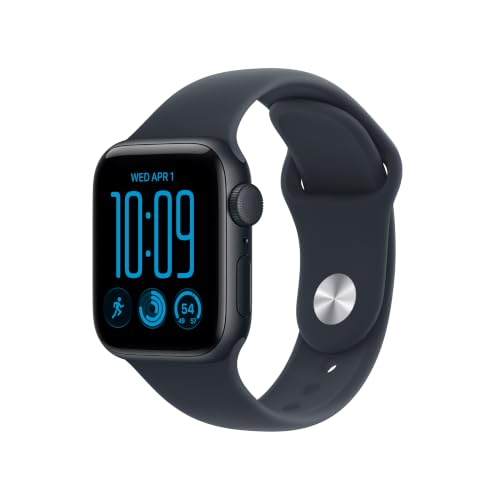
Apple Watch SE 3 GPS Smartwatch
What We Like
- Fast charging: 8 hours in 15 minutes
- Fall and crash detection for safety
- Temperature sensing for cycle tracking
- Siri AI for workout and wellness tips
Trade-offs
- Requires an iPhone for full connectivity
- No cellular option for calls without iPhone
All-day, 18-hour battery life means you can wear it from morning until bedtime without needing to recharge. Charging is up to twice as fast as the previous SE, so a quick 15-minute charge provides up to 8 hours of use. Temperature sensing enables insights in the Vitals app and Cycle Tracking app, giving you useful data for tracking sleep recovery or cycle trends. It’s practical for anyone who doesn’t want to worry about battery life during a busy day.
The SE 3 leans heavily on your iPhone for calls, texts, and GPS routing. If you leave your phone at home, you lose some of the standalone freedom you get from something like the Garmin Vivoactive 5. Still, for iPhone users who want a fast-charging watch that keeps you connected and safe without breaking a sweat over battery anxiety, this is the one to grab.
Product photos
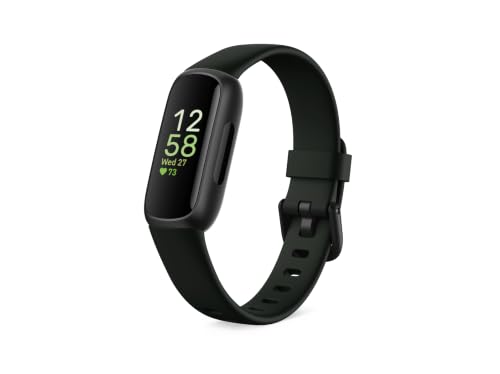
Fitbit Inspire 3 Fitness Tracker
What We Like
- Ultra-compact and lightweight design
- 24/7 heart rate and stress management
- Automatic sleep tracking with smart alarm
- 40+ exercise modes included
Trade-offs
- No built-in GPS for outdoor runs
- Small screen limits real-time workout data
- Requires smartphone for standalone GPS tracking
Weighing only 0.2 pounds and measuring less than two inches in its longest dimension, the Fitbit Inspire 3 is light and compact enough that you barely notice it during sleep or all-day wear. It tracks your heart rate 24/7, scores your daily stress levels, and offers guided breathing sessions to help you relax when life gets overwhelming. For anyone who finds bulky watches annoying but still wants solid fitness insights, this slim profile is a genuine relief.
The trade-off for that featherlight feel is that you won’t find built-in GPS here, so mapping a run means carrying your phone along. Compared to the Garmin Vivoactive 5, which includes GPS, the Inspire 3 relies on your phone for location data. But if your priority is a tracker that stays comfortable through sleep and workouts alike, and you’re fine keeping your phone in your pocket, this little band delivers the core health metrics without the bulk.
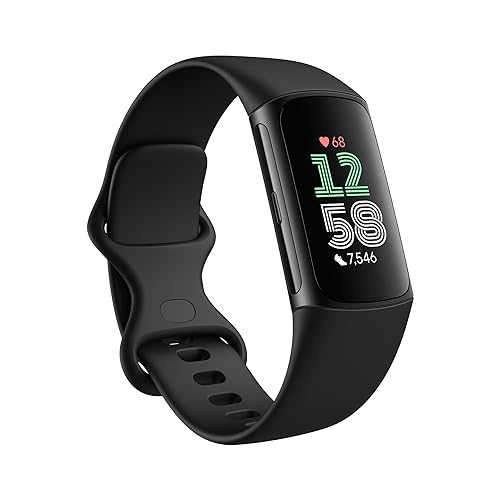
Fitbit Charge 6 Fitness Tracker
What We Like
- Links heart rate to gym machines
- Built-in GPS for runs and rides
- Google Maps turn-by-turn directions
- 3-month Google Health Premium trial
Trade-offs
- No onboard music storage for offline play
- Band sizes limited to small and large
The Fitbit Charge 6 does something most trackers don’t: it beams your heart rate straight to compatible treadmills, ellipticals, and other gym machines so you can see your effort on the equipment’s display without wearing a chest strap. That single feature makes it the obvious choice if you spend most of your workout on cardio machines and want consistent, real-time data between your wrist and the console. It also packs built-in GPS for outdoor runs, over 40 exercise modes, and Google Maps directions on your wrist, so you can leave your phone behind and still navigate a new route. The sleep score and stress management score round out the daily picture, helping you tune into recovery without guesswork.
The Charge 6 lacks onboard music storage, so streaming tunes during a phone-free run isn’t an option here. If your training leans heavily toward outdoor navigation or you want a bigger display for glancing at metrics, the Vivoactive 5 might suit you better. But for anyone who lives on gym floor machines and values that direct equipment integration, the Charge 6 earns its spot in your gym bag.
Garmin Forerunner 165 Running Smartwatch

What We Like
- Personalized daily suggested workouts adapt to recovery
- Built-in GPS tracks pace, distance, and speed
- AMOLED touchscreen with traditional button controls
- Safety features: incident detection and Assistance
Trade-offs
- HRV and recovery data are estimates, not medical-grade
- Safety features require smartphone and network coverage
The daily suggested workouts that adapt based on your performance and recovery are the standout feature here. They take the guesswork out of planning your runs, adjusting intensity when you’re tired or pushing you when you’re ready. That makes this watch ideal for runners who want structured training without hiring a coach, especially if you’re following Garmin Coach or race-specific plans. The built-in GPS gives you reliable pace and distance outdoors, while the bright AMOLED touchscreen is easy to read mid-stride, and the physical buttons let you start a run without fumbling through menus.
Keep in mind that the recovery time and HRV status are estimates, not clinical measurements. If you need precise physiological data for medical reasons, you’d want a dedicated chest strap or a medical device. Compared to the Polar Pacer Pro, which offers similar training tools but with a more minimalist approach, the Forerunner 165 gives you a richer display and a similar number of activity profiles (25+ versus 34+ for the Polar). It’s a focused running companion that keeps training simple and effective.
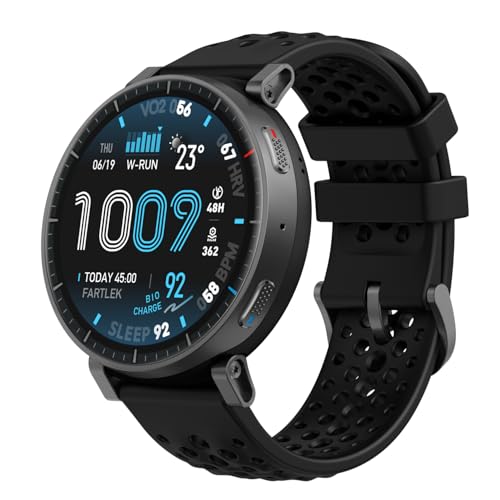
Amazfit Active Max Smart Watch
What We Like
- 25-day battery life
- 3000-nit AMOLED display
- 4GB onboard storage for maps and music
- 170+ workout modes with Zepp Coach
Trade-offs
- Requires Android phone for hands-free message replies
- No cellular option: needs phone nearby for calls
A 25-day battery life means you can wear this watch for weeks without hunting for a charger, perfect for long trips or anyone who forgets to plug things in. The 3000-nit AMOLED screen stays readable in direct sunlight, so you can check your pace on a bright trail run without squinting. With 4GB of storage for offline maps and music, plus 170+ sport modes, it suits everyone from casual walkers to marathon trainees who want personalized Zepp Coach plans.
One catch is that you need an Android phone to reply to messages hands-free, which limits convenience for iPhone users. Still, if battery longevity is your top priority, this watch offers up to 25 days of battery life. That’s longer than many other fitness trackers in this guide, while maintaining GPS accuracy with five satellite systems and a bright 3000-nit AMOLED screen.
Product photos
Suunto Run GPS Sport Watch

What We Like
- Extremely lightweight at 36g
- Dual-band GPS for precise tracking
- 12-day battery with daily use
- 4GB offline music storage
Trade-offs
- No built-in music streaming service support
- No offline music streaming, only local MP3 files.
At just 36 grams with the textile strap, this is one of the lightest GPS sport watches you can strap on for a run. That weight disappears on your wrist, making it easy to forget you’re wearing a watch packed with dual-band GNSS for accurate route tracking, a bright 1.32-inch AMOLED touchscreen, and enough battery to last 12 days between charges. It’s built for runners who want precise location data and recovery insights like Training Stress Score without lugging around a heavy device. The 4GB of offline music means you can leave your phone behind and still have your playlist along for the ride.
Product photos
Polar Pacer Pro GPS Fitness Watch

What We Like
- Ultra-light 41g design for runners
- 35-hour battery in training mode
- Recovery tools with sleep tracking
- Optical heart rate monitoring by Polar Precision Prime
Trade-offs
- No offline music or streaming support
- No music storage for phone-free runs
At just 41 grams, this watch is light enough that you might forget you are wearing it on a long run. That featherweight build matters when every ounce counts over miles, but what really sets it apart is the recovery toolkit paired with Polar Precision Prime optical heart rate monitoring. The same sensor that tracks your effort also feeds sleep and recovery data, helping you know when to push and when to rest. For anyone serious about balancing training with proper recovery, this is a focused tool that respects your body’s signals.
Runners who prioritize recovery data and a barely-there feel will find this watch delivers on both fronts without adding unnecessary weight. The 41-gram design is light enough to forget you are wearing it during long training sessions, which is a real advantage for those who dislike bulky gear. Some smartwatch features common on competing models, such as the Garmin Vivoactive 5 or Apple Watch SE 3, are not included here, so buyers should not expect full app stores or contactless payments. Instead, the focus stays on performance tools like Polar Precision Prime optical heart rate monitoring and specialized training programs for over 150 sports, along with sleep and recovery metrics that help guide smarter training decisions.
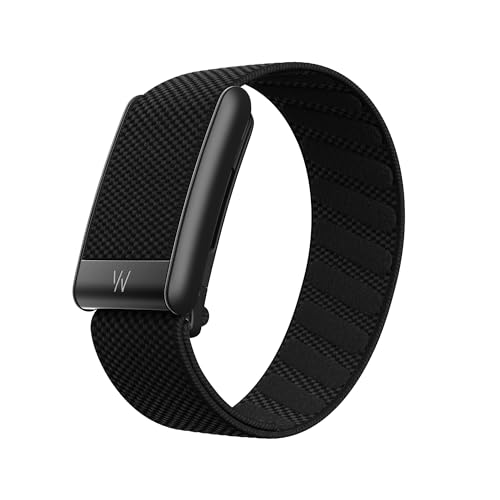
WHOOP 5.0 Screenless Fitness Wearable
What We Like
- 14+ day battery with wrist charging
- 99%+ heart rate and HRV accuracy
Trade-offs
- Bulky compared to slim wristbands (7.4 inches long)
- Larger than many wrist-worn trackers at 7.4 inches long
A 14-plus-day battery that charges on your wrist without removing the tracker means you can wear it constantly and never lose a night of sleep data. That continuous tracking is the whole point here. The WHOOP 5.0 measures heart rate, HRV, respiratory rate, blood oxygen, and skin temperature around the clock, then feeds it into an AI coach that tells you what to do next. It’s built for people who want deep recovery insights and long-term health trends rather than a quick glance at their step count. The screenless design keeps it lightweight and comfortable for all-night wear, and the Healthspan feature even calculates how your habits are aging you.
The WHOOP 5.0 has no screen, so you cannot glance at your heart rate mid-set or see a map of your run without pulling out your phone. Unlike the Garmin Vivoactive 5, which does not require a membership, the WHOOP needs a 12-month subscription to access its coaching and metrics. If you want a simple, subscription-free tracker with a display for on-the-wrist feedback, the Garmin is an alternative. But if your priority is uninterrupted sleep and recovery data with an AI that adapts to your habits, the WHOOP 5.0 delivers that in a way screen-based watches may not match.
Product photos
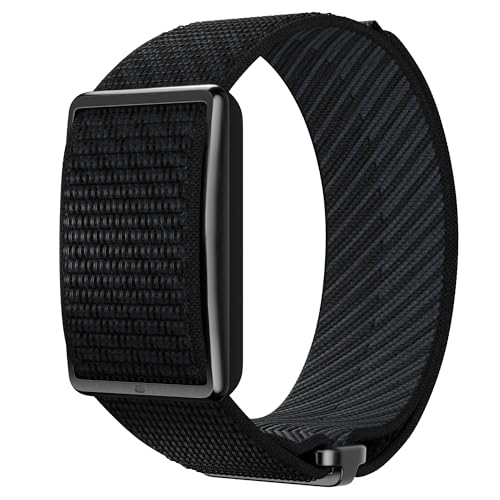
Polar Loop Screen-Free Health Band
What We Like
- No monthly subscription needed
- 24/7 heart rate monitoring
- Screen-free for distraction-free wear
- 8-day battery life
Trade-offs
- No display for quick glances
- No GPS for outdoor route tracking
A 29-gram band you can forget you’re wearing, with continuous heart rate tracking that runs for eight days between charges. That’s the core promise of the Polar Loop: full health monitoring without a screen to pull your attention or a monthly fee to drain your wallet. It’s built for people who want the data, sleep quality, resting heart rate, nightly recovery metrics, but don’t need a mini phone strapped to their wrist. The Polar Flow app gives you all the insights without locking anything behind a paywall, so you get the same detailed sleep and heart rate analysis from day one.
The obvious downside is no display, so you can’t glance down mid-run to check your pace or see a notification. If your goal is uninterrupted focus, during work, sleep, or training, and you’re happy to review your stats later, this band delivers exactly that. If you want on-wrist feedback during a workout, you’ll want a screen.
Product photos
How We Evaluated Fitness And Heart Rate Trackers
To build this list, we examined each tracker’s published specifications, battery claims, and sensor capabilities. We also reviewed expert round-ups and studied what owners consistently praise or criticize in their long-term use. This research-led approach helps identify which devices perform well for different types of activity.
The four criteria that mattered most were heart rate monitoring reliability, battery life for your workout frequency, built-in GPS versus phone-dependent tracking, and the variety of exercise modes available. A tracker that excels in all four areas is rare, so we prioritized trade-offs based on common workout styles.
A research-led evaluation cannot replicate the controlled conditions of a lab test, but it does reveal real-world patterns. We prioritized devices with consistent owner feedback across multiple sources rather than single outlier reviews.
What To Look For In Fitness And Heart Rate Trackers
The right tracker matches your primary activity, your willingness to charge it, and whether you want a screen or prefer a screenless band. Focus on the features that matter for how you actually move.
Choose a tracker with built-in GPS if you run or cycle outdoors without your phone. Prioritize battery life above 7 days if you dislike daily charging. Look for gym equipment integration if you spend most of your workout on machines.
Heart Rate Monitoring And Sensor Accuracy
Optical heart rate sensors on the wrist are standard, but their accuracy varies during high-intensity intervals or weightlifting. Some trackers, like the Polar Pacer Pro, use proprietary optical technology (Polar Precision Prime) to improve consistency. If your primary goal is precise heart rate data for zone training, you may want to explore the chest strap vs wrist debate to understand the trade-offs between convenience and precision.
Battery Life And Charging Speed
Battery life ranges from roughly one day to 25 days depending on display type and GPS use. The Amazfit Active Max claims 25 days of typical use, while the Apple Watch SE 3 charges to 8 hours of use in just 15 minutes. If you travel frequently or forget to charge, prioritize a longer battery life or fast charging capability.
Built-In GPS And Route Tracking
For runners and cyclists, built-in GPS is essential for tracking pace, distance, and route without carrying a phone. The Garmin Forerunner 165 and Suunto Run both offer dual-band GPS for precise tracking in challenging environments. Trackers without built-in GPS, like the Fitbit Inspire 3, rely on your phone’s GPS, which is fine for casual walks but less convenient for serious outdoor training.
Workout Modes And Training Features
The number of exercise modes matters less than whether your specific activities are included. The Garmin Vivoactive 5 offers over 30 built-in sports apps, while the Fitbit Charge 6 links heart rate data directly to gym equipment. For runners, the Garmin Forerunner 165 provides daily suggested workouts that adapt to your recovery. If you plan to use a heart rate monitor for training, look for zone-based alerts and recovery insights.
- Check if the tracker supports your primary activity (running, cycling, swimming, yoga, weightlifting).
- Confirm whether GPS is built-in or phone-dependent.
- Verify if the device works with your smartphone operating system (iPhone or Android).
- Consider whether you want offline music storage for phone-free runs.
- Decide if you want a screen or prefer a screenless band like the WHOOP 5.0.
A tracker that matches your most frequent activity and your charging habits will serve you better than one with the longest feature list.
Fitness And Heart Rate Trackers Compared
The table below compares the 10 trackers across key specifications, including battery life, GPS capability, and heart rate monitoring features.
| Product | Display | Battery Life | Heart Rate |
|---|---|---|---|
| Garmin Vivoactive 5 GPS Smartwatch | AMOLED | Up to 11 days | Wrist-based 24/7 |
| Apple Watch SE 3 GPS Smartwatch | N/A | 18 hours | N/A |
| Fitbit Inspire 3 Fitness Tracker | N/A | N/A | 24/7 monitoring |
| Fitbit Charge 6 Fitness Tracker | N/A | N/A | 24/7, links to gym equipment |
| Garmin Forerunner 165 Running Smartwatch | AMOLED touchscreen | Up to 11 days | wrist-based heart rate |
| Amazfit Active Max Smart Watch | 1.5" AMOLED | Up to 25 days | Heart Rate |
| Suunto Run GPS Sport Watch | 1.32" AMOLED touchscreen | 12 days | N/A |
| Polar Pacer Pro GPS Fitness Watch | crystal clear, color | 35 hours | Polar Precision Prime optical |
| WHOOP 5.0 Screenless Fitness Wearable | Screenless | 14+ days | 99%+ HR and HRV |
| Polar Loop Screen-Free Health Band | Screen-free | 8 days | 24/7 continuous |
Frequently Asked Questions
What is the difference between a fitness tracker and a smartwatch?
A fitness tracker focuses on health metrics like heart rate, steps, and sleep, usually with a smaller display and longer battery life. A smartwatch offers additional features like messaging, apps, and cellular connectivity, often at the cost of shorter battery life. The Garmin Vivoactive 5 and Apple Watch SE 3 sit in the middle, blending fitness tracking with smartwatch functions.
Do I need built-in GPS on a fitness tracker?
Built-in GPS is useful if you run, hike, or cycle without your phone and want accurate pace and route data. Trackers without built-in GPS, like the Fitbit Inspire 3, use your phone’s GPS, which works fine for casual outdoor activity but drains your phone’s battery. If you train phone-free, prioritize a tracker with standalone GPS.
How accurate are wrist-based heart rate monitors?
Wrist-based optical heart rate monitors are accurate enough for steady-state cardio and daily activity tracking. During high-intensity intervals or weightlifting, they may lag behind a chest strap. For serious zone training, many athletes prefer a chest strap for its beat-by-beat precision.
Can I use a fitness tracker without a subscription?
Yes, most trackers work without a subscription. The WHOOP 5.0 requires a membership for full functionality, while the Polar Loop is a screen-free band with no monthly fee. Most Garmin and Fitbit devices offer core features without a subscription, though premium tiers provide additional insights like advanced sleep analysis.
What is the best fitness tracker for heart health?
Trackers with ECG functionality and advanced heart rate monitoring are best for heart health. The best fitness trackers for heart health include devices with optical heart rate sensors and features like irregular rhythm notifications. For medical concerns, always consult a doctor rather than relying solely on a wearable.
The Bottom Line
The Garmin Vivoactive 5 GPS Smartwatch is the best overall pick for anyone who wants a versatile everyday fitness watch with long battery life, a bright screen, and detailed health insights. It works well for runners, gym-goers, and casual users alike, with over 30 sports apps and Body Battery energy monitoring.
If you are an iPhone user who values fast charging and safety features, the Apple Watch SE 3 is your best bet. For runners who need adaptive training plans, the Garmin Forerunner 165 delivers personalized daily suggested workouts. Those who want a discreet, lightweight tracker for 24/7 heart rate and sleep insights should choose the Fitbit Inspire 3.
The single most important factor is matching the tracker to your primary activity. A runner needs GPS and training plans; a gym-goer needs equipment integration; a health-focused user needs accurate heart rate and sleep tracking. Pick the device that fits your routine, and it will help you stay consistent.
