
10 Best Natural Yoga Mats Under 200 in 2026
This post contains affiliate links. As an Amazon Associate, we earn from qualifying purchases.
The JadeYoga Harmony Yoga Mat is the best overall natural yoga mat under two hundred dollars, winning on its reliable natural rubber grip and a commitment to planting a tree for every mat sold. For taller practitioners, the Body By Yoga Luxury Cork Yoga Mat offers extra room. The Manduka eKO Lite Yoga Mat is our pick for a lightweight, portable option.
Shopping for a natural yoga mat means balancing grip, cushion, weight, and material. You want something non-toxic and eco-friendly, but it also needs to stay put during downward dog and feel comfortable under your knees. It is a trade-off, and the right choice depends on your practice style.
This guide is research-based, drawing on manufacturer specifications, expert round-ups, and patterns in owner feedback to narrow down the best options. We have focused on mats made from natural rubber, cork, and jute that stay under two hundred dollars, so you can find a sustainable mat that fits your budget and your practice.
Top 10 Natural Yoga Mats Under 200 in the Market
Certain content that appears on this site comes from Amazon. This content is provided "as is" and is subject to change or removal at any time.
The Best Natural Yoga Mats Under 200, Reviewed
JadeYoga Harmony Yoga Mat

What We Like
- Natural open-cell rubber for grip
- No PVC, phthalates, or heavy metals
- Tree planted for every mat sold
- Lightweight at 4.9 pounds
Trade-offs
- Open-cell rubber absorbs sweat and moisture
- Thinner than extra-thick mats for joint comfort
A 3/16-inch thickness and natural open-cell rubber give this mat the kind of grip that keeps you planted in downward dog without sliding around. It weighs just under five pounds, so it’s easy to carry to class or stash in a closet between sessions. For yogis who value a secure, non-slip surface and want a mat made without PVC or harsh chemicals, this one delivers a clean, responsive practice that feels stable from the first pose.
The open-cell rubber surface absorbs moisture more readily than closed-cell or cork alternatives, so owners report wiping it down after sweaty sessions to keep it fresh. At 68 inches long and 24 inches wide, it is shorter and narrower than the 80-by-26-inch Body By Yoga Luxury Cork Mat. If grip and eco-friendly materials are your priorities, this mat’s traction and sustainability are key features.
Product photos
Body By Yoga Luxury Cork Yoga Mat

What We Like
- Extra long and wide for tall users
- Cork layer thicker than standard mats
- Grip improves with sweat for hot yoga
- Natural rubber base stays put on floors
Trade-offs
- At 9.9 lb, heavy to carry to class
- 0.2-inch thickness is thin for hard floors
At 80 by 26 inches, this mat gives you more than enough room to stretch out fully without your hands or feet slipping off the edges. That extra length and width is a rare find among natural yoga mats, and it means tall practitioners or anyone who likes a wide stance can finally stop adjusting mid-pose. The cork surface is deliberately thicker than the paper-thin layer on many competitors, so it holds up better over time and feels more comfortable under your palms and knees. Designed by yoga instructors, it balances cushioning from the natural rubber base with the stability you need for standing poses.
The trade-off is weight. At nearly ten pounds, this mat is noticeably heavier than something like the Manduka eKO Lite at 5.2 pounds, so if you walk or bike to the studio, you will feel the difference. The 0.2-inch thickness provides firm support for balance poses, but if you have sensitive knees and practice on hard floors, you may want extra padding underneath. For home practice where you can leave it unrolled, or for the serious yogi who wants a large, durable surface that stays put, the extra heft is a fair price to pay.
Manduka eKO Lite Yoga Mat

What We Like
- 100% natural tree rubber construction
- Textured surface for reliable grip
- Closed-cell design resists moisture buildup
- Lightweight at 5.2 lb for easy portability
Trade-offs
- 4mm thickness offers less cushioning than thicker mats
- Narrower 24-inch width limits side-to-side space
- Requires special cleaner; avoid soap and sun exposure
At 5.2 pounds, this mat is genuinely easy to carry from home to studio or between rooms, which matters when you want a natural rubber option that doesn’t feel like you’re hauling a tire. The 4mm thickness keeps it portable but still gives enough cushion for most floor work, and the textured surface from the Rippled Catch-Grip Design helps you hold poses without slipping, during flows or steady balances. Made from 100% natural tree rubber with a closed-cell construction, it also resists sweat and moisture from soaking in, so the mat stays cleaner between sessions.
The trade-off for that lightweight feel is less padding under knees and joints compared to thicker mats like the Manduka eKO (5mm) or some cork options that run 6mm or more. At 24 inches wide, it’s also narrower than several competitors, which might feel tight if you spread your limbs wide in standing poses. If you prioritize easy transport and a grippy natural surface over maximum cushion and width, this mat delivers a clean, functional practice without the bulk.
Product photos
Manduka eKO Yoga Mat

What We Like
- 100% natural tree rubber construction
- Textured rippled catch-grip for stability
- 5mm thickness balances cushion and feel
- Closed-cell design resists moisture and scratches
Trade-offs
- Strong natural rubber scent when new
- At 7 lbs, heavier than some travel mats
A 5mm thickness made from 100% natural tree rubber gives this mat a noticeably plush, forgiving feel under your hands and knees, ideal for longer holds or restorative flows where extra cushioning matters. The textured rippled catch-grip surface helps you stay planted during standing poses, and the closed-cell construction keeps sweat and dirt from soaking in, so it stays cleaner between sessions. If you prefer a softer landing without losing connection to the floor, this is the natural rubber mat that delivers that comfort directly.
A few quirks come with the natural rubber: it has a characteristic scent that may be stronger when first unrolled, and fresh air and regular use can help soften it over time. At 7 pounds, this mat is heavier than the 4.9-pound JadeYoga Harmony, making it less convenient to carry to the studio. For a home practitioner who values cushioning and eco-friendly materials over portability, though, this mat’s supportive thickness is hard to beat.
Satori Concept Cork Yoga Mat
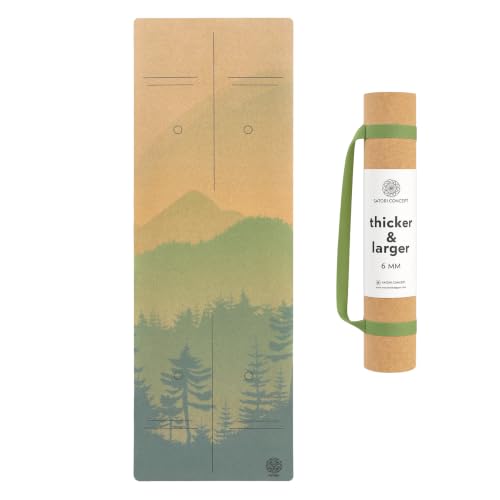
What We Like
- Extra-large 80×26 surface for spacious movement
- Non-toxic, sustainable materials with no chemical smell
- Cork grip improves with sweat for secure practice
Trade-offs
- At 8.0 lb, heavier than standard mats for travel
- 6 mm thickness less plush than thicker cushion mats
An 80-inch length and 26-inch width give you room to stretch out fully without your hands or feet creeping off the edge. That makes a real difference for taller practitioners or those who like wide stances. The natural cork top provides grip that improves as you sweat, so active practices stay secure, while the tree rubber base cushions knees and wrists with steady support. This combination of generous space and sweat-activated traction makes it a smart fit for anyone who wants a stable, eco-friendly mat that doesn’t slide around during practice.
Portability is the main compromise here: at 8.0 pounds, it’s heavier than some other mats like the JadeYoga Harmony (4.9 lb), so carrying it to the studio requires the included strap and a bit more effort. The 6 mm thickness offers good joint protection but won’t feel as plush as thicker mats if you spend a lot of time on hard floors. For yogis who prioritize a large, grippy surface and natural materials over portability, this mat delivers exactly what it promises.
Liforme Printed Yoga Mat
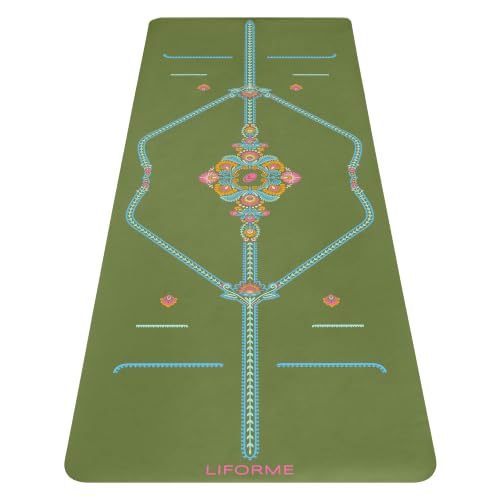
What We Like
- Patented AlignForMe alignment markers
- Grip improves when you sweat
- PVC-free, non-toxic eco-polyurethane surface
- Includes complimentary yoga bag
Trade-offs
- 4.2 mm thickness offers less cushion than thicker mats
- Natural rubber base has a strong smell when new
The Liforme Printed Yoga Mat’s patented AlignForMe markers are the standout feature here, a set of visual guides printed directly onto the surface that help you position your hands and feet with precision in every pose. For anyone who struggles with alignment or wants to build confidence without staring at the instructor, these markers turn the mat into a quiet coach. At 72.8 inches long and 26.8 inches wide, it gives taller practitioners room to stretch out, and the GripForMe surface actually gets tackier as you sweat, making it a smart pick for hot yoga or vigorous vinyasa flows. The eco-friendly construction (PVC-free polyurethane over natural rubber) also means you’re not breathing in harsh chemicals during practice.
The trade-off comes down to cushioning: at 4.2 mm thick, this mat offers less padding than thicker options like the Manduka eKO Yoga Mat’s 5 mm (listed at 0.2 inches). If you have sensitive knees or spend a lot of time in prone poses, you might want a little more padding. And at 5.5 pounds, it’s not the lightest option to haul to class, but the included bag helps. For yogis who value alignment feedback and a grippy surface over plush comfort, this is a focused, well-built tool that delivers exactly what it promises.
Rocalt Cork Yoga Mat
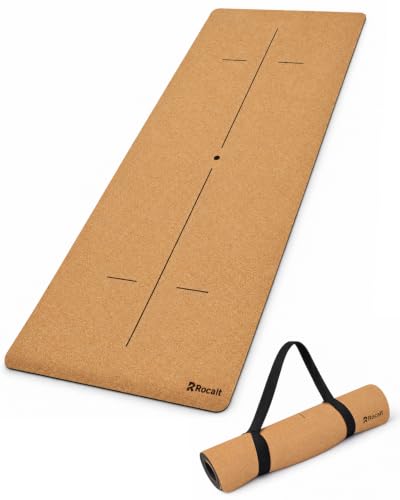
What We Like
- Extra width (26 in) for spacious poses
- Natural non-toxic materials
- Carrying strap included for transport
Trade-offs
- Heavy 9 lb mat, less portable than lighter options
- Cork surface requires careful cleaning to maintain grip
At 26 inches wide, this mat gives you two extra inches of room compared to standard 24-inch mats. That space really matters when you’re spreading out for wide-legged poses or need a stable landing for hand placements during transitions. It’s built for dedicated practice spaces where weight isn’t a concern, and the minimalist alignment lines help you find your footing without distracting from the flow.
The trade-off for that generous width and natural construction is heft: at 9 pounds, this isn’t the mat you toss in a backpack for a quick studio session. If portability matters more to you, something like the JadeYoga Harmony weighs about 4.9 pounds and rolls up smaller. But for home practitioners or those with a car commute who value extra surface area and the texture of real cork, the Rocalt delivers a stable, grounded feel that lighter mats can’t match. Just give it a day or two to air out the natural rubber scent before your first practice.
Product photos
Liforme Special Yoga Mat

What We Like
- GripForMe material stays grippy when sweaty
- PVC-free, non-toxic eco-polyurethane and rubber
- Includes free yoga bag
Trade-offs
- 4.2 mm thickness offers less cushion than thicker mats
- Heavier than some natural rubber mats at 5.5 lb
The Liforme Special Yoga Mat’s GripForMe material is the standout feature here, it’s designed to stay non-slip even when you’re drenched in sweat, which makes it a top pick for hot yoga or any practice where your hands and feet need to stay planted. The patented alignment design is built into the mat, helping you check your foot and hand placement during practice. At 72.8 inches long and 26.8 inches wide, it offers a spacious surface for most practitioners. The mat is made from eco-polyurethane and rubber, and it is PVC-free and non-toxic, which fits well if you’re trying to avoid synthetic materials in your gear.
The Liforme Special Yoga Mat is 4.2 mm thick, which gives decent cushioning for most poses, but if your knees are sensitive or you do a lot of supine work, you might want more padding. At 5.5 pounds, it’s a bit heavier than the 4.9-pound JadeYoga Harmony, so it’s not the lightest mat to carry. For comparison, the Manduka eKO Yoga Mat is 5 mm thick, offering extra comfort for those who need it.
Ananday Premium Cork Yoga Mat
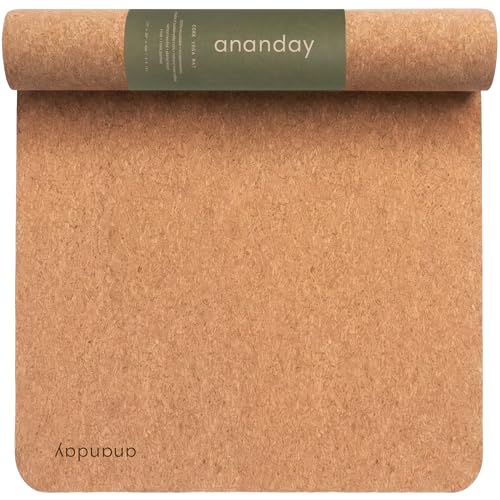
What We Like
- Naturally self-cleansing cork resists odors
- Grip improves with sweat, no towel needed
- Plastic-free, PVC-free, toxin-free materials
- Climate Neutral Certified, plants trees per mat
Trade-offs
- At 0.2 inches, less cushion for hard floors
- Narrower than some extra-wide mats at 24 inches
Cork’s natural self-cleansing surface actively prevents grime and odor buildup, which means this mat stays fresh practice after practice without any chemical smells. That makes it a standout for hot yoga or sweaty sessions where other mats start to hold a scent. The cork top layer actually releases more grip when damp, so you won’t be slipping around or reaching for a towel mid-flow. It’s a smart pick if you value a mat that works with your sweat, not against it, and want materials that are kind to the planet too.
The Ananday mat is 0.2 inches thick, which is standard for a 5mm mat, so on tile or hardwood you’ll feel the floor more during knee-down poses. The Manduka eKO Yoga Mat matches that thickness, so cushioning is comparable. It’s also 24 inches wide, while the Body By Yoga Luxury Cork Mat is 26 inches wide, so if you’re taller or like extra room, that wider option might appeal. For odor resistance and sustainable materials, this cork mat uses renewable cork and natural tree rubber, making it a good fit for eco-conscious practitioners.
Product photos
Adventure World Natural Yoga Mat

What We Like
- Non-slip grip increases with moisture
- Biodegradable and eco-friendly materials
- Natural cork top layer
Trade-offs
- At 7.5 lb, heavier than some alternatives
- Cork surface requires moisture for best grip
A 5 mm thickness puts this mat right in the sweet spot for joint comfort without losing ground feel, thick enough for knees in tabletop, thin enough to stay stable in standing balances.
Portability is the main compromise here: at 7.5 lb, it’s heavier than the Manduka eKO Lite (5.2 lb), so if you walk to class or carry your mat often, that extra poundage adds up. For a home practice or studio where you don’t haul it far, the cork’s ability to resist retaining odors and the eco-friendly materials make this a genuinely practical choice that keeps its cool when you’re working hard.
Product photos
How We Evaluated Natural Yoga Mats Under 200
We started by looking at materials, construction specs, and manufacturer claims for dozens of natural yoga mats under two hundred dollars. Our research also included expert round-ups from yoga instructors and sustainability advocates, plus a careful reading of owner feedback to spot real-world patterns in durability and performance.
Four criteria mattered most. Material safety was first, we prioritized mats free of PVC, phthalates, and heavy metals. Grip came second, as a slippery mat ruins a practice. Cushion and weight were a constant trade-off: thicker mats protect joints but are heavier to carry. Finally, size mattered for taller or broader practitioners.
Because this is a research-led evaluation, our conclusions come from comparing specs, reading what experienced owners report, and synthesizing expert opinions. We aim to give you a clear, honest starting point for your own search, not a substitute for personal experience.
What To Look For In Natural Yoga Mats Under 200
Choosing a natural yoga mat means understanding how material, thickness, and size affect your practice. Here is what to focus on.
Focus on material safety (no PVC or phthalates), grip performance (especially when sweaty), thickness for your joint comfort, and weight for portability. Size matters if you are tall or like a wide practice surface.
Material: Natural Rubber vs. Cork vs. Jute
The material defines the mat’s feel and function. Natural rubber offers excellent grip, especially when dry, and is the most common choice for best natural yoga mats. Open-cell rubber (like the JadeYoga Harmony) gets grippier with sweat but absorbs moisture, while closed-cell rubber (like the Manduka eKO) resists moisture and is easier to clean.
Cork is a fantastic alternative: its grip improves with moisture, it is naturally antimicrobial and odor-resistant, and it is harvested sustainably. If you want a truly plastic-free option, mats made from cork are a strong choice. Jute mats offer a textured, eco-friendly surface but can be rougher on sensitive skin.
Thickness and Cushioning
Thickness directly affects joint comfort and stability. A 4mm mat (like the Manduka eKO Lite) is lightweight and great for travel but offers less padding for knees and elbows. A 5mm or 6mm mat (like the Manduka eKO) provides a better balance of cushion and ground feel for most practitioners. Thicker mats, around 8mm, are plush for restorative poses but can make balancing poses feel less stable. If you practice mainly on hard floors, prioritize a thicker mat; for studio use on carpet, a thinner mat is fine.
Size and Portability
Standard mats are 68 inches long and 24 inches wide, but many natural options come in longer (72-80 inches) or wider (26 inches) versions. If you are over 5’8″, a longer mat like the Body By Yoga Luxury Cork or Satori Concept Cork is worth the extra weight.
Speaking of weight: natural rubber and cork are denser than PVC, so expect a mat to weigh between 5 and 9 pounds. If you carry your mat to class, a lightweight option like the Manduka eKO Lite (5.2 lb) or JadeYoga Harmony (4.9 lb) makes a big difference. For home use, weight matters less.
- Check the material: natural rubber, cork, or jute, each has different grip and care needs.
- Measure your height and preferred practice space to decide on length and width.
- Weigh the mat if you plan to carry it regularly; aim for under 6 pounds for travel.
- Read the care instructions: some natural mats need special cleaners and should not sit in direct sunlight.
A good rule of thumb: for sweaty practices, choose cork or open-cell rubber; for dry practices and portability, choose closed-cell natural rubber.
Natural Yoga Mats Under 200 Compared
The table below compares our top picks at a glance, so you can see how they stack up on material, thickness, weight, and key features before reading the full reviews.
| Product | Material | Thickness | Weight | Dimensions |
|---|---|---|---|---|
| JadeYoga Harmony Yoga Mat | Natural open-cell rubber | 0.2 inches | 4.9 pounds | 68 x 24 inches |
| Body By Yoga Luxury Cork Yoga Mat | Cork + Natural Rubber | 0.2 inches | 9.9 pounds | 80 x 26 inches |
| Manduka eKO Lite Yoga Mat | 100% natural tree rubber | 4mm | 5.2 lb | 71 x 24 in |
| Manduka eKO Yoga Mat | 100% natural tree rubber | 5mm | 7 lbs | 71 x 24 in |
| Satori Concept Cork Yoga Mat | Natural cork + tree rubber | 6 mm | 8.0 lb | 80 x 26 x 0.2 in |
| Liforme Printed Yoga Mat | Eco-polyurethane + natural rubber | 4.2 mm | 5.5 lb | 72.8 x 26.8 in |
| Rocalt Cork Yoga Mat | Cork surface, natural rubber base | 6 mm | 9 lb | 72 x 26 in |
| Liforme Special Yoga Mat | Eco-polyurethane + natural rubber | 4.2 mm | 5.5 lb | 72.8 x 26.8 x 0.2 in |
| Ananday Premium Cork Yoga Mat | Cork + natural tree rubber | 0.2 inches | 5.3 pounds | 72 x 24 x 0.2 inches |
| Adventure World Natural Yoga Mat | Natural cork & rubber | 5 mm | 7.5 lb | 72 x 24 x 0.2 in |
Frequently Asked Questions
What is the best natural yoga mat for hot yoga?
For hot yoga, look for a mat with a moisture-activated grip. Cork mats like the Body By Yoga Luxury Cork or the Ananday Premium Cork are excellent because they get grippier as you sweat and resist odors. The Liforme Printed Yoga Mat also performs well in hot conditions thanks to its eco-polyurethane surface that improves with moisture.
How do I clean a natural rubber yoga mat?
Natural rubber mats, especially open-cell ones like the JadeYoga Harmony, absorb sweat and require gentle care. Wipe them down after each use with a diluted mix of water and a few drops of mild soap. Avoid harsh chemicals, soaking the mat, or leaving it in direct sunlight, which can degrade the rubber. The Manduka eKO series recommends a specialized mat cleaner.
Are cork yoga mats better than rubber?
It depends on your priorities. Cork is naturally antimicrobial, odor-resistant, and its grip improves with sweat, making it ideal for hot yoga. It is also a highly sustainable material. Natural rubber offers superior dry grip and more cushioning options. Both are excellent non-toxic choices. If odor resistance and moisture-activated grip matter most, go with cork; if you want more cushion and a classic rubber feel, choose natural rubber.
What thickness of yoga mat is best for beginners?
A thickness of 5mm to 6mm is generally best for beginners. It offers enough cushion to protect knees and wrists during poses like downward dog and tabletop, while still providing enough stability for balancing poses. Thinner mats (4mm) are portable but can be uncomfortable on hard floors. Thicker mats (8mm+) are plush but can feel unstable for standing balances.
How long do natural yoga mats last?
With proper care, a high-quality natural rubber mat can last 2 to 5 years, depending on usage frequency. Cork mats tend to be very durable and can last even longer, as cork is naturally resistant to wear and tear. The lifespan depends on how often you practice, how you clean and store the mat, and whether you use it on rough surfaces. Avoiding direct sunlight and harsh cleaners extends the life of any natural mat.
The Bottom Line
The JadeYoga Harmony Yoga Mat is the best overall pick for most yogis. It combines a lightweight build with the legendary grip of open-cell natural rubber, and its tree-planting program adds a feel-good factor. This is the mat to choose if you want a reliable, eco-conscious surface for daily practice without the bulk of a thicker mat.
If your practice is tall, sweaty, or both, the Body By Yoga Luxury Cork Yoga Mat gives you the extra length and moisture-activated grip you need, though you will trade portability for that space. For travelers or studio-goers, the Manduka eKO Lite Yoga Mat is a lightweight, closed-cell natural rubber mat that resists moisture and packs easily.
The single most important thing is to match the material to your practice. Do you sweat a lot? Go for cork or open-cell rubber. Do you need a portable mat for class? Pick a lightweight closed-cell rubber mat. Do you want the most cushion? Choose a thicker natural rubber mat. Get that right, and you will have a mat that supports your practice for years.
