
Bro Split Pros and Cons: What the Research Actually Says
This post contains affiliate links. As an Amazon Associate, we earn from qualifying purchases.
Bro split pros and cons: the split works for muscle growth when weekly volume is high enough, and the frequency argument is less settled than gym lore suggests. A 2016 meta-analysis of 10 studies favored training each muscle twice weekly; a 2019 re-analysis of 25 studies found no difference once volume was matched.
Volume is the number that separates those two findings: sets per muscle group per week. The 2019 analysis held that number constant across frequency groups. The 2016 analysis did not, and the sources still argue over how much that explains.
What follows is the two papers side by side, the trial that tested them directly, the days-per-week arithmetic that decides whether a bro split fits your week at all, and the point where I think most beginners should walk away from it.
Key Takeaways
- Volume decides more than frequency. With weekly sets per muscle matched, the 2019 meta-analysis of 25 studies found no significant hypertrophy difference between high and low training frequency.
- The 2016 finding still counts in context. Pooling 10 studies, Schoenfeld, Ogborn and Krieger found training a muscle at least twice weekly beat once weekly.
- Four days is the practical floor for covering every muscle group directly. MuscleBooster puts the minimum at 4 days a week to cover every muscle group, and compressing the split into 3 pushes sessions past 2 hours.
- Leg day is the failure point. Stronger names neglecting legs as the most common bro split failure.
What a Bro Split Actually Splits
NASM’s description is the plainest one available: the bro split divides training across major muscle groups, one group per session, so the full body gets covered over a week rather than inside a single workout.
A bro split assigns each major muscle group to a separate training day, so chest, back, shoulders, legs, and arms each receive one dedicated session per week. Compound lifts performed on other days add indirect work, meaning the weekly total for any single muscle exceeds the direct session count, sometimes by a wide margin.
The label oversells the isolation. A chest day also works triceps and front delts. A back day works biceps. Setgraph makes the point directly, noting that a body-part label does not mean only one muscle works, and that the overlap needs counting when a shoulder or arm session lands later in the week.
Most types of workout splits reduce to the same question: how many muscle groups share a session.
The 5-Day Version
Five days is the most common arrangement, per NASM and macrosinc. Chest, back, legs, shoulders, arms, then two rest days.
Legion points out what that layout actually distributes: four out of five training days go to upper-body muscles. That cuts both ways, and it explains why the split suits physique goals more than balanced strength.
The 3-Day and 4-Day Versions
Compress it and the shape changes:
- 3 days: NASM describes chest/shoulders, back/arms and legs as one grouping, run once or twice weekly depending on training level. Macrosinc notes the result is essentially a push pull legs split wearing a different name.
- 4 days: setgraph’s example runs chest/triceps, back/biceps, shoulders/abs, legs/calves. That is a change in grouping, not an automatic jump to twice-weekly direct work.
- 6 days: normally a 5-day split plus one extra session aimed at a lagging muscle, per Legion and setgraph.
- Historical volume: the Arnold split is where the body-part template came from, and it shows how far the idea gets pushed.
If you’re building a four-day version, the best muscles to group together are the ones that already assist each other, which is why chest/triceps keeps showing up.
The 2016 vs 2019 Reversal Nobody Quotes Together
Ten studies said one thing in 2016. Twenty-five said close to the opposite in 2019, and the same lead author signed both.
Schoenfeld, Ogborn and Krieger published a 2016 meta-analysis in Sports Medicine pooling 10 studies. The conclusion: training a muscle group at least twice per week produces superior hypertrophy versus once per week.
Three years later, Schoenfeld, Grgic and Krieger published a second meta-analysis in the Journal of Sports Sciences (37(11):1286-1295) covering 25 studies. With weekly training volume equated, frequency had no significant effect on hypertrophy.
A trial landed the same year. Gomes and colleagues (JSCR 33(Suppl 1):S130-S139) compared volume-matched low- and high-frequency training in well-trained men. No significant between-group difference in strength or DXA lean tissue.
| Source | What it found | What it means for a bro split |
|---|---|---|
| Schoenfeld, Ogborn and Krieger 2016 (10 studies) | Twice-weekly training beat once-weekly for hypertrophy | Reads as a direct argument against one session per muscle |
| Schoenfeld, Grgic and Krieger 2019 (25 studies) | No significant frequency effect once weekly volume was equated | Reads as permission, if weekly volume is high enough |
| Gomes et al. 2019 trial (well-trained men) | No significant difference in strength or DXA lean tissue | Supports the 2019 reading in trained lifters |
One caution is worth keeping. Setgraph points out that the 2016 analysis did not establish that its frequency advantage came purely from distributing volume, so that explanation should not be pinned on it. The honest version is narrower: the two papers measured different things under different conditions.
How the claim travels is its own story. Legion states that research shows faster muscle growth from training each major group at least twice per week, and does not mention the 2019 reversal. Setgraph flags the tension explicitly. The NASM blog on bro splits sits in the middle, calling the method effective for certain people while insisting there is nothing specifically magical about it.
Comparing best workout splits side by side makes the volume question easier to see, because the layouts differ mostly in how they spread sets across the week.
Does a Bro Split Build Less Muscle Than Twice-Weekly Training?
Take the volume question seriously and the answer gets boring in a useful way. Match the weekly sets, and the split stops mattering much.
That is the reading MuscleBooster lands on: appropriate volume and intensity matter more than training frequency, and once-weekly and multiple-weekly training can produce the same gains when volume and intensity are matched.
The mechanism argument for higher frequency is real but indirect. Training a muscle twice a week produces more of those spikes. More spikes is a plausible route to more growth. It is not the same thing as a measured difference in size, and the 2019 meta-analysis is the one that measured that.
The frequency question has a real answer and a settled answer, and they are not the same thing. Once weekly sets are matched, frequency stops being the first lever you pull.
Practically, the research leaves the bro split standing. Your calendar is what knocks it over, and that is the next problem.
Bro Split Pros and Cons: Where It Genuinely Wins
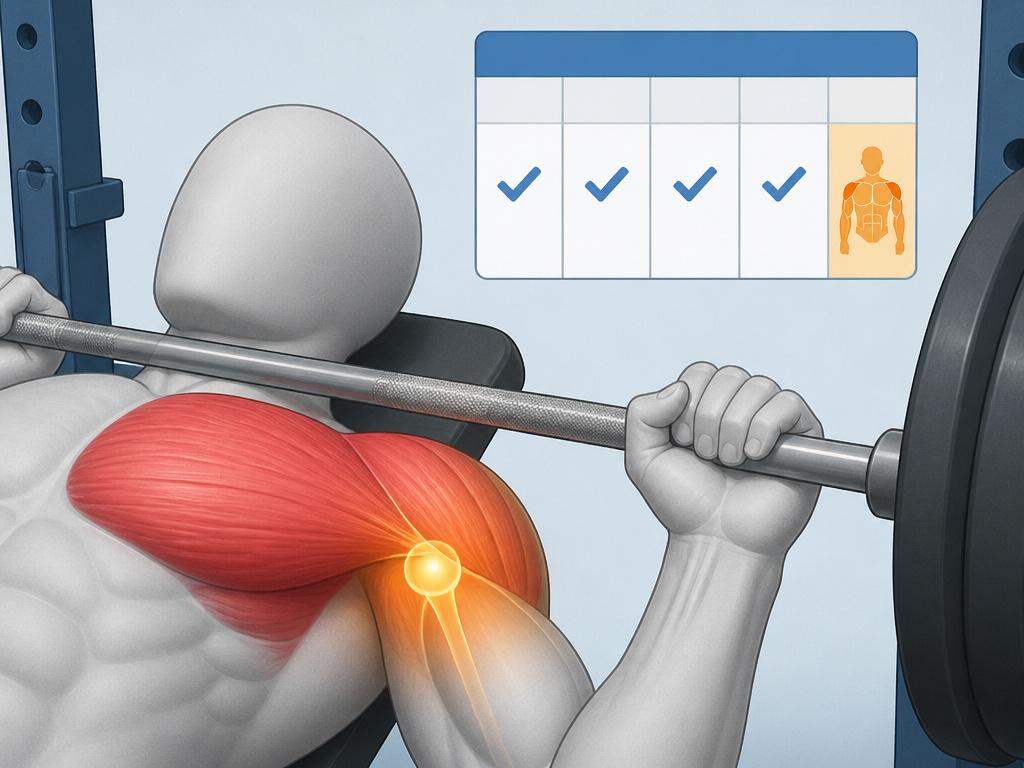
Focus is the honest argument for it, and it holds up better than the frequency argument does.
NASM’s pro is specific. The split lets you focus on one major muscle group per session and work each group with enough volume across the week, including the groups people skip. Shoulders are the usual casualty.
That is a lot of work in one visit.
And you feel it. Four exercises into a chest day, the target muscle stops doing the work and the joints take over. The press turns into a shoulder grind with a chest label stuck on it.
I would rather see someone run five days with four honest exercises per muscle than six days where every session is a race. The extra day buys nothing if the sets inside it are junk.
Where it wins:
- Advanced lifters: the group Stronger says the split actually fits.
- Anyone bringing up a lagging muscle: a sixth session adds frequency to one area without rebuilding the week.
- People who like long, single-focus sessions: Legion makes the point that we push harder at training we enjoy, and adherence is not a small thing.
- Shoulders and arms: the groups that get skipped in full-body work and get a whole day here.
How Many Days a Week Do You Need for a Bro Split?
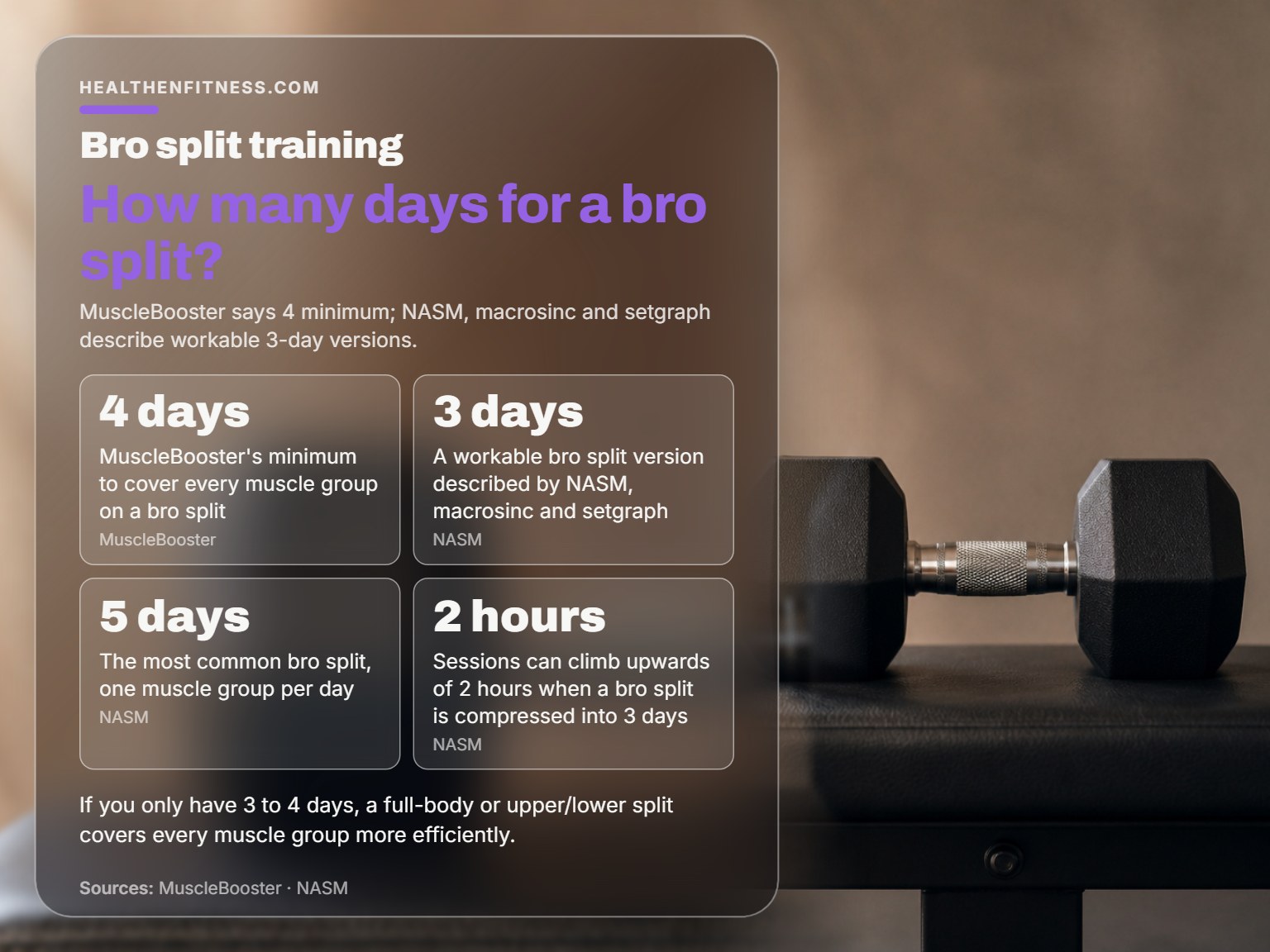
Four is the number MuscleBooster keeps coming up with, but NASM, macrosinc and setgraph all describe workable 3-day versions.
Macrosinc takes the practical view. If your schedule only allows 3 to 4 days a week, a full-body programme or an upper/lower split covers every muscle group more efficiently.
That is a fair correction, and both claims survive it. A compressed three-day version runs long because two days of work got stacked into one. A normal five-day session is whatever you build it to be.
| Days you can train | Bro split reality | What to run instead |
|---|---|---|
| 2 to 3 | Sessions climb past 2 hours when compressed | Full body, 3 days, rest between |
| 4 | Needs combined muscle groups to fit | Upper lower split, 2 upper and 2 lower |
| 5 | The standard version, one group per day | Bro split, if volume is managed |
| 6 | 5-day split plus a weak-point day | Bro split with one muscle trained twice |
Where this goes sideways: Compressing a five-day split into three days and then skipping the third session. Two groupings get trained, the third gets nothing, and cramming it into next week is how people end up with 90-minute chest days.
The 3 day vs 4 day split question sits underneath all of this, because the split you pick has to survive the week you actually have. If you’re still deciding, the honest way to how to choose a workout split is to start from your available days and work backwards.
Who Should Skip the Bro Split Entirely
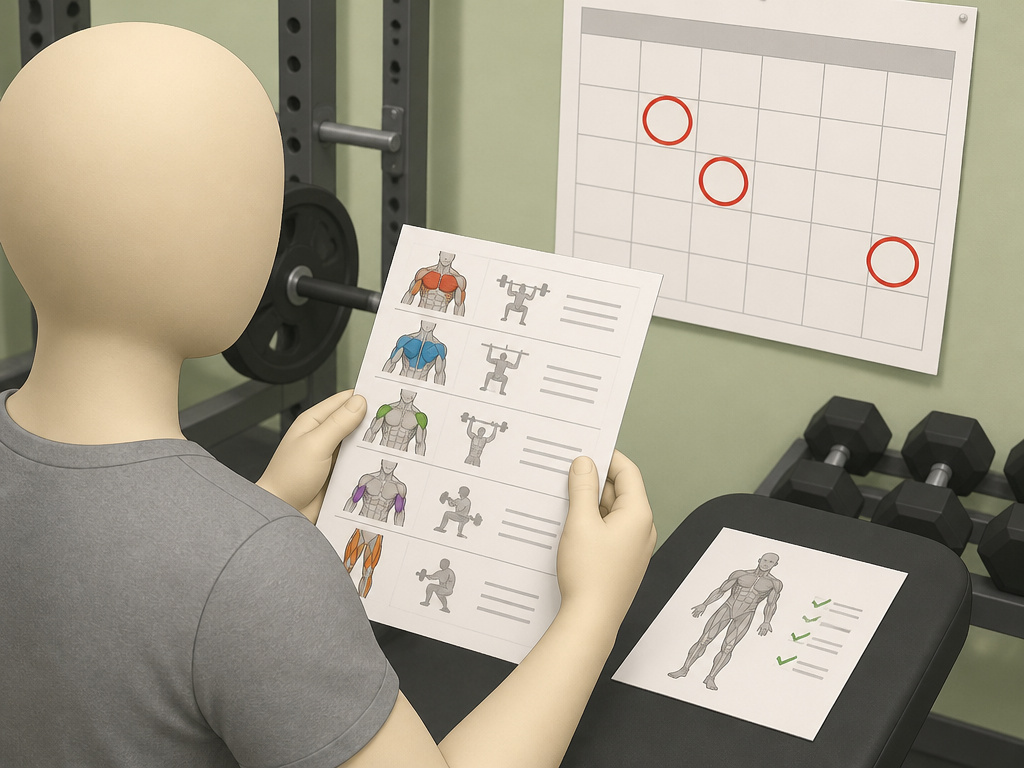
If you’ve been lifting for less than a year, Stronger and setgraph argue the bro split is probably costing you progress, while Legion and MuscleBooster call it beginner friendly.
Setgraph makes a softer version of the same point: a simpler full-body plan makes regular practice easier for someone new.
Beginners also get intense DOMS after sessions like that, which eases week by week as the body adapts. That first week it’s the kind of sore where standing up from a chair takes a second attempt.
The counter-case is real. Both are describing the same thing: a split that’s easy to understand is a split people actually follow.
Skip this if: You’re in your first six months and you can only reach the gym three times a week. You’ll spend those three sessions trying to fit five days of work into them, and the thing you cut first is legs.
My own read is that the beginner argument for the bro split is really an argument for simplicity, and simplicity is available at three days a week too. If you want the frequency case laid out properly, full body vs split covers it, and the upper lower split for beginners is the middle path that gets you twice-weekly frequency on four days.
If you go the higher-frequency route, the push pull legs split is the one that draws the most comparison, largely because a three-day bro split is one.
Running It Without Wrecking Your Week
I spent months trying to fix my hip hinge alone and got nowhere with it. A coach in a small strength class spotted it in one session, and the fix was one cue I could not have found by watching myself.
That’s the honest limitation of any split. It organizes your week. It does not watch your form, and a five-day bro split gives you five sessions with nobody checking your setup.
Exercise Selection and Set Count
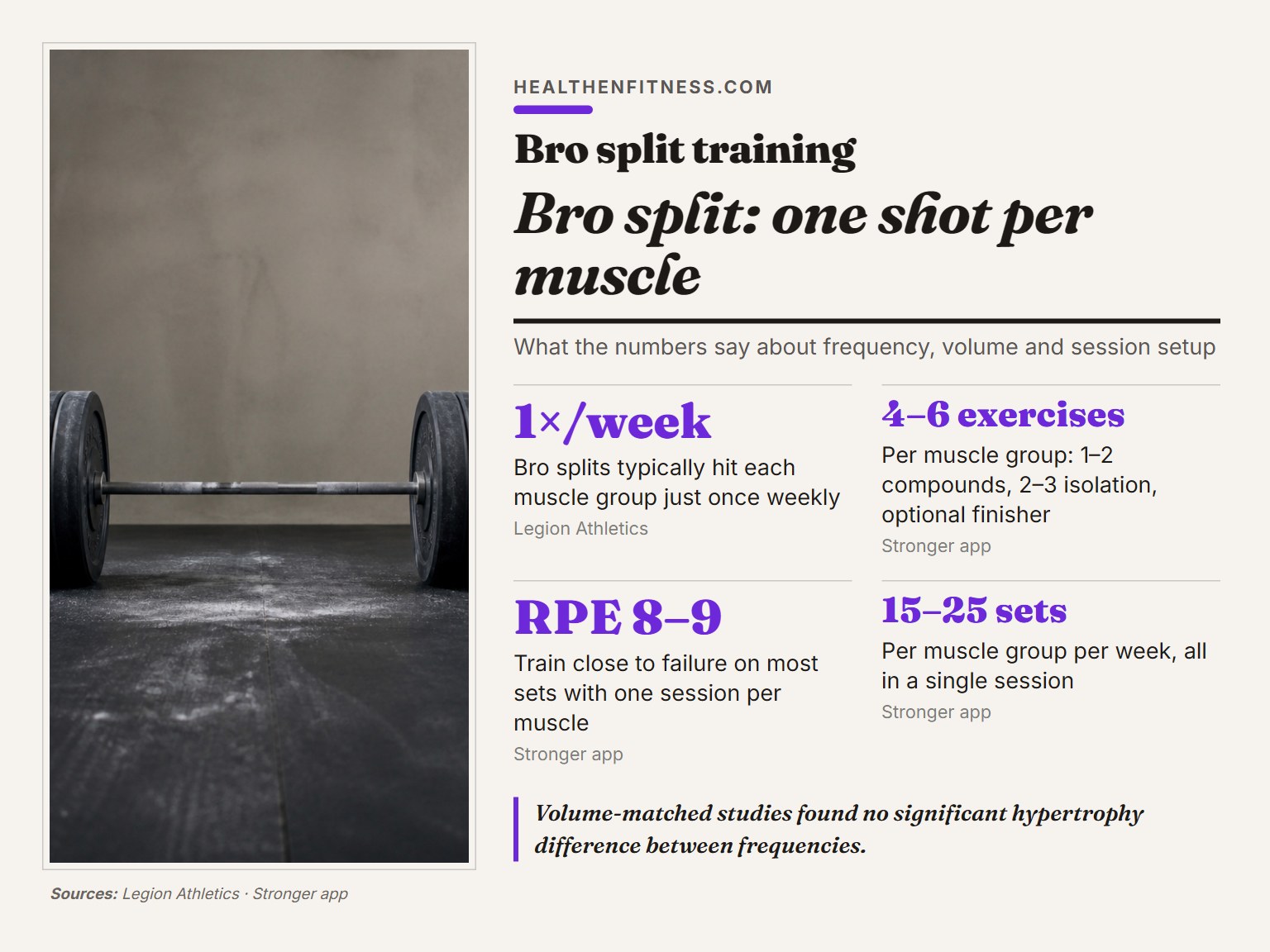
Stronger’s prescription again: 4 to 6 exercises per muscle group, starting with 1 to 2 compound movements, adding 2 to 3 isolation exercises, and optionally finishing with a high-rep set. Legion’s version is blunter. Build the day around compound exercises, cut the junk volume, and add weight or reps every session.
Effort level matters more here than in a higher-frequency split.
Before you start: A once-weekly session per muscle leaves no room for a bad warm-up. Ten minutes of ramp-up sets before the first heavy compound protects the joints you need for the next four exercises. If a joint hurts in a way that outlasts the session by a day, get it checked before adding load, because a bro split has no spare session to train around a flare-up.
- Pick the five days you’ll actually attend, then assign muscle groups to them. A split that needs a day you keep missing is a plan for four sessions, not five.
- Put legs on your most recovered day. Skip it and the split’s main selling point, balanced volume, quietly disappears.
- Cap the session at 4 to 6 exercises for the target muscle, heaviest compound first while you’re fresh. Go past that and the last two exercises are fatigue, not stimulus.
- Log every set. A training log app does this without ceremony. Without a log, a week-long gap between sessions erases whatever progression you built.
- Train close to failure on most sets, around RPE 8 to 9. With one session per muscle, the last few reps are where the stimulus lives.
- Miss a day, move on. Cramming turns a normal session into a two-hour one.
Progression and Missed Sessions
Progressive overload on a bro split runs on a weekly clock. You get one shot per muscle group, so the target for each session is one more rep or a little more weight than last week.
Home training changes the equipment list, not the structure. A barbell and a rack cover the compound work the split depends on. The isolation exercises are the part you can substitute.
Frequently Asked Questions
Is a bro split good for building muscle?
Yes, with a condition attached. NASM’s position is that bro splits can be effective when progressive overload and recovery are handled, and that there is nothing specifically magical about the method. The 2019 meta-analysis supports that reading: when weekly volume is equated, frequency stops being the deciding factor.
How many days a week is a bro split?
The most common version is 5 days, one major muscle group per session. MuscleBooster puts the minimum at 4 days a week to cover every muscle group. A 3-day version exists, and macrosinc notes it is essentially a push pull legs split.
Is a bro split OK for beginners?
The sources split on this. Legion and MuscleBooster call it beginner friendly, mainly because it is simple to follow. Stronger and setgraph both point new lifters toward full body or a 3-day split for the first 6 to 12 months, on the grounds that higher frequency gives more practice at the movements.
Do bro splits build less muscle than training twice a week?
Not by default. The 2016 meta-analysis of 10 studies found twice-weekly training beat once-weekly. The 2019 meta-analysis of 25 studies found no significant difference once weekly volume was equated, and the Gomes 2019 trial in trained men found no significant difference in strength or lean tissue.
Can you do a bro split in 4 days?
You can, but you’ll combine muscle groups, such as chest/triceps, back/biceps, shoulders and legs. Stronger argues that at that point it is essentially a 4-day split rather than a true bro split. Setgraph treats the same layout as a legitimate variant. An upper lower split is the better fit for four days.
What’s the difference between a bro split and push pull legs?
Bro split organizes the week by body part. PPL organizes it by movement pattern: pushing muscles, pulling muscles, legs. Run PPL three days a week and you get one rotation. Run it six days and each muscle gets trained twice, which is where its frequency advantage comes from.
The Bottom Line
Two numbers settle most of the bro split pros and cons for you: days available and years trained.
If you can train five days a week and you’ve got two years of lifting behind you, run the bro split and stop apologizing for it. The research doesn’t forbid it, and the focus it gives you is a genuine benefit.
MuscleBooster’s threshold is four days; below that, it argues covering every muscle group once a week stops fitting, while NASM and macrosinc note a 3-day version can still work, and a full-body plan or an upper lower split gets you the same weekly volume in less time.
If you’re in year one, Stronger and setgraph would have you skip it, while Legion and MuscleBooster call it beginner friendly. Beginners need repetition of the basic movements more than they need volume, and three full-body days deliver more of that than five single-muscle days do. Legion and MuscleBooster will tell you otherwise, and they’re right that a simple plan is easier to follow. I just think simplicity is available at three days a week too.
Do this today: open your calendar and count the days you can genuinely reach the gym over the next four weeks. Pick the split that fits that number, not the one that fits your ambition.
