
How Long Should a Deload Week Last? What the Data Says
This post contains affiliate links. As an Amazon Associate, we earn from qualifying purchases.
On deload length, sources disagree: the largest survey of competitive lifters puts the average at 6.4 days, taken every 5.6 weeks, while Gymshark Central says 6–7 days and Gym Note Plus and Legion Athletics say about a week. Reported durations range from 1 to 14 days, so a week is the center of gravity, not a rule.
That 1-to-14-day spread comes from the same survey, which means the right number depends on something the survey never measured. What it did measure is who deloads, how often, and how much they cut. Those three answers are the ones you can actually use.
What follows: the survey data, the places where published advice openly disagrees, how much to cut, and who genuinely needs a deload at all. By the last section you’ll have a number you can write into your program this week.
Key Takeaways
- The average deload runs 6.4 days in the largest survey of competitive lifters, taken every 5.6 weeks.
- Published intervals range from 3 weeks on, 1 week off to every 8-10 weeks, and no two sources agree.
- Cut sets by 40-60% or load to 60-70% rather than stopping training entirely.
- A 2024 PeerJ study found a one-week deload slightly blunted lower-body strength gains; a study cited by Cleveland Clinic found no harm to endurance or power.
- If you can’t decide, take seven days. Short enough that nothing detrains.
How Long Should a Deload Week Last? The Survey Data
Six point four days is the only hard number anyone has. Everything else is an opinion with a citation attached.
Rogerson and colleagues surveyed 246 competitive strength and physique athletes in 2024. Reported deload duration averaged 6.4 days with a range of 1 to 14 days, and deloads were taken every 5.6 weeks on average. The authors note a clear lack of empirical research and describe the findings as broad guidelines.
That figure comes from a deloading in strength sports study. The sample was mostly powerlifters at 63.4%, with physique athletes next at 18.3% and mixed-sport athletes at 11.0%.
The headline result puts a mean deload at 6.4 days, repeated every 5.6 weeks. Individual reports ran from 1 day to 14.
Sport changed things. Weightlifters reported the longest deloads at 8.5 days. Strongman and strongwoman athletes reported the shortest at 6.3 days. Powerlifters sat at 6.5 days and physique athletes at 6.3.
Two caveats before you copy any of that. The weightlifting subgroup was nine people. Separately, part of this data describes what coaches program rather than what athletes choose.
The authors say so themselves. There’s a clear lack of empirical research on deloading, and their findings act only as broad guidelines.
Why No Two Sources Agree on Deload Length
Ask six coaches how long a deload should last and you’ll get six numbers. None of them come from the same dataset.
Here’s how far apart the published advice actually sits.
| Source | Deload length | Interval |
|---|---|---|
| Rogerson et al. 2024 (246 athletes) | 6.4 days average | Every 5.6 weeks |
| Cleveland Clinic | A full deload week | Every 6-8 weeks |
| Gymshark Central | 6-7 days | Every 6-8 weeks generally; 4-6 weeks for advanced/high-volume |
| Gym Note Plus | About 7 days | Every 4-8 weeks |
| Legion Athletics | One week | Every 8-10 weeks (or every 4th week in one program) |
| Muscle & Strength | Not specified | 3 weeks on, 1 week off (also lists 6-8 and 12-16 week groups) |
The durations cluster. Several sources land around a week, close to the survey mean of 6.4. The intervals don’t cluster at all.
Cleveland Clinic recommends deloading every six to eight weeks for high-intensity trainees. Gymshark Central recommends 6-8 weeks for most lifters, then 4-6 weeks for advanced or high-volume trainees.
Muscle & Strength describes three separate camps in one article: 3 weeks on and 1 week off, every 6-8 weeks, and every 12-16 weeks. A commenter on that same article notes that the 5/3/1 program schedules its deload in the fourth week of each mesocycle.
Common mistake: Treating one interval as the answer for everyone. Run 8-10 weeks on a program built around heavy singles and you may be grinding stalled reps before the next deload.
Terminology muddies this further. A recovery week and a deload week get used interchangeably, and a rest week gets folded in with both.
The Cleveland Clinic deload week guide draws the line clearly. A deload is not a rest week. You keep training, you just reduce intensity or volume.
The Gap Between 5.6 Weeks and 8-10 Weeks
How long should a deload week last? The published answers run from one day to fourteen. How often you take one is a separate question, and the sources blur the two constantly.
The 5.6-week figure is a mean, not a target. Rogerson’s team reports what athletes did, not what worked best.
Nobody has run the trial that settles it. The survey authors say as much.
How Often Should You Deload? 5.6 Weeks Is the Survey Answer
Every 5.6 weeks is the survey mean. Cleveland Clinic and Gymshark both say six to eight. Gym Note Plus defaults to five to six.
Gym Note Plus advises deloading more often if you train close to failure on most sets, run high weekly volume, or eat in a calorie deficit. It advises less often if your sets sit further from failure or you train three days a week. Legion Athletics makes the same call on calorie deficits, shortening the recommended interval.
Rule of thumb: Deload more often when more of your sets sit close to failure, and less often when they don’t. Frequency tracks effort, not the calendar.
Deloads only make sense inside a bigger periodization plan, because the entire point is placing the easy week where it protects the hard ones.
Life outside the gym counts too. Sickness, travel, and poor sleep all change how much training load you can absorb before the next easy week is due.
How Much Should You Cut in a Deload Week?
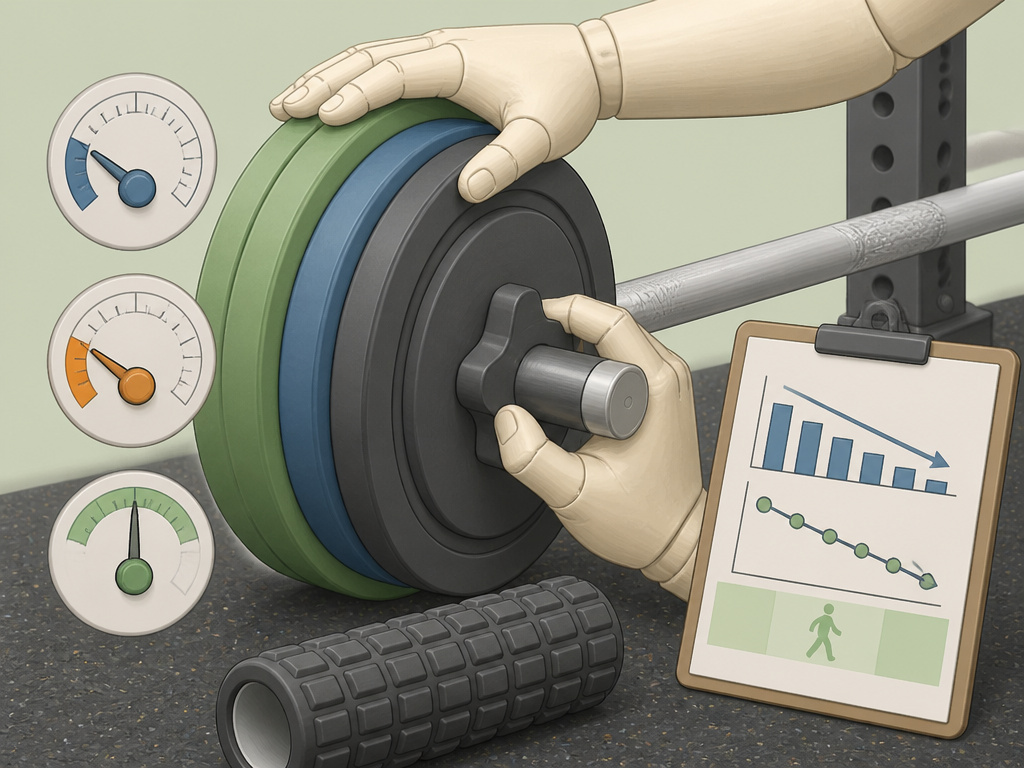
Three dials exist: volume, intensity, and frequency. Turning the wrong one is the most common deload error.
Before you start: A deload is a reduced-load week, not a week off. A nine-week study cited by Rogerson and colleagues found a full week of no training at the midpoint negatively impacted lower-body strength. And don’t jump straight back to pre-deload loads afterward; Cleveland Clinic advises easing back over one to two weeks.
The survey tracked what athletes actually changed:
- 78.9% reduced weekly sets.
- 63.0% kept the same number of training sessions per week. They didn’t skip days.
- 83.7% reduced the load on multi-joint exercises like squats and presses.
- 84.9% backed off how close they trained to failure.
Notice the pattern. Most people kept showing up and took the weight down, rather than taking the week off.
Volume, Intensity, or Frequency?
| Method | What you change | Suits |
|---|---|---|
| Reduce volume | Cut total sets by 40-60% | High-volume programs; keeps movement patterns |
| Reduce intensity | Drop loads to 60-70% of normal | Heavy programs; keeps technique sharp |
| Reduce frequency | Train fewer days that week | High stress outside the gym |
| Technique focus | Lighter loads, slower tempo | Anyone whose form slips under fatigue |
Gymshark’s example strength deload keeps the same lifts and drops the loads. Back squat and bench press at 3×4 around 60-65%, and deadlift at 2×3 around 60%.
Keep something light moving on the off days. A short active recovery session beats a full stop, and it keeps the habit intact.
Do Beginners and Casual Lifters Need a Deload at All?
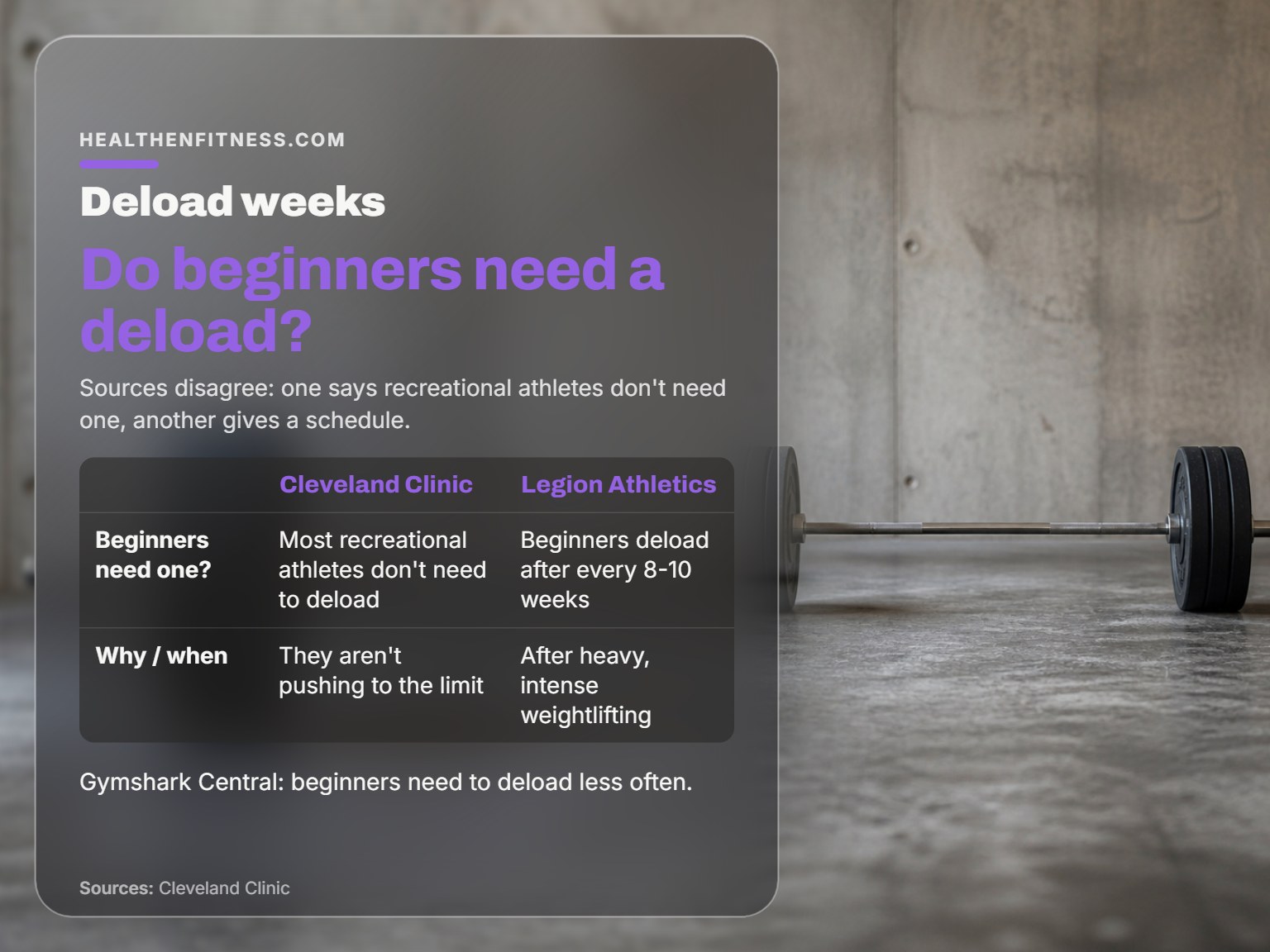
Cleveland Clinic states plainly that most recreational athletes don’t need to deload, because they aren’t pushing their bodies to the limit.
The sources that do address beginners don’t agree on much else. Gymshark Central says beginners need to deload less often, and only when progress slows, form slips, or training starts feeling unusually hard. Legion Athletics gives beginners a specific interval: a deload after every 8-10 weeks of heavy, intense weightlifting.
That’s a real disagreement, and it’s worth naming. One source says you probably don’t need this at all. Another hands you a schedule.
Cleveland Clinic lists five signs worth acting on:
- Strength or performance stops improving despite consistent training.
- Persistent physical or mental fatigue.
- Getting injured or sick more often than usual.
- A drop in motivation or enthusiasm for training.
- Poor sleep or insomnia.
That lines up with what central nervous system fatigue looks like in practice: weights feel heavier, coordination slips, and effort climbs.
If you’re already taking rest days between sessions and still feel flat, the fix is probably sleep and food. A training slump is often a recovery problem wearing a programming costume.
Does a Deload Week Cost You Strength?
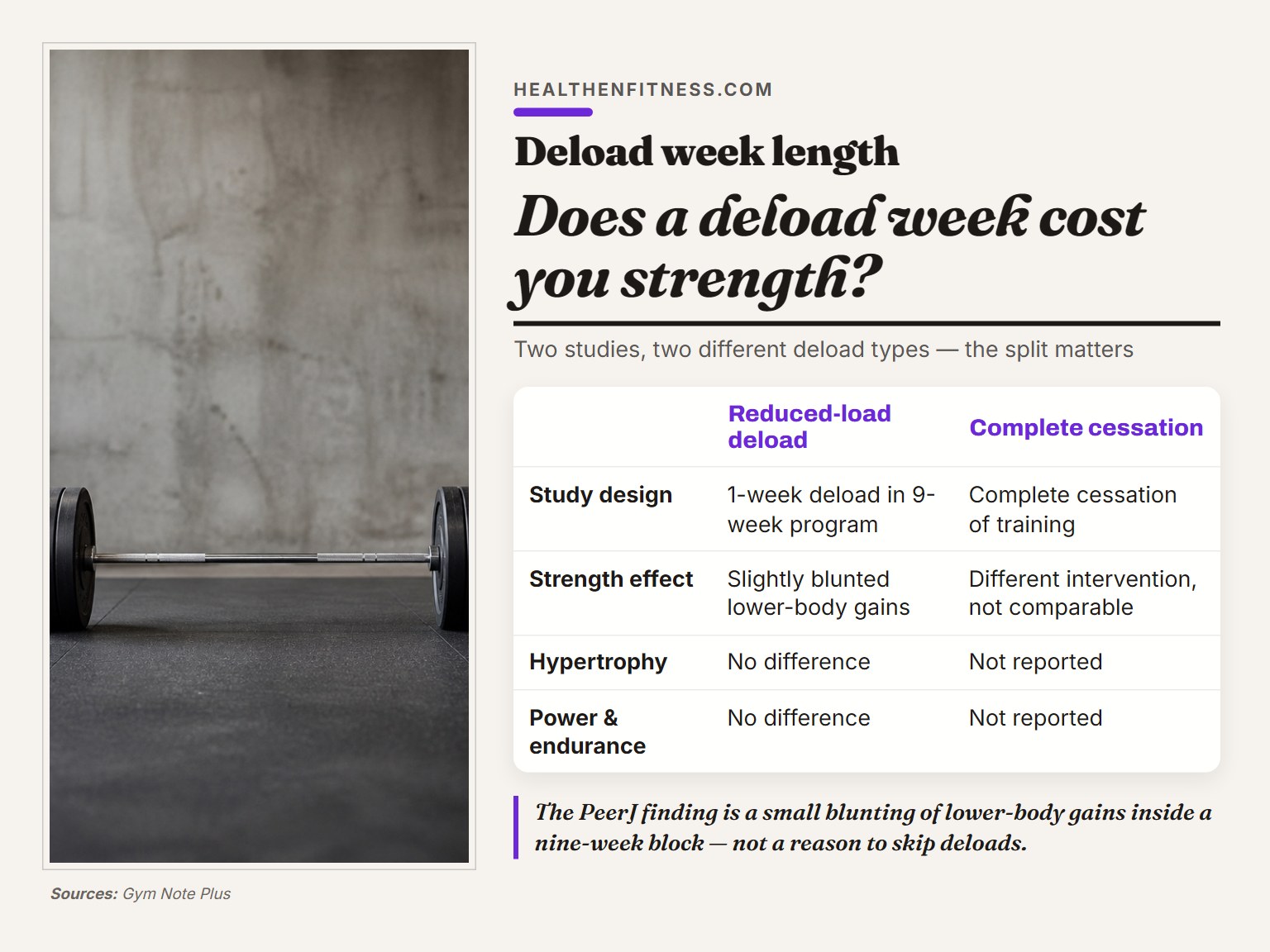
This is where the sources genuinely split, and the split matters more than the number.
Gym Note Plus relays a different result. A 2024 PeerJ study by Coleman and colleagues placed a one-week deload at the midpoint of a nine-week supervised program and found it slightly blunted lower-body strength gains, with no difference to hypertrophy, power, or muscular endurance.
Those three findings get quoted as if they contradict each other. They don’t quite. The PeerJ study examined a reduced-load deload. Rogerson’s cited study examined complete cessation. Those are different interventions.
Where this goes sideways: Reading “deloads cost you strength” and skipping them entirely. The PeerJ finding is a small blunting of lower-body gains inside a nine-week block.
How to Return to Training After a Deload
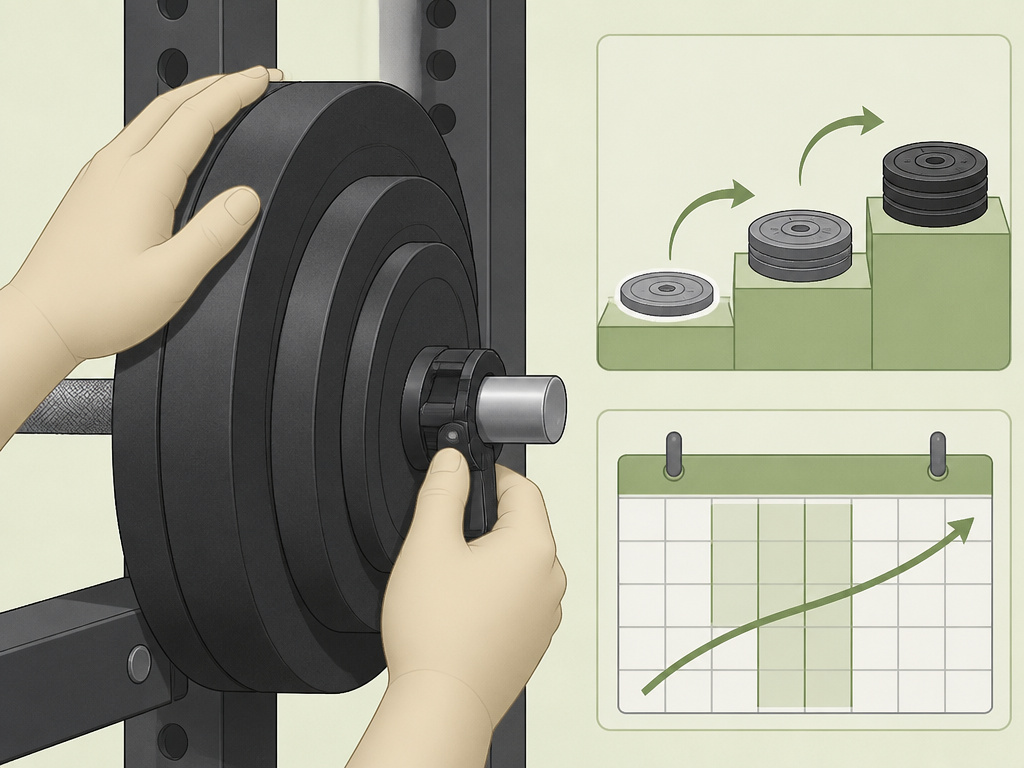
The week after a deload is where the good work gets thrown away.
Cleveland Clinic warns against jumping straight back in where you left off. Returning immediately to heavier weights can stress your body and undo the progress you made while deloading. It may take a week or two to work comfortably back to pre-deload levels. Gymshark Central adds that you should return to your normal program as planned and not pile on extra work straight away.
- Keep your normal training days and exercises. The deload changed the load, not the structure.
- Add weight back in steps, not all at once. Cleveland Clinic puts the ramp at one to two weeks.
- Don’t add bonus sets because you feel great. Gymshark warns this can undo the gains.
- Write down your top sets. A log turns “I feel fresher” into evidence.
The First Two Weeks Back
Expect the rebound before you chase it. Gymshark notes that coordination, bar speed, and performance often improve first, with the numbers following.
If week two back feels worse than week one, you came back too fast. Cut the load and hold for another week. That’s not a setback, it’s the ramp doing its job.
Frequently Asked Questions
How long should a deload week last for a beginner?
There’s no beginner-specific duration in the survey data, which covered competitive athletes only. Gymshark Central says beginners need to deload less often, and Legion Athletics suggests a deload after every 8-10 weeks of heavy training. Cleveland Clinic goes further and says most recreational athletes don’t need one at all. A lighter week of reduced sets is a reasonable middle ground.
Can a deload week be shorter than seven days?
Yes. The survey range ran from 1 to 14 days, with a mean of 6.4. Gymshark Central puts the typical window at 6-7 days. Gym Note Plus says if you can’t tell which you need, take seven.
Should I deload every 4 weeks?
Only if your program is built that way. Legion Athletics uses an every-fourth-week deload in Beyond Bigger Leaner Stronger, and a commenter on the Muscle & Strength article notes that 5/3/1 places its deload in the fourth week of each mesocycle. Elsewhere in the same article, Muscle & Strength describes 3 weeks on and 1 week off as its own schedule. That’s a program design choice, not a universal rule.
What’s the difference between a deload week and a rest week?
Rest week stops structured training. A deload keeps you training with reduced volume or intensity. Both Cleveland Clinic and Gymshark Central draw that line. It matters because the strength cost shows up with complete cessation, not with a reduced-load week.
Do I need to deload if I’m in a calorie deficit?
Both Gym Note Plus and Legion Athletics recommend shortening the interval when you’re eating in a deficit, because recovery demands rise. Neither cites a primary study for that specific claim, so treat it as coaching judgment rather than settled evidence.
The Bottom Line
One threshold is worth carrying out of all this. If your top sets have dropped for two straight weeks and your sleep and food are fine, you’re due. If only your motivation has dropped, check your sleep first.
Don’t wait for the calendar to tell you. The survey mean of 5.6 weeks describes what competitive lifters did, not what your body needs. Cleveland Clinic’s 6-8 week window and Legion’s 8-10 week window are both defensible, and neither has trial evidence behind it.
The honest position is that nobody has run the study that settles how long should a deload week last. The survey authors say so directly. What you have instead is a cluster of sources agreeing on six to seven days and disagreeing on everything else.
So pick your number and hold it for a full block before you change it. Progress you can repeat is progress that lasts.
Today, just write your next deload date in your log, eight weeks out, and leave it there.
