
How to Manage Life Stress and Training Load: Step-by-Step
This post contains affiliate links. As an Amazon Associate, we earn from qualifying purchases.
To manage life stress and training load together, treat psychological stress as a third load category alongside training and competition load, then adjust the week rather than the goal. The IOC consensus statement names external load, internal load, and psychological load as separate inputs, and only the first two show up in a training log.
That third category is the one that quietly wrecks a plan, and it is the heart of how to manage life stress and training load. A brutal week at work lands in the same body as a brutal week under the bar, and the logbook records none of it.
What follows: the one number everyone quotes and where it actually came from, the signals worth checking before you touch your program, and the lighter week to schedule before you need it.
Key Takeaways
- Psychological load is a third category, listed beside training and competition load in the IOC consensus statement.
- The 10% weekly ceiling comes from injury data. The IOC says so itself, then applies it to illness risk by analogy.
- Subjective measures beat objective ones for tracking training response, per a systematic review the IOC cites.
- Travel to international destinations beyond 5 time zones from home carries a 2-3 fold increased illness risk in elite athletes, per Schwellnus et al. 2012 as cited by the IOC.
- Sources disagree on who owns the problem. The IOC points at governing bodies and event organisers; the NSCA guide points at the team physician or coach.
What Actually Counts as Training Load?
Three things, and only two of them are in your logbook.
External load describes the work performed, such as distance covered or weight lifted. Internal load describes the physiological response to that work. Psychological load sits alongside both as a separate category, covering life events and perceived stress that alter how the same session is absorbed and recovered from. Only the first two appear in a standard training log.
The IOC consensus statement splits load this way. External load is the session on paper. Internal load is what your body actually did with it. Psychological load is everything else riding along for the ride.
- External load is the objective work: sets, reps, distance, pace.
- Internal load is the response, and it shifts day to day even when the session doesn’t.
- Psychological load covers life events and perceived stress, and it changes how the other two land (which is why a session that felt easy last month can feel like a wall today).
Most weekly workout schedule templates track two of the three. That’s the gap, and it’s a wide one.
The 10% Rule Comes From Injury Data, Not Illness Data
The number everyone quotes is a hand-me-down.
The IOC consensus statement says weekly load should be increased by less than 10%, then states plainly that the figure comes from injury literature and is applied to illness risk by analogy. Read that twice. The source flags its own caveat in the same breath as the number.
| Source | What it actually says | Basis given |
|---|---|---|
| IOC 2016 consensus | Weekly load increase under 10% | Injury data, applied to illness by analogy |
| NSCA practical guide | Increase weekly loads progressively | No percentage cited |
| Laval coaches’ guide | Increase training load progressively | No percentage cited |
One source gives a number and tells you where it came from. Two others give the principle and skip the number entirely. That’s the disagreement, and it’s worth naming rather than smoothing over.
The 10% figure still earns its place as a working convention. Just don’t treat it as a measured threshold for illness, because the IOC consensus statement on training load says the figure comes from injury literature and is applied to illness risk by analogy.
The transfer matters because a tendon and an immune system don’t fail for the same reasons, which is why how to manage life stress and training load deserves its own thinking. A ceiling fitted to one is a starting convention for the other, not a measurement of it.
Should You Cut Training When Life Gets Heavy?
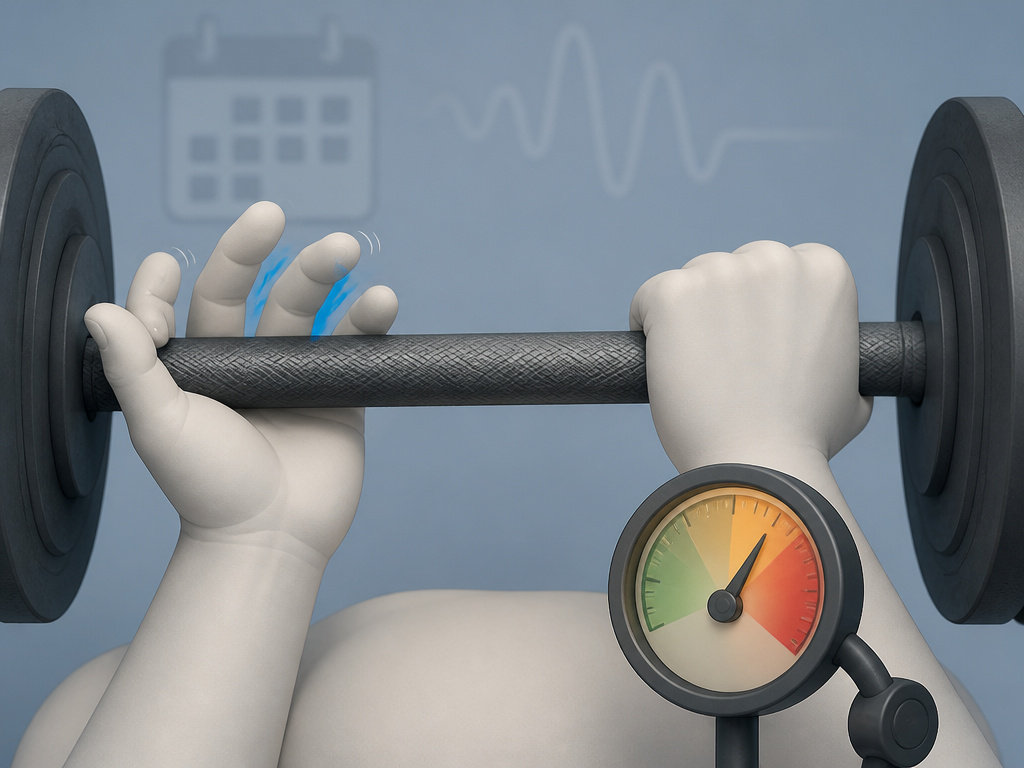
The IOC’s answer is qualified: for athletes showing unfocused behavior after negative life events it recommends reducing training and competition load, but the same document endorses high chronic load as protective and concedes very high loads can influence illness risk either positively or negatively.
The Case for Cutting Back, and the Case Against
The same document undercuts a blanket version of that advice. It endorses high chronic load as protective, and it concedes that very high loads can influence illness risk either positively or negatively.
So the source holds two positions at once. Reduce load when life events leave an athlete unfocused. Don’t assume high load is the enemy, because a well-built chronic base looks protective. The practical answer is a sequence rather than a rule: check whether the stress is showing up in behavior and recovery first, then adjust.
Where this goes sideways: Cancelling the whole program the week a deadline lands. The IOC endorses high chronic load as protective, so a total stop removes the buffer along with the stressor, and rebuilding costs more than the trim would have.
The general-population advice sits on a different shelf entirely. The APA healthy stress management tips focus on identifying stressors, addressing them, and building social support. The MedlinePlus guide to managing stress covers stress-reduction techniques and social support for the same general audience.
Both are sound, and neither is written for someone deciding whether to squat on Thursday. The IOC treats stress as a load-modification input, which means the stress score changes the prescription. Same phenomenon, different action model.
If the fatigue feels deeper than a bad week, the signs of overtraining are worth checking against your own. And central nervous system fatigue is a separate conversation from life stress, worth not confusing with it.
A session going wrong feels heavy in the hands before it looks slow on a stopwatch. The bar doesn’t move differently. It just feels like more.
Which Signals Are Worth Trusting When They Disagree?
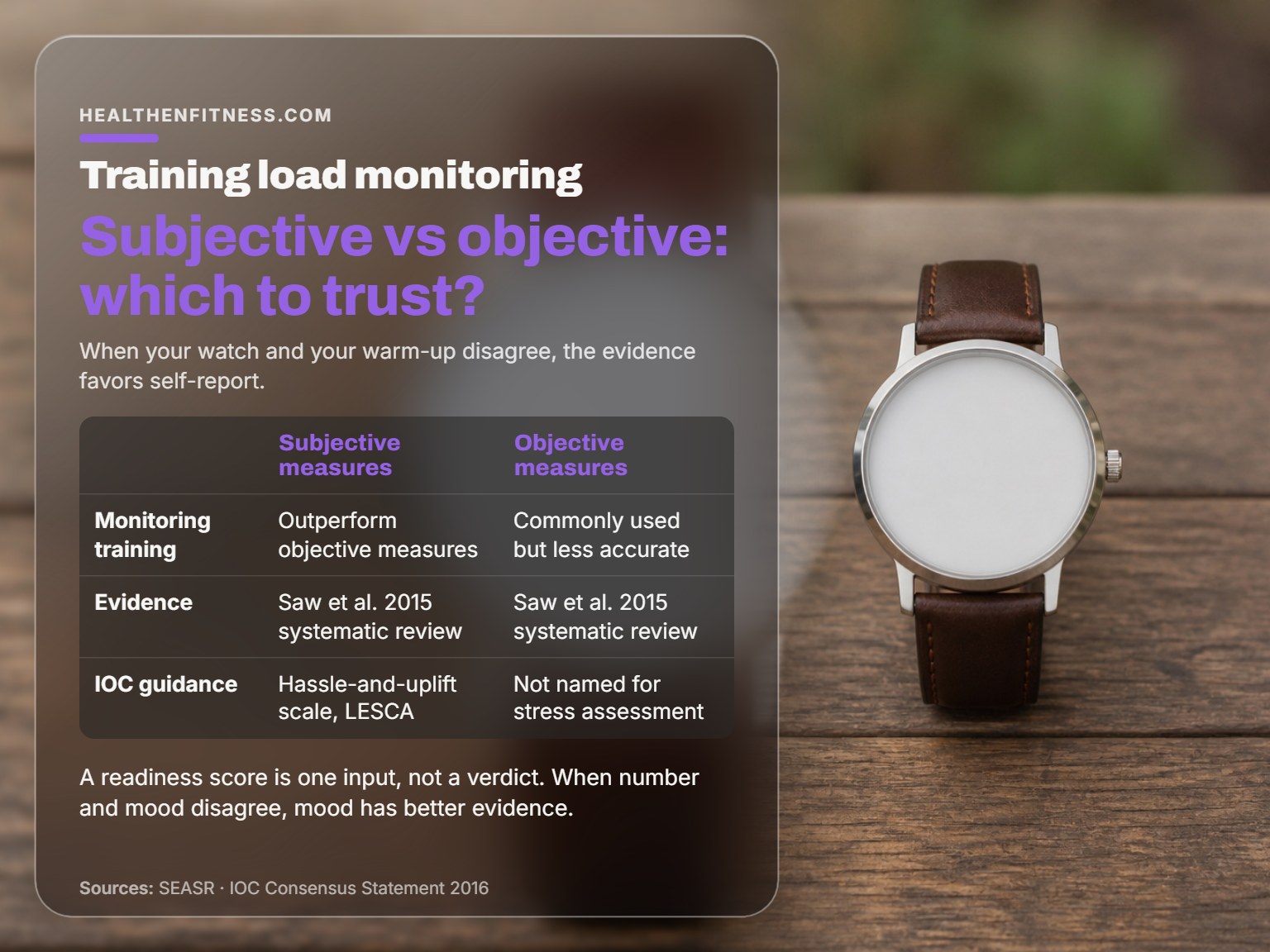
Your watch says green. Your warm-up says otherwise. One of them has better evidence behind it.
A systematic review by Saw et al. 2015, cited by the IOC, found that subjective self-reported measures outperform commonly used objective measures for monitoring athlete training response. Mood, sleep quality, and motivation are data, not soft stuff.
The IOC names two structured tools for this: the hassle-and-uplift scale and LESCA, the Life Events Survey for Collegiate Athletes, both named as periodic stress-assessment tools to time load adjustments. The Laval coaches’ guide also lists wellness monitoring as part of training-load management.
| Signal | What it points to | What to change |
|---|---|---|
| Mood flat for several check-ins | Psychological load accumulating | Trim volume before intensity |
| Sleep quality dropping | Recovery behind the training | Shorten the session, keep the habit |
| Motivation gone | Load, life events, or both | Run the hassle-and-uplift check |
| Soreness that won’t clear | Internal load outpacing recovery | Cut the week, not the month |
What to Log and What to Ignore
Wearables are fine instruments and terrible referees.
Wearable devices hand you a recovery number each morning and fold the same idea into a training status. I wore a Whoop for a stretch and stopped checking the score before morning sessions. It changed my behavior more than it changed my training.
Use them for trends across weeks. Ignore them as a green light for a single session.
A readiness score is one input, not a verdict. When the number and the mood disagree, the mood has the better evidence behind it.
If you’re training with poor sleep, the adjustment is its own problem with its own rules. Treating every tired morning as a load crisis is how people end up training hard and recovering never.
Travel, Time Zones, and the Load No Metric Captures
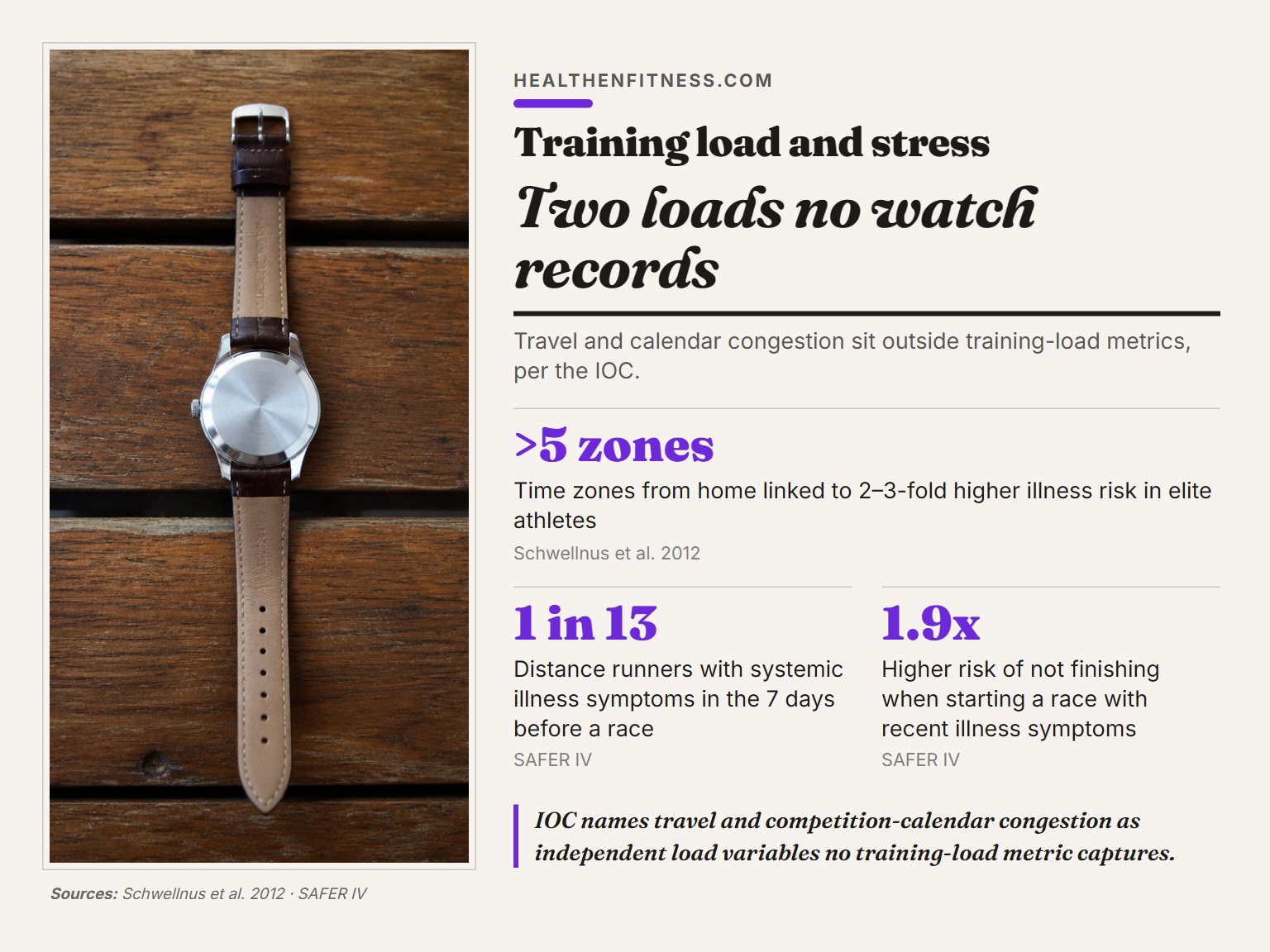
Elite athletes travelling to international destinations more than 5 time zones from home carry a 2-3 fold increased risk of illness, according to Schwellnus et al. 2012 as cited by the IOC.
That’s a load variable no training log records. The IOC names travel and competition-calendar congestion as independent load variables that no training-load metric captures, and it says so in a document otherwise devoted to measuring load.
The race-day data is just as blunt. In the SAFER study IV cohort of distance runners cited by the IOC, 1 in 13 reported systemic symptoms of acute illness in the 7-day window before a race. Runners who started a race with recent systemic illness symptoms had 1.9 times the risk of not finishing, per the SAFER study IV cited by the IOC.
The Two Variables No Watch Sees
Travel and calendar congestion. Both sit outside external and internal load, and both change the risk picture without touching a single set.
There’s a second problem for anyone building a monitoring rule. The IOC notes that the timeframe of response and adaptation varies within the same athlete, so a fixed monitoring interval is invalid.
Easy to miss: A monitoring system that reads only training load will miss the two variables the IOC names explicitly. Put travel days and fixture congestion on the same page as your sets and reps.
The tell is usually a dry, scratchy throat on the second morning and a wake-up your body insists is midday.
How to Manage Life Stress and Training Load When the Calendar Is the Problem
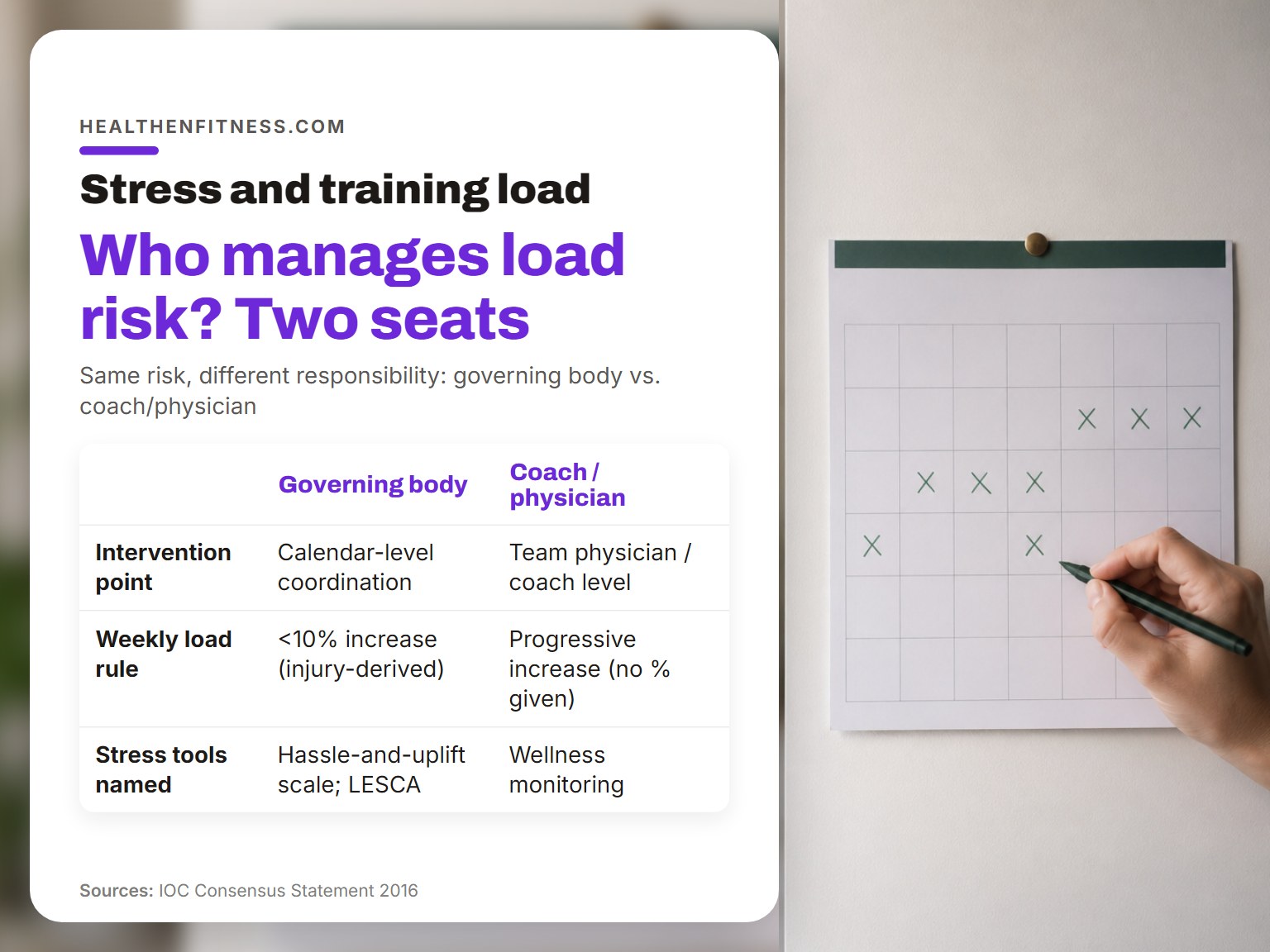
Two sources point at different people.
The IOC assigns calendar-level responsibility to sports governing bodies and recommends increased coordination between single-sport and multisport event organisers, while the NSCA practical guide and the ACSM/AMSSM consensus statement place the intervention point at the team physician or coach level.
Both are describing the same risk from different seats. The governing body can move the calendar. The coach can move the session. Neither can do the other’s job.
If you train without a coach, you’re holding both roles. A training slump after a congested month points at the calendar before it points at motivation.
The supplement aisle will offer you ashwagandha for stress. It doesn’t manage load, and no source here treats it as though it does.
Build the Lighter Week Before You Need It
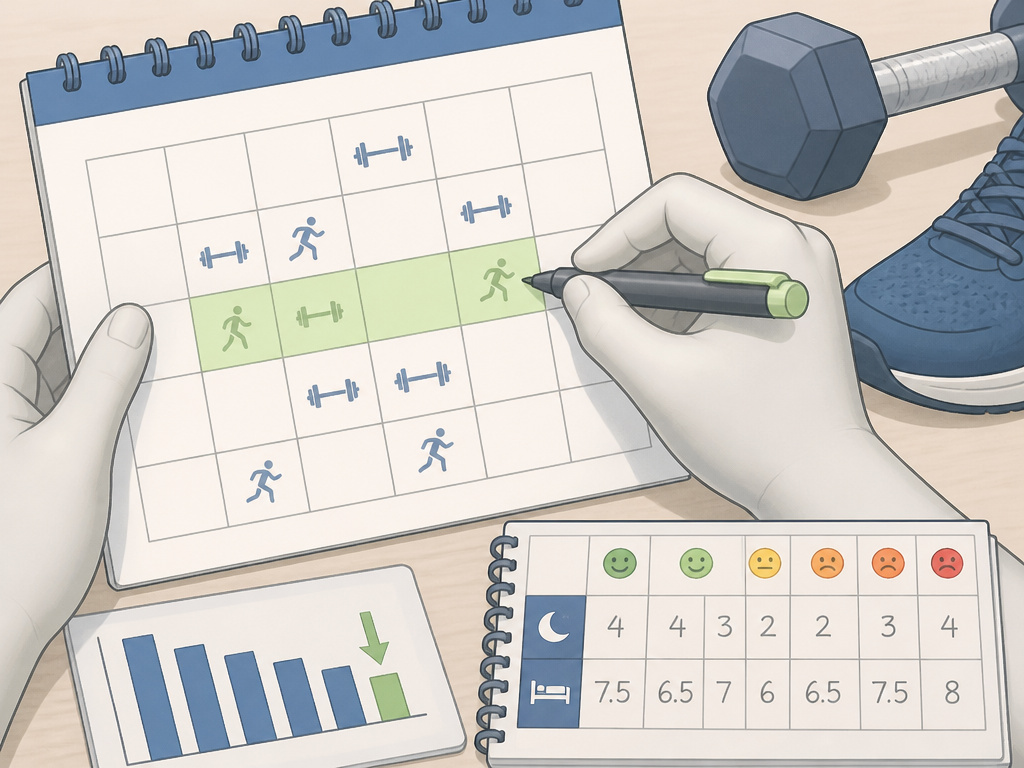
Plan the lighter week in advance, because you won’t schedule it during the week you need it.
Before you start: Training through systemic illness symptoms is the move the data punishes hardest, with 1.9 times the risk of not finishing a race you started sick. Chest symptoms, fever, or a resting heart rate that stays elevated are stop signs. If you’ve had surgery or a serious injury, get a clinician’s input before you change load.
- Check the calendar first. Travel, deadlines, and fixture congestion go on the page before sets and reps. Skip this and you’ll blame your program for a load it never set.
- Score mood, sleep, and motivation on the same day each week. Use the hassle-and-uplift scale or LESCA if you want a structured version. Skip it and you’re relying on memory, which is the least reliable instrument you own.
- Compare the score to last week, not to a target. The IOC notes adaptation timing varies within the same athlete, so a fixed monitoring interval is invalid and your own baseline is the sensible comparison.
- Trim volume before intensity. Cutting sets keeps the movement pattern and the habit. Cutting the whole session costs you both.
- Keep the session on the calendar even when it shrinks. A short session protects the routine. A cancelled one protects nothing.
I’d rather see someone string together a run of unremarkable weeks than one great week followed by a long gap. Consistency is the whole return, and a planned lighter week is how you protect it.
Planning a deload week is a scheduling task, not a crisis response. And a rest day with a walk in it beats a rest day on the sofa feeling guilty about it.
You’ll know the lighter week landed when the bar comes off the rack with a soft click instead of a grind.
Frequently Asked Questions
Does life stress really count as training load?
Yes, as a separate category. The IOC consensus statement classifies load as external and internal, then treats psychological load as a distinct third category alongside training and competition load. It changes how the same session is absorbed and recovered from.
Is the 10% weekly increase rule reliable?
It’s a convention with a documented origin. The IOC states the figure comes from injury literature and is applied to illness risk by analogy. The NSCA and Laval guides recommend progressive increases without citing the 10% figure at all.
Should I stop training when I’m stressed?
Not automatically. The IOC recommends reducing training and competition load for athletes showing unfocused behavior after negative life events, but the same document endorses high chronic load as protective and concedes very high loads can influence illness risk either positively or negatively. Check whether the stress is showing up in behavior and recovery, then adjust.
Which is better, a wearable or a notebook?
For tracking training response, a systematic review by Saw et al. 2015, cited by the IOC, found subjective self-reported measures outperform commonly used objective measures. Wearables are useful for trends. Your own mood and sleep ratings carry more signal for a single session.
How do I tell stress from overtraining?
Look at the pattern rather than one bad day. Persistent soreness that won’t clear, sleep quality dropping, and motivation gone across several check-ins point at accumulated load. A flat mood that tracks a work deadline points at psychological load.
The Bottom Line
When the signals are off at the same weekly check-in, consider making the next week lighter.
None of this replaces a clinician if something is genuinely wrong. A symptom that persists deserves a professional rather than a program tweak.
The IOC is candid that its own numbers have limits. A rule with a known origin is a tool.
Today, just write down your mood, your sleep, and your motivation in the same notebook, and put the date on it.
