
How to Stretch After a Workout: What Actually Helps
This post contains affiliate links. As an Amazon Associate, we earn from qualifying purchases.
To stretch after a workout, keep it short and gentle: about 5 minutes of static holds, one stretch per muscle group, held 15-30 seconds, and only to the point of a mild pull. A 2025 expert panel does not recommend it as a recovery routine, while NHS and Cedars-Sinai still recommend post-workout stretching, so treat it as a flexibility habit, not soreness insurance.
The how to stretch after a workout distinction matters because two different problems get bundled under one word. Stiffness is a range-of-motion issue, and stretching does change it. Soreness is a marker of unaccustomed training, and stretching doesn’t touch it.
What follows: the 2025 consensus and why it landed, the two studies that flatly disagree about soreness, the exact hold times from the NHS and Cedars-Sinai, and the shorter list of things that actually help you feel better tomorrow.
Key Takeaways
- Skip the long post-workout stretch if recovery is the goal. An international panel reached 100% agreement that stretching is not a recovery routine, and rated its confidence in that evidence as low.
- If you stretch anyway, keep holds short. NHS says 15-20 seconds; Cedars-Sinai says at least 30.
- Soreness findings are mixed. A 2021 meta-analysis found no effect on DOMS at 24, 48, or 72 hours versus passive recovery, while the Jamieson RCT found bothersome soreness was lower in the stretching group (24.6% vs 32.3%).
- Warm up with the lift, not with a stretch. Static stretching on its own before activity has been shown to reduce explosive power.
- Get cleared first if you’re injured, pregnant, or managing a condition. Both NHS and Cedars-Sinai point those readers to a professional.
What the 2025 Research Actually Says About Post-Workout Stretching
An international panel of stretching researchers reached full agreement after three Delphi rounds: post-exercise stretching is not recommended as a recovery routine.
The panel reviewed stretching for recovery and reached full agreement across three Delphi rounds that it should not be recommended as a post-exercise routine. Confidence in the underlying evidence was rated low. Delayed onset muscle soreness was attributed to the deep fascia rather than to lactate, inflammation, or free-radical buildup.
That statement landed in the Journal of Sport and Health Science in 2025, and it runs against roughly forty years of gym-class habit. The same panel also rated its confidence in the evidence as low, which is worth holding onto. Low confidence cuts both ways.
The mechanism section is the interesting part. Delayed onset muscle soreness, the ache you feel a day or two later, seems to come from the deep fascia. Z-line streaming, inflammation, and lactate or free-radical accumulation were all ruled out as causes of the soreness itself. The full Delphi consensus on stretching exercise has the panel’s exact wording if you want to read it directly.
A separate post-exercise stretching systematic review found no significant effect on strength recovery (ES -0.08, 95% CI -0.54 to 0.39; p=0.750). That analysis defined the short-term window as 1 hour or less after exercise, with delayed markers checked at 24, 48, and 72 hours.
One more limitation worth knowing: most recovery research used static or PNF work only. If you’ve been reading up on PNF stretching, understand that its post-workout role is essentially unstudied.
Does Stretching After a Workout Reduce Soreness?
Two studies looked at this and came back with opposite answers.
The Jamieson trial followed adults for 12 weeks, using 30-second static stretches of seven lower limb and trunk muscle groups before and after activity. Bothersome soreness came in at 24.6% in the stretching group versus 32.3% in controls (OR 0.69, 95% CI 0.59 to 0.82).
The 2021 meta-analysis found no effect on soreness at 24, 48, or 72 hours versus passive recovery (ES -0.09 to -0.24).
So which is it? The two studies measured different things. Jamieson tracked self-reported “bothersome soreness” across a 12-week training block. The meta-analysis measured DOMS intensity at fixed time points after a single session. A weekly soreness burden and a 48-hour soreness score are not the same outcome.
The part nobody mentions: Both studies tested structured, repeated stretching protocols. A couple of half-hearted toe touches on the way to the car is not what either one measured.
If soreness is your main complaint, the honest answer is that muscle soreness responds better to sleep, food, and lighter training than to a hamstring hold. That’s a boring answer. It’s also the one with the most behind it.
The 5-Minute Cool-Down the NHS Still Recommends
The NHS still publishes a post-workout routine, and it takes about five minutes.
Its stated purpose is to gradually relax, improve flexibility, and slow your heart rate. That’s a comfort and flexibility goal, not a recovery claim, and the distinction is doing a lot of work here.
Before you start: If you have an injury, a medical condition, or you’re pregnant, the standard routine may need changes, and NHS directs you to a physiotherapist. Cedars-Sinai adds that an injured muscle or joint shouldn’t be stretched without a doctor or physical therapist clearing it. Cedars-Sinai’s Dr. Hougen also does not recommend that patients with arthritis stretch the affected joints.
NHS lists five named stretches. Hold each one 15-20 seconds, and spend more time on any that feel like they need it.
- Buttock stretch. Lie on your back, bring your knees to your chest, cross one leg over the other thigh, and pull toward you. Skip the cross and you’re mostly just lying on the floor.
- Hamstring stretch. Lie on your back, raise one leg, hold below the knee, and pull it toward you while keeping it straight. Bend the other knee with your foot down, or your lower back takes the stretch instead.
- Inner thigh stretch. Sit with your back straight, put the soles of your feet together, and lower your knees toward the floor. Rounded back means the hips never get the message.
- Calf stretch. Step one leg forward and bend it, keep the back leg straight, and lower that heel toward the ground. Hold a chair or wall if you need to.
- Thigh stretch. Lie on your side, grab the top foot, and pull the heel gently toward the buttock with your knees touching. Let the knees separate and the stretch leaks out sideways.
The calf stretch is the one I see cheated most. The back heel lifts off the floor, the stretch quietly disappears, and the person keeps holding anyway.
The buttock and hamstring stretches both happen on the floor, and a yoga mat is enough padding for most people. If your knees complain during the thigh stretch, a thicker mat can help.
A cool-down routine built around those five movements covers the whole body in about the time it takes to fill a water bottle.
How Long Should You Hold Each Stretch? Two Credible Answers
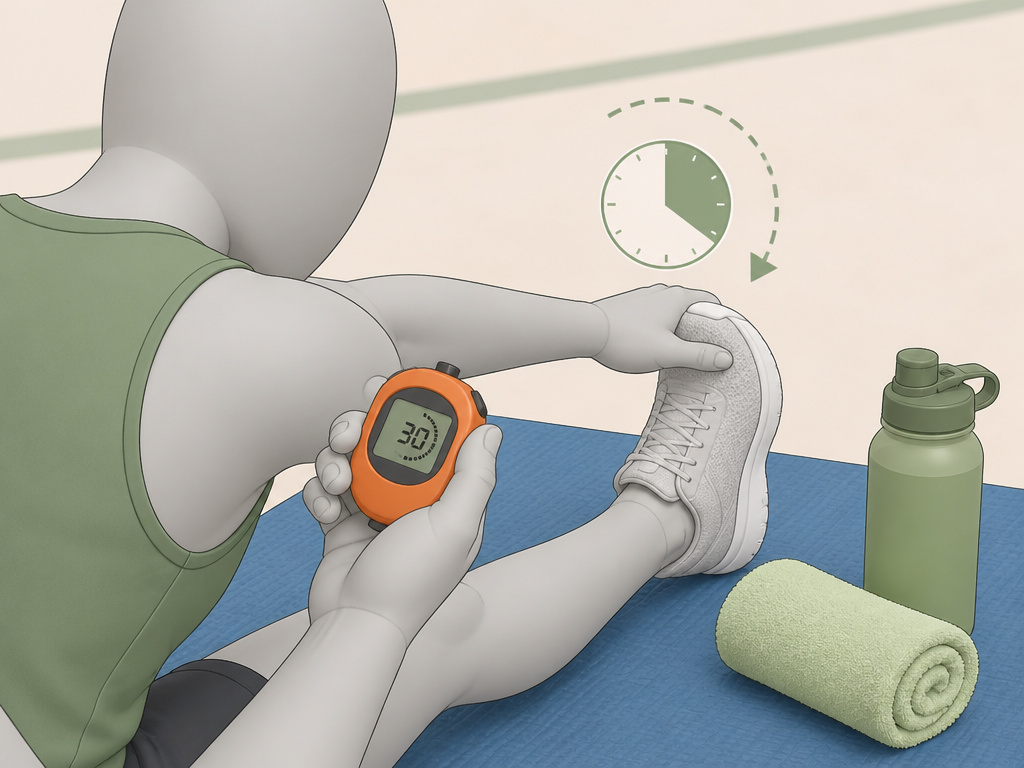
Fifteen to twenty seconds, or at least thirty. Both numbers come from credible sources, and they don’t match.
| Source | Post-workout stretch? | Hold time |
|---|---|---|
| Delphi consensus, 2025 | No, not for recovery (100% agreement) | Not specified |
| NHS | Yes, about 5 minutes | 15-20 seconds |
| Cedars-Sinai | Yes, static after activity | At least 30 seconds |
| Jamieson trial, 2009 | Tested before and after activity | 30 seconds |
The Jamieson protocol used 30-second holds, which lines up with Cedars-Sinai stretching expert advice. NHS is the outlier at 15-20 seconds, though it also says to spend more time if you feel the need, which quietly closes most of the gap.
If you’re counting down the last five seconds of a hold, you’ve already got what you came for. Somewhere between 20 and 30 seconds covers both camps.
Cedars-Sinai’s fuller instruction is to stay relaxed, breathe slowly, and ease into the stretch, pulling back a little if you notice yourself tensing up. That’s more useful than the number. There’s a longer breakdown of how long to hold each stretch if you want the detail.
Where Post-Workout Stretching Still Earns Its Place
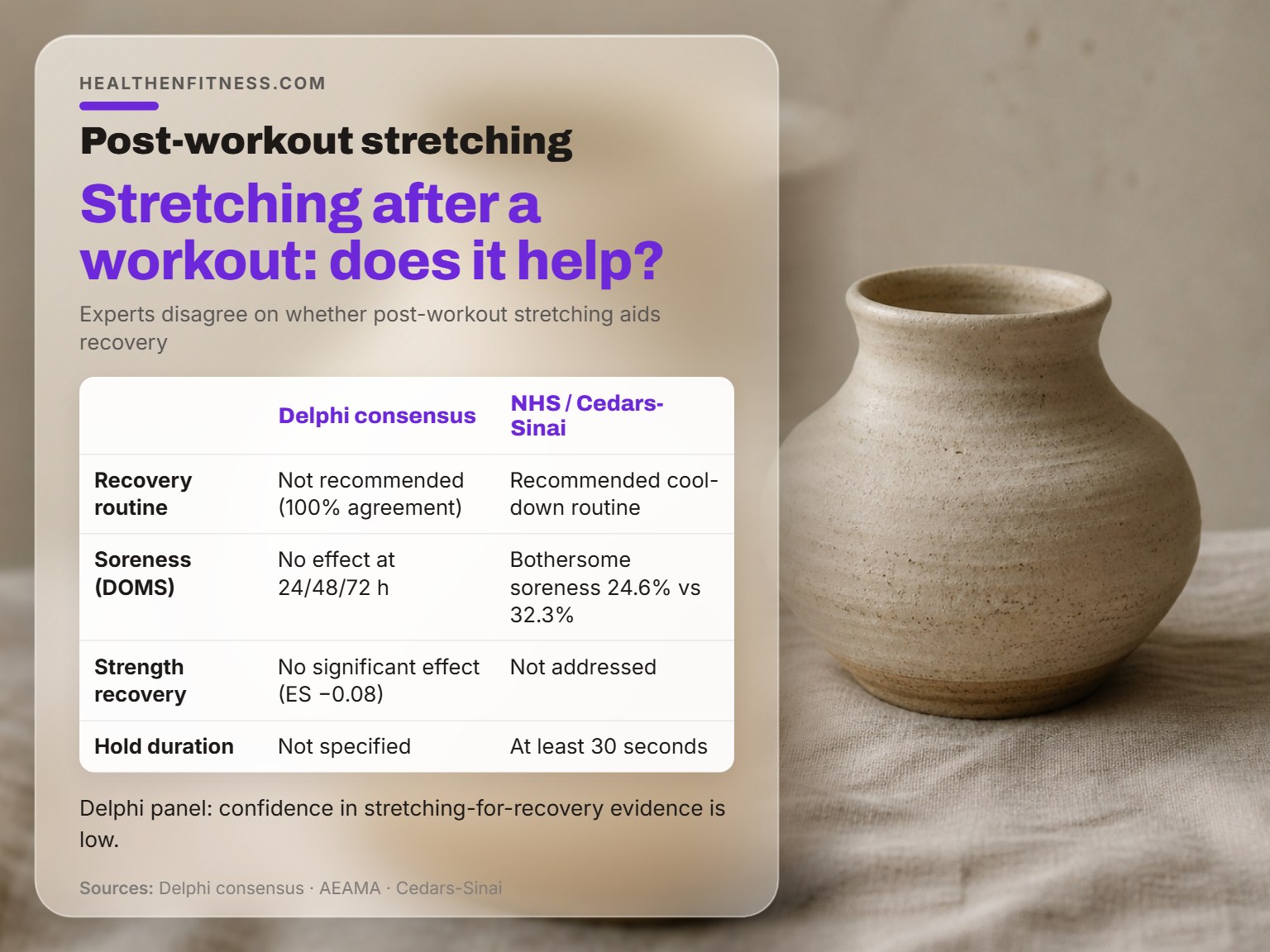
The same panel that told you not to stretch for recovery also said stretching reduces muscle stiffness, both acutely and chronically.
It just added that it’s questionable whether less stiffness is a desirable goal. That’s a strange sentence to read, and it’s the most interesting one in the paper.
Cedars-Sinai takes the practical view. Static stretches done after activity, when muscles are warm and pliable, can improve flexibility, reduce stiffness, and prevent or reduce back pain. That’s a real benefit set, and it has nothing to do with tomorrow’s soreness.
So the honest split: if your goal is touching your toes or easing a stiff lower back, there’s a case. If your goal is feeling less wrecked tomorrow, the case is thin.
That’s also why the static vs dynamic question keeps coming up. Cedars-Sinai notes that static stretches used on their own before activity reduce explosive power, and that a few minutes of dynamic warm-up improves lower-limb muscle performance and reduces injury.
How to Stretch After a Workout Without Making It Worse
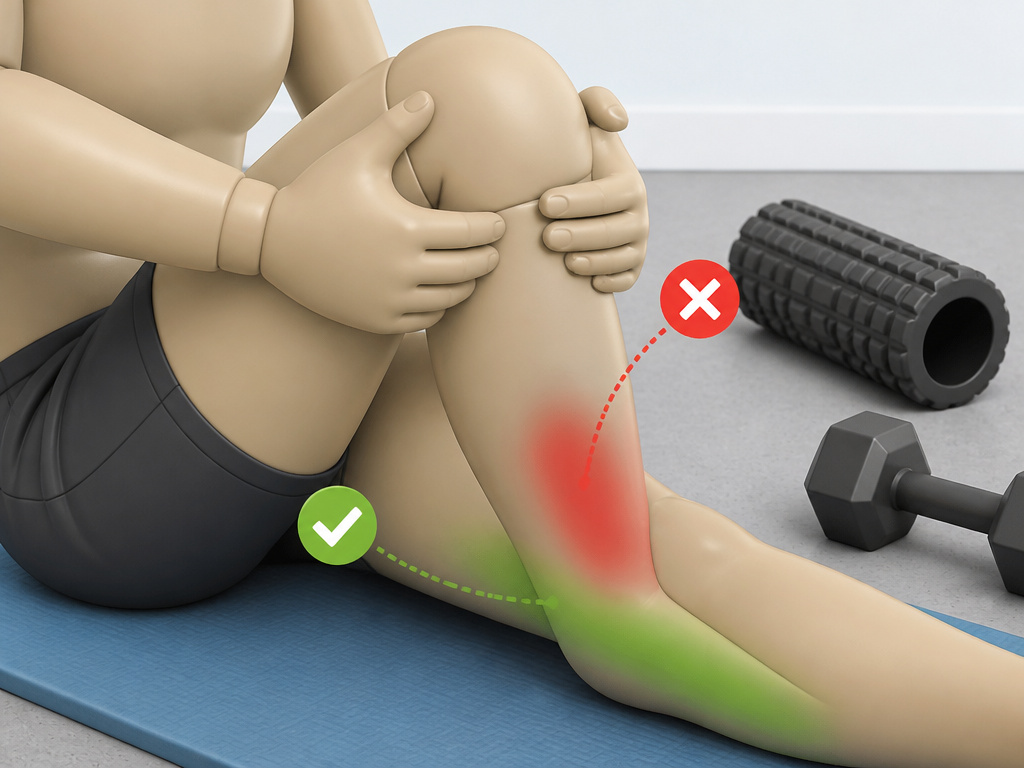
You finish a hard set of squats, your hamstrings feel like guitar strings, and you fold straight into a deep forward bend. That’s the moment most post-workout stretching goes sideways.
Stretching a cold muscle hard
A cold muscle under a hard stretch feels taut and unyielding, and the instinct is to push through it. Cedars-Sinai’s rule is to stretch only to the point where the muscle resists, and to feel a stretch without pushing into sharp pain. Back off if it turns sharp.
Treating a stretch as treatment for an injury
An injured muscle or joint shouldn’t be stretched without a doctor or physical therapist. Cedars-Sinai says so directly, and NHS points the same readers toward a physiotherapist. This is where self-coaching stops working, and I’d rather you hear it plainly.
Assuming dynamic stretching behaves the same way after exercise
The panel noted that most recovery research used static or PNF stretching only, which leaves dynamic stretching’s post-exercise role essentially unstudied. Nobody has a solid answer here yet. Anyone who tells you otherwise is guessing.
I’d rather see a beginner do two easy sets with an empty bar than fifteen minutes of hamstring holds before a session. The bar warms the exact tissue you’re about to load. That part matters more than it sounds.
I used to roll for a long time before squats and wonder why I felt flat. Now it’s a brief roll per stiff area, then straight into bodyweight squats or hip airplanes while the range is fresh.
Common mistake: Chasing a personal record on a muscle that’s still sore from two days ago, then stretching it hard afterward to “flush it out.” The panel found no lactate or free-radical link to soreness, so there’s nothing to flush.
The broader list of stretching mistakes that cause injury covers the rest, including the ones that show up before you ever get to a cool-down.
What Actually Helps After a Workout
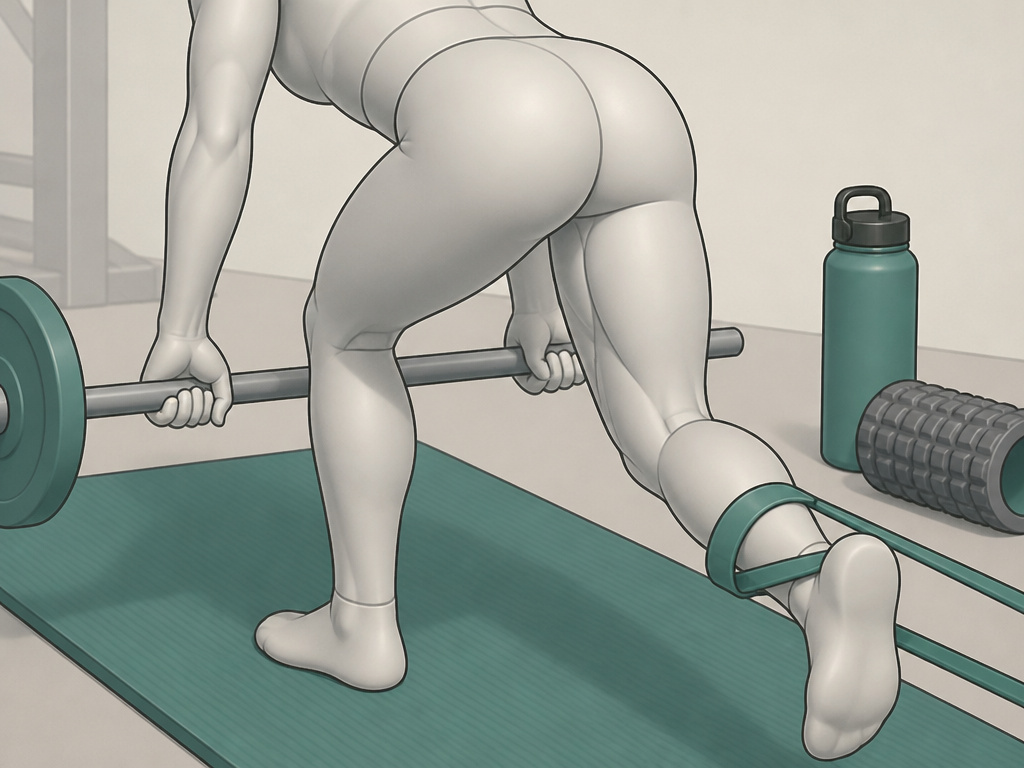
Sleep beats stretching. That’s the short version.
The recovery basics haven’t changed: food with protein, water, and a consistent bedtime do more for how you feel tomorrow than any cool-down protocol. The panel’s point about soreness is worth repeating here. DOMS is a marker of unaccustomed training and shouldn’t be a common phenomenon once you’re training regularly.
| What you notice | Likely cause | What actually helps |
|---|---|---|
| Soreness 1-2 days after a new exercise | DOMS from unaccustomed training | Repeat the exercise lighter; it fades as training regularizes |
| Hamstrings that feel tight every week | Range you don’t own under load | Slow hip hinges and Romanian deadlifts through full range |
| Stiffness after sitting | Reduced range, not damage | Short static holds or a few minutes of movement |
| Sharp pain during a stretch | Tissue that shouldn’t be pushed | Back off and see a physiotherapist or doctor |
Here’s the honest version. A friend of mine spent weeks stretching tight hamstrings and felt worse, not better. What finally eased them was slow, controlled hip hinges under light load. That’s one person’s experience and not a study, but it lines up with the panel’s point that stiffness and soreness are separate problems.
Three things I’d actually do after training:
- Train the range instead of stretching it. Work at the bottom of a squat or a Romanian deadlift builds range and strength together, which is the version that carries over.
- Roll briefly, then move. A minute or so per stiff area, then straight into bodyweight squats or hip airplanes while the range is still fresh.
- Keep longer stretching separate. If you want a flexibility session, put it in the evening rather than bolting it onto a rushed cool-down.
A resistance band around the foot makes the hamstring hold easier to control than reaching with both hands, especially when your grip gives out before the muscle does.
If you want the full sequence laid out, a full-body stretching routine is a better evening project than a post-workout add-on. And the wider post-workout recovery picture is mostly sleep, food, and sensible loading.
Frequently Asked Questions
How soon after a workout should you stretch?
NHS frames its routine as a cool-down, so it follows the session directly. Neither NHS nor Cedars-Sinai sets a minimum wait before you start. If you’re doing a longer flexibility session instead, the evening works fine and keeps it separate from training.
Does stretching after a workout help sore muscles?
The evidence is split. The Jamieson trial found bothersome soreness at 24.6% in stretchers versus 32.3% in controls across 12 weeks. The 2021 meta-analysis found no effect on DOMS at 24, 48, or 72 hours. Different outcomes, different answers.
Is it bad to stretch after lifting?
It isn’t bad, it just isn’t the recovery tool it’s sold as. The 2025 panel rated confidence in the recovery evidence as low and did not recommend stretching as a post-exercise recovery routine. Static stretching before lifting is the bigger issue, since it can reduce explosive power.
How long should each stretch be held?
NHS says 15-20 seconds and to spend more time if you feel the need. Cedars-Sinai says at least 30 seconds. The Jamieson trial used 30-second holds. Anywhere in the 20-30 second range satisfies all three.
Should you stretch an injured muscle?
No. Cedars-Sinai says not to stretch an injured muscle or joint without first consulting a doctor or physical therapist, and NHS directs people with injuries or medical conditions to a physiotherapist. Cedars-Sinai’s Dr. Hougen also does not recommend that arthritis patients stretch the affected joints.
The Bottom Line
Try this week: after your next session, pick one stretch you actually like, hold it 20-30 seconds per side, and skip the rest of the routine. Then check how you feel the next morning and the morning after that. That two-day window tells you more than any article can.
Everything above changes if you’re rehabbing something specific or managing a condition. In that case a physiotherapist’s plan overrides every recommendation here, including mine.
The bigger point is that how to stretch after a workout is a smaller question than most people think. Stretching is a flexibility tool. Recovery is sleep, food, and training you can repeat next week without dreading it.
