
10 Best Nontoxic Yoga Mats in 2026
This post contains affiliate links. As an Amazon Associate, we earn from qualifying purchases.
The JadeYoga Harmony Yoga Mat is the best overall nontoxic yoga mat, thanks to its grippy natural rubber surface, zero PVC or phthalates, and a tree planted with every purchase.
Shopping for a nontoxic mat means cutting through vague claims about being “green.” What actually matters is what the mat is made from. PVC-free materials like natural rubber, cork, or jute, and how those materials perform during your practice.
We built this guide by studying manufacturer specs, material composition data, and patterns in owner feedback across dozens of models. Our goal is to help you find a mat that is safe for your body, durable on the floor, and honest about what it is made of.
Top 10 Nontoxic Yoga Mats in the Market
Certain content that appears on this site comes from Amazon. This content is provided "as is" and is subject to change or removal at any time.
The Best Nontoxic Yoga Mats, Reviewed
JadeYoga Harmony Yoga Mat

What We Like
- Non-slip natural rubber surface
- No PVC, phthalates, or heavy metals
- Tree planted with each mat sold
- Made in the USA
Trade-offs
- Open-cell rubber absorbs sweat and odors
- 4.9 lb is heavier than some travel mats
A 3/16-inch thickness from natural open-cell rubber gives this mat a rare balance: enough cushion for knees and wrists without making you feel disconnected from the floor. The non-slip surface holds steady in downward dog, and the lack of PVC, phthalates, and heavy metals means you are not breathing in plastic fumes during your practice. It suits anyone who wants a grippy, eco-conscious mat that still feels responsive underfoot, especially if you value sustainability and a clean material list.
The trade-off is that open-cell rubber is thirsty, it soaks up sweat and can hold onto smells over time. So you will need to clean it more often than a closed-cell mat like the Manduka eKO Lite. At 68 inches long and 24 inches wide, it is shorter than some alternatives such as the 71- or 72-inch mats in the guide. That may feel cramped for taller practitioners or those who like extra room for wide-legged poses. Still, for the combination of grip, natural materials, and the tree-planting program, this mat makes a compelling everyday companion.
Product photos
Manduka eKO Lite Yoga Mat

What We Like
- Textured surface for reliable traction
- Closed-cell design resists moisture buildup
- Lightweight at 5.2 lbs for portability
Trade-offs
- 4mm thickness offers less cushion for sensitive joints
- Narrower 24-inch width limits room for wider stances
- Requires special cleaner, not soap or water
At 4mm thick and 5.2 pounds, this mat is light enough to toss in a bag and carry to class or the park without feeling like you’re hauling a tire. The textured rippled surface gives you reliable traction during faster flows, while the closed-cell design prevents moisture from soaking in, keeping your practice clean between sessions. If you value a portable, earth-friendly mat that stays clean, this one fits the bill nicely.
With 4mm of natural rubber, this mat won’t cushion bony knees or elbows the way a thicker mat would. If you spend long minutes in kneeling poses or have sensitive joints, you might want to double up with a towel or look at the 5mm Manduka eKO Yoga Mat instead. Compared to that sibling, the eKO Lite is exactly one pound lighter and one millimeter thinner, which makes it a better travel companion but a less forgiving floor buffer. For yogis who prioritize lightness and non-toxic materials over plush comfort, it’s a smart pick.
Product photos
Manduka eKO Yoga Mat

What We Like
- Biodegradable natural tree rubber
- Textured grip for dry traction
- Closed-cell design resists moisture
- 5mm cushion for comfort
Trade-offs
- Strong natural rubber scent when new
- Heavier than many mats at 7 lbs
A 5mm thickness made from 100% natural tree rubber gives this mat a plush, responsive feel that cushions joints during floor poses without sacrificing stability. The textured rippled surface provides reliable traction in dry conditions, so you can hold downward dog or a slow flow without slipping. This is a mat built for practitioners who want eco-friendly materials and a medium cushion that supports both gentle stretching and more dynamic sequences.
The trade-off comes with weight and care. At 7 pounds, it is noticeably heavier than the 5.2-pound Manduka eKO Lite, so carrying it to class feels more like a workout. The natural rubber also has a distinct scent when new, though it fades with use. For a durable, non-toxic mat with a plush feel, this one delivers.
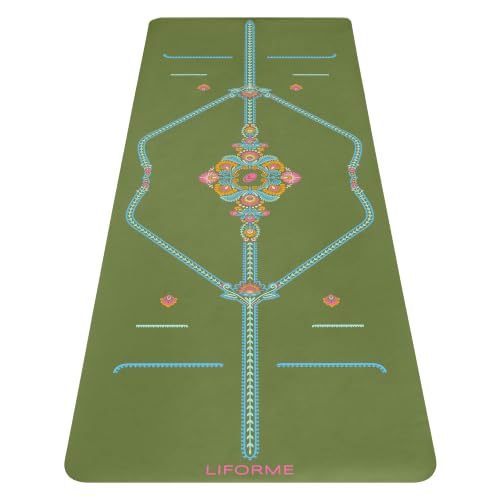
Liforme Printed Yoga Mat
What We Like
- Patented AlignForMe alignment guides
- GripForMe surface improves grip with sweat
- Non-toxic, PVC-free eco-polyurethane and natural rubber
- Comes with free yoga bag
Trade-offs
- At 5.5 lb, heavier than some travel-friendly mats
- 4.2 mm thickness offers less cushion than thicker mats
The patented AlignForMe markers printed directly on the surface give you visual cues for foot and hand placement in every pose, no more guessing whether your alignment is off. That design, combined with a GripForMe surface that actually gets tackier as you sweat, makes this mat a standout for anyone who wants to build proper form without slipping. At 72.8 inches long and 26.8 inches wide, it offers generous room for taller practitioners or those who like a bit of extra space during flow sequences.
Weight and cushioning are the main considerations here. At 5.5 pounds, it’s heavier than the Gaiam Cork mat (2.0 lb), so if you’re carrying it to a studio daily, that extra heft adds up. And with a 4.2 mm thickness, it’s firmer than the 5 mm Manduka eKO mat, which some may prefer for stability, but it offers less padding for knees and hips during floor poses. Best for yogis who prioritize alignment feedback and sweat-proof grip over portability or plush padding.
Liforme Special Yoga Mat

What We Like
- Grip stays strong when wet with sweat
- PVC-free, non-toxic eco-polyurethane and rubber
- Extra-long and extra-wide surface
- Patented alignment markings built in
Trade-offs
- At 5.5 lb, heavier than most travel mats
- 4.2 mm thickness offers less cushion than thicker mats
The Liforme Special Yoga Mat uses a proprietary “GripForMe” material that keeps its grip even when drenched in sweat, making it a strong option for sweaty practices. Its 72.8-inch length and 26.8-inch width give you room to spread out without your hands or feet slipping off the edge. The alignment markings printed on the surface help you check your stance mid-flow. This mat suits anyone who wants a stable, non-toxic surface that won’t lose grip when wet.
The trade-off comes down to weight and padding. At 5.5 pounds, this mat is heavier than the 2.2-pound Retrospec Solana Extra Thick Yoga Mat, so it’s less convenient to carry to class if you walk or bike. The 4.2 mm thickness also provides less cushion than the 5 mm Manduka eKO Yoga Mat, which matters if your knees are sensitive or you frequently work in prone poses. For hot yoga where grip is everything, those compromises make sense; for gentler floor-based practice, a thicker, lighter mat might serve you better.
YOGA DOOD Cork Yoga Mat

What We Like
- Moisture-activated grip improves with sweat
- Sustainably harvested cork and biodegradable materials
- Alignment lines guide practice without distractions
- Lightweight at 6.3 lbs for portability
Trade-offs
- 4mm thickness offers less cushion for sensitive joints
- Narrower than some extra-wide options at 26 inches
A cork surface that gets grippier with sweat is the standout feature here, turning a common hot-yoga problem into an advantage. This mat weighs 6.3 pounds and measures 72 by 26 inches, with a 4mm thickness that offers a balance of support and stability. The sustainably harvested cork and biodegradable materials align with eco-conscious values, and the nature-inspired alignment marks guide your practice without flashy distractions. It’s a thoughtful pick for anyone who wants a natural, non-toxic surface that supports sweaty practice without slipping.
The trade-off is the 4mm thickness: it provides support for joint health during strength-based poses, but if you need more cushion for longer sessions, a thicker mat like the Manduka eKO (5mm) offers additional padding. At 26 inches wide, it’s roomy for most but not as expansive as the KEEP Non-Slip Large Yoga Mat’s 32-inch width. For the practitioner who values grip that improves with sweat and a mat that rolls compactly, this is a grounded choice.
Product photos
Gaiam Cork Yoga Mat

What We Like
- Natural cork resists sweat and odor
- Lightweight at only 2.0 lb
- Eco-friendly TPE backing
- Grip improves when slightly damp
Trade-offs
- At 0.2 in thick, minimal cushion for joints
- Narrower than some premium mats at 24 in
At just 2.0 pounds, this cork mat is light enough to toss in a bag without thinking twice. That makes it a great companion for anyone who carries their mat to the studio or across town. The natural cork top is designed to resist sweat and odor, and it actually gets grippier when slightly damp, so hot yoga sessions won’t turn into a slip-and-slide. For someone starting out or watching their budget, this mat keeps things simple and sustainable without demanding a heavy upfront investment.
The thin 0.2-inch profile means less cushioning than the 1-inch Retrospec Solana Extra Thick mat. So if your knees or joints are sensitive, layering it over a carpet or using a towel for extra padding is a practical workaround. Many competitors share the same 24-inch width, so taller or broader practitioners should check their own comfort with that dimension. For someone who values portability and natural materials over plush padding, this mat offers a straightforward, budget-friendly choice.
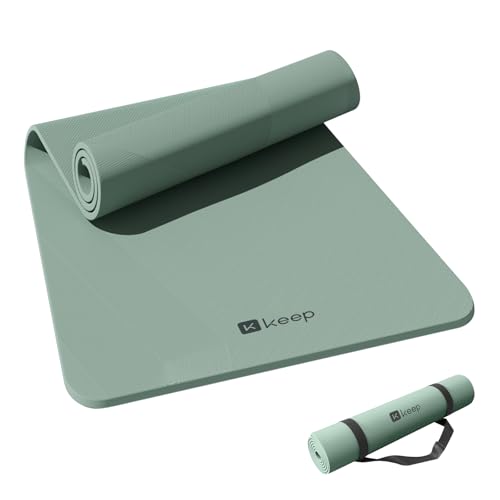
KEEP Non-Slip Large Yoga Mat
What We Like
- 32-inch width for spacious poses
- 7mm cushion protects joints
- Double-sided non-slip grip
- TPE material free from plasticizers
Trade-offs
- Requires airing out before first use to dissipate packaging odor
- Spot-cleaning only with cold water; no machine washing or soaking
A 32-inch width means you can stretch your arms wide, shift into side planks, or roll from hip to hip without ever touching the floor. That extra real estate is the main reason this mat stands apart from standard 24-inch models, it gives you room to move freely, especially if you are tall or like dynamic flows. The 7mm TPE padding cushions knees and elbows during floor work, and the double-sided non-slip texture keeps you planted on dry or wet surfaces. It is also lightweight enough to sling over your shoulder with the included strap, so you will not dread carrying it to class.
The 7mm thickness provides noticeable cushioning for knees and elbows during floor poses, which matters if you spend time on your knees in low lunges or kneeling stretches. At 2.8 pounds, the mat is easy to carry in the included strap to a gym or yoga class without feeling like a burden. The extra-wide 32-inch surface gives you room to spread out for wide-legged poses or dynamic flows without worrying about slipping off the edge. Compared to the Manduka eKO Lite at 5.2 pounds, the KEEP mat is easier to transport but less likely to stay planted on polished floors under hard pushes.
Product photos
Retrospec Solana Extra Thick Yoga Mat

What We Like
- 1-inch thick cushion for joints
- Non-slip grip for stability
- BPA-free and latex-free materials
- Includes nylon carrying strap
Trade-offs
- At 24 inches wide, less room for wide stances
- Initial harmless odor requires airing out before use
A full inch of cushioning means this mat practically invites you to drop to your knees or sit in a deep hip opener without wincing. That extra thickness relieves pressure on joints, hands, and hips, making it a smart pick for those with sensitive knees or who frequently work in floor poses. It’s also BPA-free and latex-free, so you’re not worrying about what’s under you while you breathe through a long hold. The non-slip material helps keep you planted, and the included nylon strap makes it portable enough to carry from home to the studio.
The trade-off for all that plush comfort is a narrower surface. At 24 inches wide, you’ll have less room for wide-legged stretches compared to some wider mats on the market. And while 2.2 pounds isn’t heavy, it’s more than some thinner mats if you’re walking to class. The manufacturer notes the mat may initially release a harmless odor, so plan to unroll and air it out for a day or two before your first practice if that happens. If cushioning is your priority, this mat delivers without the toxic materials.
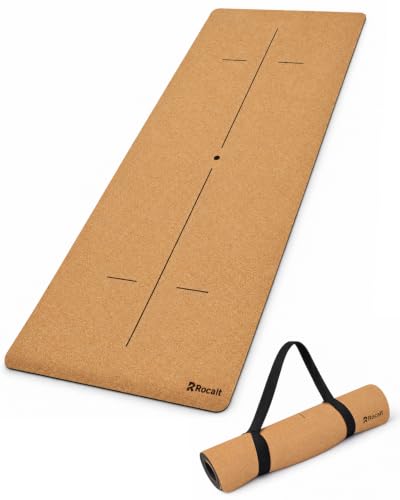
Rocalt Cork Yoga Mat
What We Like
- Wider than standard 24-inch mats
- Non-slip cork surface for hot yoga
- Natural non-toxic materials
- Built-in alignment lines for positioning
Trade-offs
- 9 lb weight is heavy to carry
- Noticeable rubber scent when new
- Requires airing before first use
A 72 x 26 inch surface gives you two extra inches of width over a standard 24-inch mat. That makes a real difference when you’re spreading your hands wide in downward dog or settling into a seated twist without your pinky dragging on the floor. The cork surface is designed to help maintain hand and foot placement during hot yoga or any sweaty practice, and the natural rubber base keeps the mat from shifting during transitions. Minimalist alignment lines provide visual references for consistent hand and foot placement without cluttering the look.
At nine pounds with a carrying strap included, this mat is heavy enough that you’ll notice it on your shoulder during the walk to the studio. The natural rubber base gives it a scent when first unrolled, so air it out in a ventilated room before your first session. Compared to the 5.5-pound Liforme Special Yoga Mat, the Rocalt is heavier. Its 6mm thickness offers more padding than the Liforme’s 4.2mm, making it a better fit for home practice or short commutes than for daily subway trips.
Product photos
How We Evaluated Nontoxic Yoga Mats
Our research started with material transparency. We looked for mats that clearly state they are free from PVC, phthalates, and heavy metals, and we prioritized those made from natural tree rubber, cork, or certified eco-polyurethane. We also checked each mat’s manufacturing claims against the broader consensus on non-toxic yoga mats to ensure nothing was overstated.
Performance mattered just as much as safety. We studied three criteria most critical for this category: grip in both dry and sweaty conditions, cushioning for joint protection, and weight for portability. A mat that is non-toxic but slides around or wears out quickly helps nobody.
The honest limit of a research-led evaluation is that we cannot replicate months of daily practice. We rely on verified owner feedback about durability, odor, and real-world grip to fill that gap, and we flag common trade-offs like strong initial rubber smell or sweat absorption so you know what to expect.
What To Look For In Nontoxic Yoga Mats
Choosing a nontoxic mat means understanding what you are putting between your body and the floor. The best options use natural or recycled materials with clear ingredient lists, and they balance grip, cushion, and weight for your specific practice style.
Prioritize mats that explicitly state “no PVC, phthalates, or heavy metals.” Natural rubber and cork are the most common safe materials. Match the thickness to your joint sensitivity and the weight to how far you carry the mat.
Material Composition and Safety Claims
The core of a nontoxic mat is its material. Natural tree rubber is the gold standard, it offers excellent grip and biodegradability. Cork is another strong option, especially for hot yoga, since its moisture-activated grip improves with sweat. Avoid mats with vague terms like “eco-friendly” without listing specific materials. The best natural yoga mats clearly state their rubber source and confirm zero PVC or phthalates.
Grip and Moisture Management
Grip changes entirely when you sweat. Open-cell natural rubber surfaces (like the JadeYoga Harmony) feel tacky when dry but absorb moisture, requiring more frequent cleaning. Closed-cell designs (like the Manduka eKO) resist moisture buildup and are easier to wipe down. For hot yoga, cork yoga mats excel because the cork layer becomes grippier as it gets damp. Test your mat’s grip with a simple downward dog before committing.
Thickness, Weight, and Portability
Thicker mats cushion knees and joints better but weigh more. Thinner mats are lighter and easier to carry but offer less padding. If you have sensitive joints, a thicker mat is worth the weight trade-off. For studio practitioners who walk or bike to class, a thinner mat is more practical.
- Check the mat’s width: standard is 24 inches, but extra-wide options (26 to 32 inches) help with wide-legged poses.
- Look for a carrying strap or included bag if you plan to travel with the mat.
- Confirm the cleaning instructions: some natural rubber mats require special cleaners, not soap and water.
- Read about initial odor: many natural rubber and cork mats need a few days to air out.
- Verify the return policy: a mat’s feel is personal, and some brands offer trial periods.
A good rule of thumb: the more transparent a brand is about its materials, the more confident you can be that the mat is truly nontoxic.
Nontoxic Yoga Mats Compared
The table below compares the key specs and features of all ten mats to help you narrow your options quickly.
| Product | Material | Thickness | Weight | Dimensions |
|---|---|---|---|---|
| JadeYoga Harmony Yoga Mat | Natural open-cell rubber | 3/16'' | 4.9 lb | 68 x 24 in |
| Manduka eKO Lite Yoga Mat | 100% natural tree rubber | 4mm | 5.2 lbs | 71 x 24 in |
| Manduka eKO Yoga Mat | 100% natural tree rubber | 5mm | 7 lbs | 71 x 24 in |
| Liforme Printed Yoga Mat | Eco-polyurethane & natural rubber | 4.2 mm | 5.5 lb | 72.8 x 26.8 in |
| Liforme Special Yoga Mat | Eco-polyurethane + natural rubber | 4.2 mm | 5.5 lb | 72.8 x 26.8 x 0.2 in |
| YOGA DOOD Cork Yoga Mat | Cork + sustainable materials | 4mm | 6.3 lbs | 72" x 26" |
| Gaiam Cork Yoga Mat | Cork top / TPE backing | 0.2 in | 2.0 lb | 68 x 24 x 0.2 in |
| KEEP Non-Slip Large Yoga Mat | TPE | 7mm | 2.8 lbs | 72"L x 32"W |
| Retrospec Solana Extra Thick Yoga Mat | BPA-free, latex-free | 1 inch | 2.2 pounds | 72" x 24" |
| Rocalt Cork Yoga Mat | Cork / natural rubber | 6 mm | 9.0 lb | 72 x 26 in |
Frequently Asked Questions
What makes a yoga mat nontoxic?
A nontoxic yoga mat is made without PVC, phthalates, heavy metals, or other harmful plasticizers. The safest materials are natural tree rubber, cork, organic cotton, and jute. Look for mats that list their full material composition rather than using vague “eco-friendly” labels.
How do I clean a natural rubber yoga mat?
Most natural rubber mats require gentle cleaning with a diluted vinegar solution or a specialized yoga mat cleaner. Avoid soaking the mat or using harsh chemicals, which can break down the rubber over time. Always air dry the mat completely before rolling it up.
Are cork yoga mats better for hot yoga than rubber?
Yes, cork mats are excellent for hot yoga because the cork surface becomes grippier as it absorbs moisture from sweat. Natural rubber mats can become slippery when wet, especially open-cell varieties. Cork also resists odor buildup better than rubber.
How thick should a yoga mat be for sensitive knees?
For sensitive knees or joints, look for a mat that is 5mm to 7mm thick. The Retrospec Solana at 1 inch offers maximum cushioning, while 4mm mats like the Liforme or Manduka eKO Lite provide less padding. Pair a thinner mat with a folded towel under your knees if needed.
What is the difference between open-cell and closed-cell yoga mats?
Open-cell mats have a porous surface that absorbs sweat and provides a tacky grip, but they require more frequent cleaning and can hold odors. Closed-cell mats have a non-porous surface that resists moisture and is easier to wipe clean, making them better for sweaty practices or shared studio mats.
The Bottom Line
The JadeYoga Harmony Yoga Mat earns our top spot because it combines a non-slip natural rubber surface with a clear commitment to non-toxic materials and sustainability. It is best for yogis who want reliable dry grip and feel good about a tree planted with every purchase.
If you need a lighter mat for carrying to class, the Manduka eKO Lite offers the same natural rubber benefits at a portable weight. For hot yoga practitioners, the Liforme Special or YOGA DOOD Cork deliver moisture-activated grip that actually improves as you sweat.
The single most important factor in choosing a nontoxic mat is material honesty. Stick with brands that name their ingredients, avoid PVC entirely, and match the mat’s thickness and grip to your specific practice, your joints and your lungs will thank you.
