
Shift Work and Workout Recovery Tips: The 11-Hour Gap
This post contains affiliate links. As an Amazon Associate, we earn from qualifying purchases.
Shift work and workout recovery tips work best around three fixed points: at least 11 hours between shifts, 7 hours of sleep a night, and exercise placed after the shift rather than before it. The Working Time Society ties the 11-hour gap to securing 7 hours of sleep, and WorkSafe New Zealand allows 7 to 9 hours per 24 hours, taken in chunks.
That chunk allowance is where most shift work and workout recovery tips fall apart. A split sleep pattern only works when the pieces add up and the timing is deliberate. Everything below treats sleep as the anchor, and the training hangs off it.
What follows: the evidence on exercise timing, a straight comparison of what three regulators actually recommend, and the recovery moves that survive a week when the schedule blows up.
Key Takeaways
- Protect the 11-hour gap first. Sleep is the recovery tool; the workout is the add-on.
- Post-shift training has the best evidence for sleep consolidation in the Frontiers review.
- Planned naps are endorsed by WorkSafe New Zealand and the Delphi consensus, even though generic sleep hygiene still discourages them.
- 80% of the included RCTs carried some concerns or high risk of bias, so read every finding as directional.
- Drop to active recovery when sleep was short. Hard sessions on a sleep debt cost more than they return.
Why the 11-Hour Gap Matters More Than the Workout Itself
The Working Time Society sets a floor of at least 11 hours between shifts. The number is deliberate. It’s sized to allow 7 hours of sleep, plus the wind-down and commute that surround it.
The consensus statement from the Working Time Society specifies a minimum 11-hour interval between shifts, sized to allow 7 hours of sleep. Shorter intervals accumulate fatigue across a block of shifts, and the recovery window required to offset that accumulation grows with extended hours and severe circadian disruption, per the same statement.
Read that last clause again. The 11-hour gap is the minimum, not the target. When your block includes extended hours or severe circadian disruption, the consensus says more recovery time may be needed. The consensus attaches no fixed number to that extra time.
So the 11-hour gap protects three things:
- Sleep duration – the 7 hours the consensus ties to the gap
- Circadian stability – a consistent bedtime window
- Training quality – a rested nervous system moves better than a caffeinated one, and that’s the whole point
Skip the gap and you’re not choosing between a workout and rest. You’re choosing between a workout and a sleep debt that compounds across the block. By night three, the workout is the thing that breaks first.
Should You Train Before or After a Night Shift?
Post-shift wins on the shift work and workout recovery tips evidence. The Frontiers systematic review of shift-worker exercise found that exercise timed after the shift most consistently improved sleep consolidation. During-shift exercise produced circadian phase delays, which is the opposite of what you want at the end of a night.
But post-shift training doesn’t mean lifting heavy at 7am and expecting to sleep at 8. The Institute of Living warns that exercising too close to bedtime can make it harder to fall asleep. Neither source reconciles the two, so you’re left with a judgment call based on how your body responds.
| Timing | What it does | Evidence |
|---|---|---|
| Pre-shift | Moderate exercise may lift alertness during the shift | HSE guidance |
| During-shift | Improves alertness; produces circadian phase delays | Frontiers review |
| Post-shift | Best evidence for sleep consolidation | Frontiers review |
| Late post-shift | May delay sleep onset if too close to bed | Institute of Living |
My read: keep the hard session in the first hour after you get home, then give yourself a wind-down window before bed. If you’re the type who lies there wired after a late session, you already know which side of that disagreement you fall on.
The case for post-shift training
You’re already alert from the shift. Core temperature is up. The gym is quiet. And the Frontiers review found that post-shift timing is where sleep consolidation actually improved in the trials that measured it.
The case against training right before bed
If your post-shift session ends right before you try to sleep, you’re fighting your own physiology. The Institute of Living’s warning exists for a reason. Leave a gap. Walking, stretching, or just sitting still counts as a gap.
Before you start: Driving home after a night shift is one of the riskiest parts of the schedule. The HSE shift-worker fatigue guidance is blunt about it. Plan a short nap before you drive if you can, and treat the drive as a task that needs its own recovery plan.
What Does the Exercise Research Actually Show for Shift Workers?
Ten randomized controlled trials. That’s the whole evidence base for exercise as a sleep intervention in shift workers, per the systematic review of exercise and shift-worker sleep. Eight of the 10 reported significant improvement in at least one sleep outcome.
The specifics are worth knowing because they shape what you should expect:
- PSQI scores dropped by 2.1 to 4.6 points in the studies that measured subjective sleep quality
- Total sleep time rose by 20 to 70 minutes in the studies that reported increases based on actigraphy
- Three studies showed cognitive gains in alertness, reaction time, and short-term memory
- Two studies showed no sleep change at all, despite cognitive improvement
That last bullet is the interesting one. Exercise may work as an acute alertness countermeasure rather than by changing sleep architecture. Two studies reported no change in sleep duration or architecture despite cognitive improvements.
Common mistake: Treating a workout as a substitute for sleep. The evidence points to exercise improving alertness and, in some trials, sleep quality. It doesn’t replace the 7 hours the consensus says you need.
A separate systematic review of shift-worker physical activity found only 7 RCTs, and none of them measured whether the intervention actually changed physical activity behaviour. That’s a gap worth knowing about when you read confident claims about what works.
Where the Sleep Guidance Disagrees
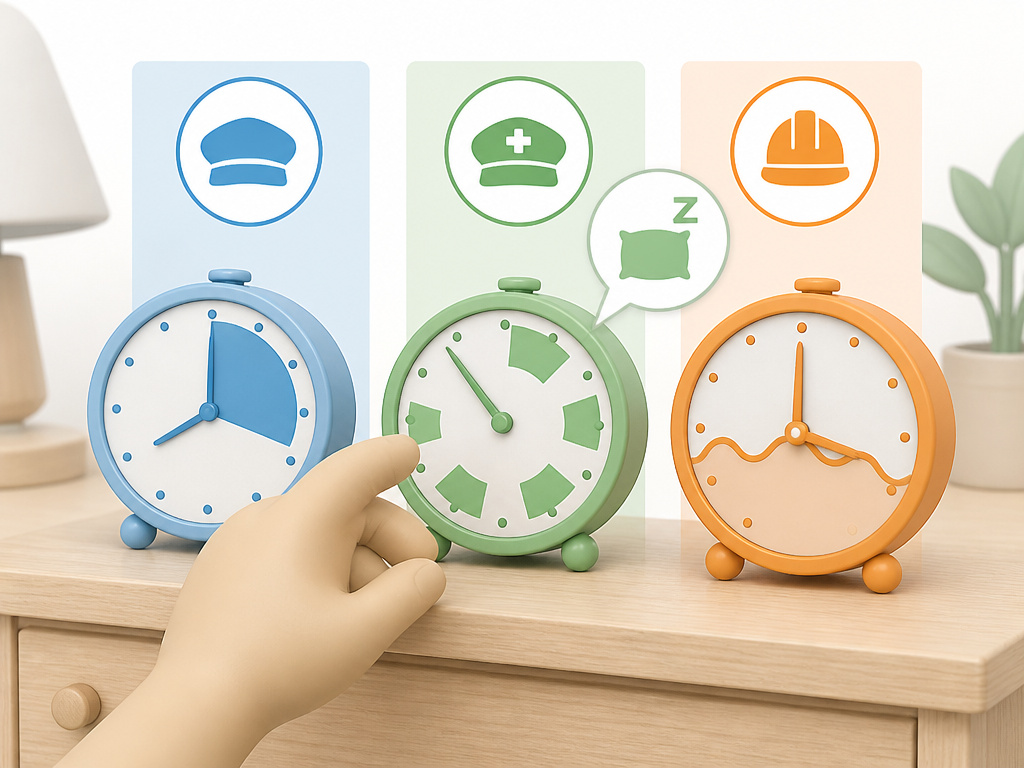
Three credible sources, three different answers on how to actually get the sleep. This is where most shift-work articles pick one and pretend the others don’t exist.
| Source | Sleep target | Notable position |
|---|---|---|
| Working Time Society | 7 hours per night, single block | 11-hour gap between shifts |
| WorkSafe New Zealand | 7 to 9 hours per 24 hours | Can be taken in chunks |
| HSE (UK) | Not specified numerically | Vary bedtime; short sleep after nights |
The napping question splits the same way. WorkSafe New Zealand endorses planned naps, including before driving home. Generic sleep hygiene advice discourages daytime napping. The Delphi consensus sleep hygiene guidelines note this contradiction directly.
What does a person do with that? Pick the position that matches your schedule and stop second-guessing it. If you can sleep in one block, follow the Working Time Society. If you can’t, WorkSafe New Zealand’s chunk allowance is the more realistic frame.
Where this goes sideways: Using naps to extend your shift rather than recover from it. WorkSafe New Zealand draws that line explicitly. A planned nap before the drive home is recovery. A nap that lets you pick up an extra four hours is borrowing against the next two days.
How to Build a Wind-Down That Works at 6am
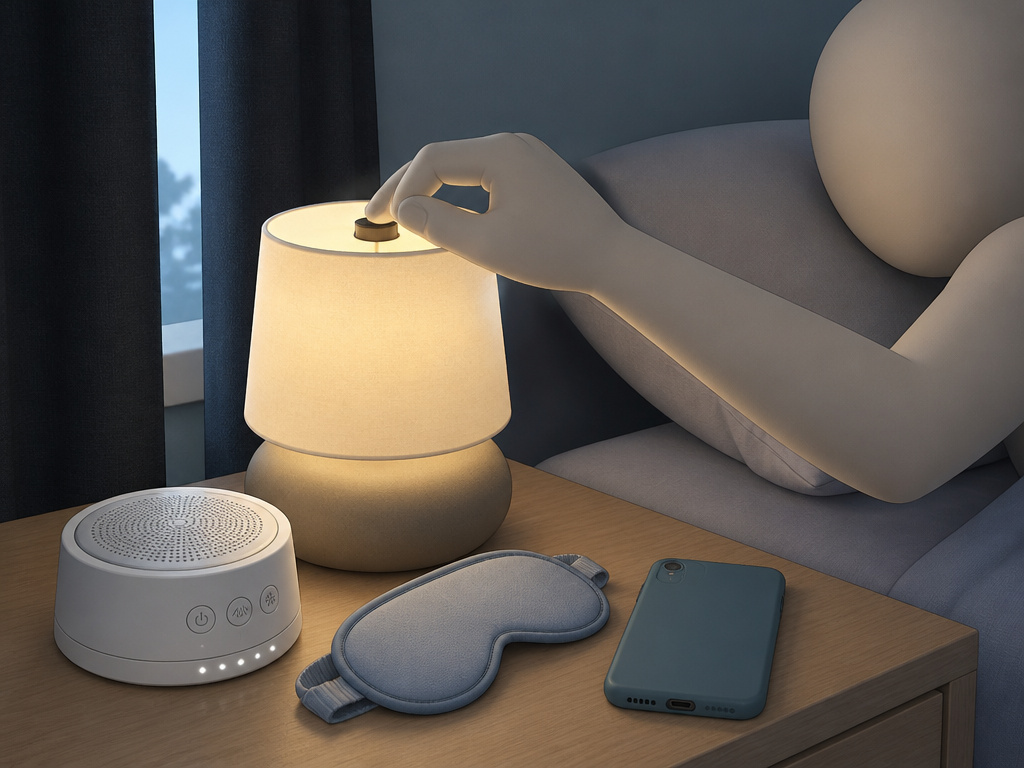
Bedtime at 6am is a different problem from bedtime at 10pm. Daylight is coming through the curtains. The neighbours are starting their cars. Your body clock is arguing with the clock on the wall.
The HSE shift-worker fatigue guidance has the practical version. Vary your bedtime depending on the shift. After a run of nights, take a short sleep and go to bed earlier that night. Keep the bedroom for sleep only, and ask the neighbours to hold off on the leaf blower.
The bedroom setup that actually matters
Three things do most of the work, and none of them are expensive:
- Blackout curtains – the HSE guidance is direct about daytime sleep being lighter and more disturbed by light and noise
- A white noise machine – a simple, consistent sound can help mask daytime noise
- A sleep mask – a comfortable mask can help block light during daytime sleep
The rest is habit. A bedtime routine you repeat every day, even on days off, does more than any gadget. Keep the phone out of the bedroom. Eat before you sleep, not as you fall asleep.
If you’re coming off a late workout rather than a shift, the same rules apply. Sleeping after late workouts is its own skill, and it’s trainable.
What to Do on a Week When the Schedule Falls Apart
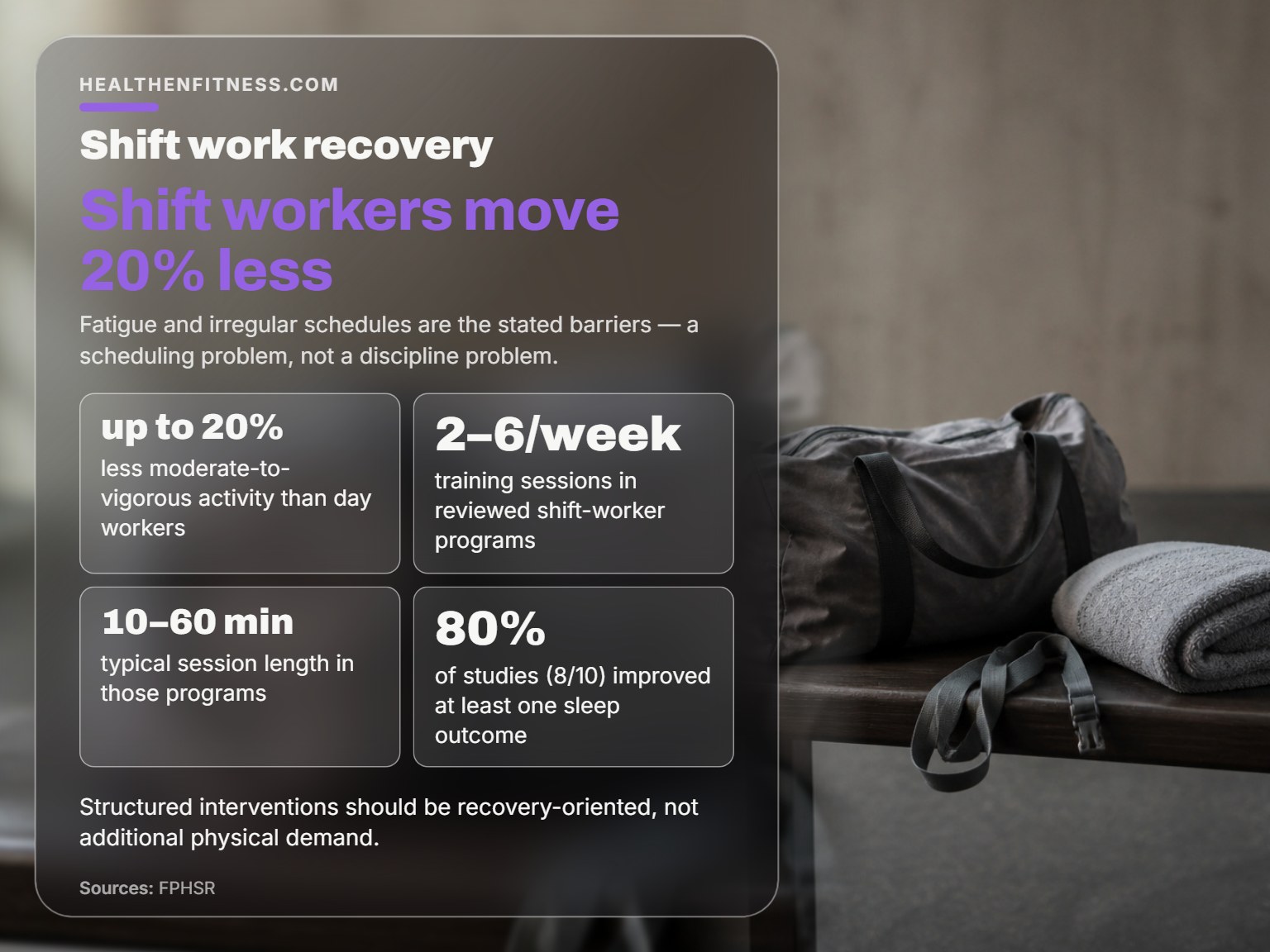
Some weeks you don’t get the 11-hour gap. Someone calls in sick. The block gets extended. You’re three nights in and the schedule has already eaten the recovery window.
Here’s what survives:
- Cut the volume, not the frequency. A 20-minute session three times beats one heroic 90-minute session you’re too wrecked to repeat.
- Move the hard work to the days with the best sleep. If Tuesday’s shift ends early, that’s the training day. Not Thursday because it’s on the plan.
- Use active recovery on the worst days. Walking, easy cycling, mobility work. The Frontiers review found that structured interventions need to be recovery-oriented rather than additional physical demand.
- Take the rest day the schedule gives you. Don’t trade it for a workout you’ll pay for later.
- Track it in a notebook. If you can’t remember what you did last Tuesday, you can’t tell whether the plan is working.
Signs you need to back off, not push through:
- Resting heart rate noticeably elevated for several days running
- Sleep getting worse, not better, after training
- A workout that felt easy last week feels like a grind this week
- You’re relying on coffee to get through the shift
The part nobody mentions: The Frontiers review found that shift workers get up to 20% less moderate-to-vigorous activity than day workers. Fatigue and irregular schedules are the stated barriers. That gap isn’t a discipline problem. It’s a scheduling problem, and it needs a scheduling fix.
The Recovery Moves That Survive a Bad Week
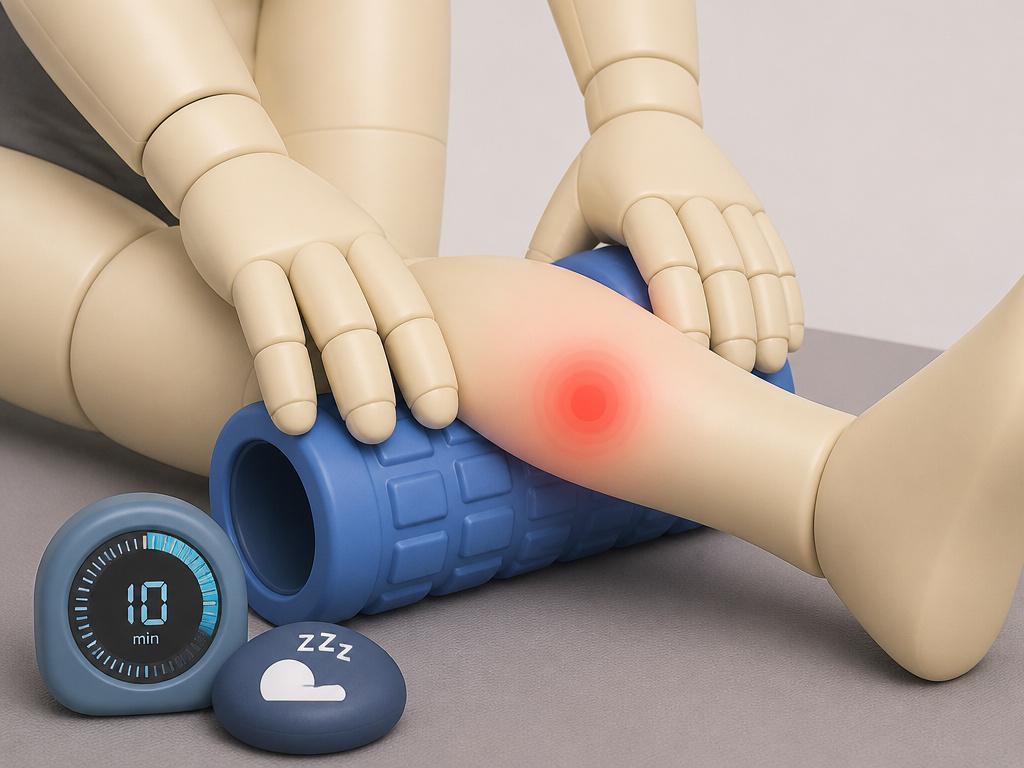
I used to spend 15 minutes foam rolling everything before every session. I couldn’t point to a single difference in how I moved afterward. I dropped it. Now I only work on one or two tight spots when they actually complain.
That’s the whole principle. Recovery should be the smallest thing that works, not the biggest thing you can justify. A post-workout recovery plan that fits in 10 minutes beats one that fits in an hour and never happens.
A few things that do hold up:
- Massage ranked most effective for DOMS and perceived fatigue in a post-exercise recovery meta-analysis
- Creatine kinase, IL-6, and CRP all dropped with recovery interventions in that same analysis, with effect sizes of −0.37, −0.36, and −0.38 respectively
- Planned naps are endorsed by WorkSafe New Zealand and the Delphi consensus, even though generic sleep hygiene discourages them
The foam roller is fine for the spots that need it. It’s just not the whole plan.
If sleep quality is the bottleneck, improving sleep quality for recovery matters more than any recovery gadget. And if you’re training through a genuinely bad patch, training with poor sleep has its own rules. If work stress is stacking on top of training load, the life stress and training load question is worth a separate look, because the two compound.
Frequently Asked Questions
How many hours should a shift worker sleep?
The Working Time Society sets a minimum of 7 hours per night, sized to fit inside an 11-hour gap between shifts. WorkSafe New Zealand gives a wider range of 7 to 9 hours per 24 hours, and explicitly allows that to be taken in chunks rather than one block.
Is it better to work out before or after a night shift?
The Frontiers review found that post-shift exercise most consistently improved sleep consolidation. During-shift exercise produced circadian phase delays. The Institute of Living warns that exercising too close to bedtime can make falling asleep harder, so leave a gap between the end of the session and the start of your sleep window.
Can exercise replace sleep for a shift worker?
No. The evidence points to exercise improving alertness and, in some trials, subjective sleep quality. The only polysomnography study in the review found no change in objective sleep duration or architecture. Exercise is an add-on to the 7 hours, not a substitute.
Are naps good or bad for shift workers?
It depends on the source. WorkSafe New Zealand and the Delphi consensus endorse planned naps, including before driving home. Generic sleep hygiene guidance discourages daytime napping. WorkSafe New Zealand adds a caveat the others don’t: don’t use naps regularly to extend your shift.
What if I can’t get 11 hours between shifts?
You cut the training, not the sleep. The Working Time Society consensus statements say more recovery time may be needed when shifts run long or circadian disruption is severe. On those weeks, keep the frequency, drop the volume, and treat the workout as something that supports recovery rather than competes with it.
The Bottom Line
Here’s the threshold that matters: if you can’t get 7 hours of sleep in a 24-hour window, don’t train hard that day. The Frontiers review is clear that exercise helps alertness and, in some trials, sleep quality. It doesn’t fix a sleep debt, and hard training on top of one makes the next shift worse.
The 11-hour gap is the number to protect. If the schedule gives it to you, train after the shift and give yourself a wind-down window before bed. If it doesn’t, drop to active recovery and wait for the next block.
Steady beats flashy. A plan you can repeat across a rotating schedule will always beat a perfect plan that only works on day shift.
Today, just open next week’s schedule and find the one shift that leaves the biggest gap. That’s your training day. Everything else is a bonus.
